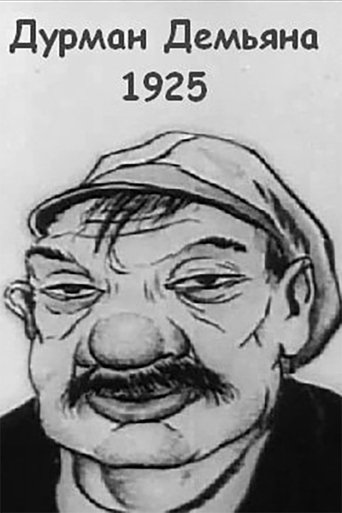
Aleksandr Bushkin
Director
- Active
- 1925-1925
Films directed 1
About Aleksandr Bushkin
Aleksandr Bushkin was a Soviet film director active in the silent era, with his known screen credit tied to the 1925 production "Дурман Демьяна". Very little reliably documented biographical information survives in widely accessible English-language reference sources, which is common for early Soviet filmmakers whose careers were often briefly recorded in studio and archival listings rather than in later biographical profiles. What can be established with confidence is that he worked during a formative period for Soviet cinema, when directors were experimenting with visual storytelling, political themes, and the emerging language of revolutionary-era film production. His known filmography suggests a short or at least poorly documented directing career, and no widely circulated later credits have been securely associated with him in major databases. Because of the limited surviving documentation, details such as his birth date, birthplace, education, and later life remain unconfirmed in standard reference material. Nevertheless, his credit places him within the important first decade of Soviet filmmaking, when many lesser-known directors contributed to the foundation of a national cinema that would soon gain international recognition. Bushkin's historical significance lies less in a long list of preserved titles than in his presence among the early practitioners who helped build the industry during the silent period.
More about Aleksandr Bushkin
Behind the camera
No detailed critical description of Aleksandr Bushkin's directing style is widely documented in accessible reference sources. Based on the era and the production context, his work would have belonged to the silent Soviet tradition, which relied heavily on visual composition, expressive performance, montage, and socially resonant themes. However, without additional surviving critical commentary or multiple identified films, any more specific description would be speculative. His known credit suggests he was part of the broader early Soviet directing culture rather than a figure with a well-documented personal stylistic signature.
In film history
Aleksandr Bushkin's cultural impact is best understood within the larger framework of early Soviet cinema rather than through a large surviving body of work. Directors of his generation contributed to the creation of a new film culture that attempted to educate, persuade, and entertain audiences in the aftermath of revolution and civil upheaval. Even when individual names are only faintly documented today, their films formed part of the cinematic infrastructure that allowed Soviet cinema to develop into one of the most influential national cinemas of the silent era. Bushkin's surviving credit helps film historians map the broader network of directors active during the 1920s, a period when the Soviet Union was rapidly professionalizing its film industry.
Later reputation
Bushkin's legacy is primarily archival and historical: he is remembered as one of the many early Soviet directors whose work is part of the foundation of national cinema, even if his personal biography is obscure. His name appears in filmographic records that preserve the memory of silent-era production beyond the most famous auteurs. For researchers, his credit underscores how much early film history depends on fragmented documentation and how many contributors remain under-recognized despite participating in landmark cultural transitions. In this sense, his legacy lies in representing the broader, often anonymous labor of cinema builders in the 1920s.
Influence
Because Aleksandr Bushkin's surviving documentation is sparse and his filmography is minimal in accessible records, direct influence on later directors cannot be confidently traced. His importance is therefore indirect: he belongs to the generation whose work established patterns of Soviet silent filmmaking that later, better-documented directors would refine and internationalize. The broader methods and themes of early Soviet directors influenced later world cinema through montage theory, ideological filmmaking, and visual experimentation, but there is no secure evidence that Bushkin himself was a major named influence on specific later filmmakers.
Off screen
No reliable, widely available biographical information has been found about Aleksandr Bushkin's personal life, including marriage, family background, or later years. This is not unusual for many silent-era Soviet film workers whose records were not extensively preserved in mainstream international film histories. As a result, details about his domestic life, social circle, or post-film career remain unknown in the standard reference record.
Education
Unknown; no reliable information on formal education has been found in accessible reference sources.
Credits
- Directed the silent-era film "Дурман Демьяна" in 1925.
- Worked during the formative years of Soviet cinema, when the industry was establishing its identity after the Russian Revolution.
- Represents the class of early Soviet filmmakers whose credits are preserved mainly in archival filmographies rather than extensive modern biographies.
Films
- Дурман Демьяна (1925)
Notes
- His best-known surviving credit is the 1925 silent film "Дурман Демьяна".
- He is associated with the early Soviet silent era, one of the most experimental periods in film history.
- Unlike major Soviet directors of the period, his personal biography is not well documented in widely accessible sources.
- His career appears in filmography records rather than in extensive critical literature.
- He is an example of the many early filmmakers whose work is known primarily through archival listings.
- His nationality is generally understood as Russian/Soviet based on the production context of his known film credit.
- No widely verified award history is associated with his name in standard reference sources.
Questions
Who was Aleksandr Bushkin?
Aleksandr Bushkin was an early Soviet film director known for directing the 1925 silent film "Дурман Демьяна". Beyond that confirmed credit, very little detailed biographical information survives in widely accessible sources, which is common for many lesser-documented filmmakers of the silent era.
What films is Aleksandr Bushkin best known for?
He is best known for "Дурман Демьяна" (1925), the only securely identified film credit commonly associated with him in accessible reference material. If additional films existed, they are not widely documented in mainstream sources.
When was Aleksandr Bushkin born and when did he die?
His birth and death dates are not reliably documented in the standard reference record available for this personality. The surviving information is limited primarily to his film credit and active period in 1925.
What awards did Aleksandr Bushkin win?
No awards or formal honors are widely documented for Aleksandr Bushkin in accessible sources. This does not necessarily mean he received none, but rather that no verifiable award record is currently attached to his name in major reference materials.
What was Aleksandr Bushkin's directing style?
There is no detailed surviving critical description of his personal directing style in accessible reference sources. Given the era, his work would have belonged to the silent Soviet tradition, likely emphasizing visual storytelling and period-typical cinematic techniques, but specifics cannot be confirmed without additional archival evidence.
What is Aleksandr Bushkin's legacy in film history?
His legacy lies in being part of the first generation of Soviet filmmakers who helped establish the country's silent cinema tradition. Even though his biography is obscure, his credit helps historians understand the broader landscape of early Soviet film production.
Was Aleksandr Bushkin primarily a director or an actor?
He is identified primarily as a director. The available record does not prominently connect him with acting work, and his known contribution is his directing credit on "Дурман Демьяна".