
Lucien Georges Bull
Director
Born: January 5, 1876 in Dublin, Ireland Died: August 25, 1972 Active: 1905-1910
Films
1 film
About Lucien Georges Bull
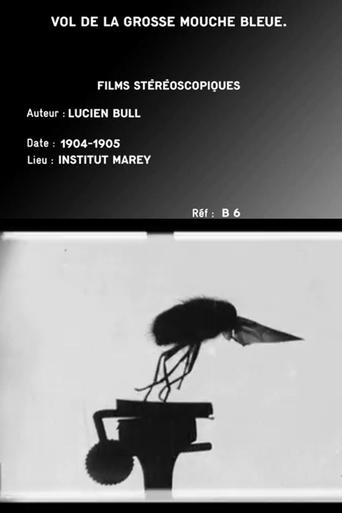
Made significant contributions to early cinema and chronophotography. Working in the early 20th century, Bull was instrumental in developing high-speed photography techniques that captured motion in unprecedented detail. His most famous work, 'Flight of the Large Blue Fly' (1905), demonstrated his innovative approach to capturing rapid movement that was invisible to the naked eye. Bull collaborated extensively with Étienne-Jules Marey at the Station Physiologique in Paris, where they developed various photographic and cinematographic devices. His work bridged the gap between scientific observation and artistic expression in early cinema. Though his filmography was brief, focusing primarily on experimental and scientific films, his technical innovations influenced generations of filmmakers and photographers. Bull's legacy lies in his ability to reveal the hidden beauty of motion through technological innovation.
The Craft
Behind the Camera
Scientific and experimental approach focusing on capturing natural phenomena and motion studies with technical precision and artistic sensitivity
Milestones
- Development of high-speed photography techniques
- Creation of 'Flight of the Large Blue Fly' (1905)
- Collaboration with Étienne-Jules Marey at Station Physiologique
- Innovation in chronophotography methods
- Contributions to early scientific cinema
Best Known For
Must-See Films
Accolades
Special Recognition
- Recognition as pioneer of cinematography
- Honored in French scientific and photographic communities
Working Relationships
Worked Often With
Studios
Why They Matter
Impact on Culture
Lucien Georges Bull's work had a profound impact on both scientific documentation and artistic cinema. His high-speed photography techniques revealed previously invisible aspects of motion, influencing fields from biology to physics. His films demonstrated that scientific observation could have aesthetic value, bridging the gap between laboratory research and public entertainment. The techniques he developed laid groundwork for modern high-speed photography used in everything from sports broadcasting to scientific research. His collaboration with Marey helped establish Paris as a center for early cinematographic innovation.
Lasting Legacy
Bull's legacy endures in the continued use of high-speed photography in both scientific and artistic contexts. His innovations in capturing rapid motion influenced the development of special effects in cinema and scientific visualization techniques. The Station Physiologique's work, to which Bull contributed significantly, is recognized as a crucial precursor to modern cinema. His films are studied by film historians as examples of how early cinema served both scientific and artistic purposes. Bull represents the intersection of scientific inquiry and artistic expression that characterized the earliest days of motion pictures.
Who They Inspired
Bull influenced subsequent generations of filmmakers and photographers interested in capturing motion beyond normal human perception. His techniques were adopted and refined by documentary filmmakers, nature photographers, and special effects artists. The scientific approach to cinematography that he exemplified influenced the development of educational films and scientific documentaries. His work with chronophotography prefigured modern motion capture technology used in contemporary cinema. Bull demonstrated that technical innovation and artistic vision could work together to expand the possibilities of visual media.
Off Screen
Lucien Georges Bull was born in Dublin but moved to France where he spent most of his professional life. He dedicated his career to scientific research and innovation in photography and cinematography. Bull married and had children, though specific details about his family life remain scarce in historical records. His work was primarily focused at the Station Physiologique in Paris, where he collaborated with other scientists and inventors. He lived a long life, witnessing the evolution of cinema from its earliest days to the modern era.
Education
Educated in France, likely in scientific and technical fields
Family
- Unknown
Did You Know?
- Born in Ireland but became a French citizen and worked primarily in Paris
- His most famous film 'Flight of the Large Blue Fly' was created using high-speed photography to capture insect wing movements
- Worked at the same institution as the Lumière brothers, though in different capacities
- His techniques could capture up to 2,000 frames per second, remarkable for the early 1900s
- Lived to be 96 years old, witnessing nearly the entire history of cinema
- His work was primarily scientific rather than commercial entertainment
- Collaborated with Étienne-Jules Marey, who invented the chronophotographic gun
- His films are considered precursors to modern nature documentaries and scientific films
- The Station Physiologique where he worked was one of the first institutions dedicated to studying motion through photography
- His innovations in high-speed photography predated similar work by Harold Edgerton by decades
In Their Own Words
The camera reveals what the eye cannot see, and in that revelation lies both scientific truth and artistic beauty.
Frequently Asked Questions
Who was Lucien Georges Bull?
French inventor and filmmaker who pioneered high-speed photography techniques in the early 20th century. He is best known for his scientific films that captured motion invisible to the naked eye, particularly 'Flight of the Large Blue Fly' (1905).
What films is Lucien Georges Bull best known for?
Titles linked here include Flight of the Large Blue Fly (1905), Various scientific motion studies.
When was Lucien Georges Bull born and when did he die?
Born January 5, 1876; died August 25, 1972.
What awards did Lucien Georges Bull win?
While Bull did not receive formal film awards during his lifetime, he is recognized posthumously as a pioneer of cinematography and high-speed photography. His innovations are honored in the history of both scientific and artistic cinema.
What was Lucien Georges Bull's directing style?
Bull's directing style was scientific and experimental, focusing on precise documentation of natural phenomena. His work combined technical innovation with an artistic sensibility that revealed the hidden beauty of motion through high-speed photography techniques.