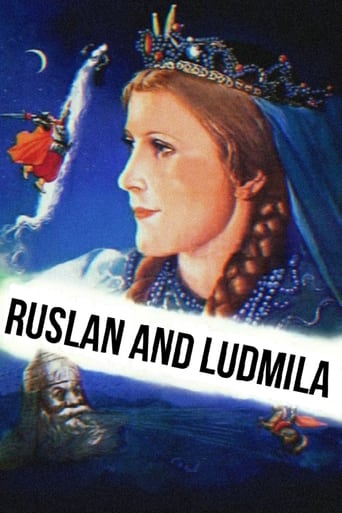
Films
1 film
About Vasiliy Savitskiy
Vasiliy Savitskiy is credited on a single production — Ruslan and Ludmila (1939). His known filmography consists of a single appearance in the 1939 fantasy film 'Ruslan and Ludmila,' which was based on Alexander Pushkin's celebrated poem. The film was one of the early attempts by Soviet filmmakers to create a large-scale fantasy production, featuring elaborate costumes and sets typical of the period's cinematic ambitions. Savitskiy's role in this production, though not extensively documented, places him among the actors working during Stalin's era of Soviet cinema when the film industry was heavily state-controlled. Unfortunately, detailed records about his career, other potential performances, or personal life remain scarce, suggesting he may have been a character actor or someone whose acting career was brief or primarily theatrical. His appearance in this notable adaptation of Russian literary classics represents his contribution to Soviet cinematic heritage.
The Craft
Milestones
- Appeared in 'Ruslan and Ludmila' (1939), an adaptation of Pushkin's poem
Best Known For
Iconic Roles
Must-See Films
Working Relationships
Studios
Why They Matter
Impact on Culture
Vasiliy Savitskiy's contribution to cinema, while minimal in scope, represents the collective effort of Soviet actors during the 1930s who participated in the adaptation of Russian literary classics for the screen. His appearance in 'Ruslan and Ludmila' places him within the context of Soviet cinema's efforts to nationalize and celebrate Russian cultural heritage through film, a major cultural initiative during the Stalinist period. The film itself was significant as one of the early fantasy productions in Soviet cinema, attempting to bring Pushkin's beloved poem to life through the medium of film.
Lasting Legacy
Due to the scarcity of documentation about Vasiliy Savitskiy's career and life, his legacy remains primarily tied to his single documented appearance in 'Ruslan and Ludmila' (1939). He represents the many character actors and supporting performers of early Soviet cinema whose contributions, while perhaps small in scale, collectively helped build the foundation of Russian film history. His story illustrates how many performers from this era, especially those with brief careers or minor roles, remain largely undocumented in film history.
Who They Inspired
There is no documented evidence of Vasiliy Savitskiy's influence on other actors or filmmakers, likely due to the brief nature of his documented film career and the limited availability of information about his work and artistic approach.
Off Screen
Very limited information is available about Vasiliy Savitskiy's personal life, as he appears to have been a relatively obscure actor from the Soviet era with only one documented film appearance.
Did You Know?
- Appeared in only one documented film during his career
- His film 'Ruslan and Ludmila' was based on Alexander Pushkin's 1820 poem
- The 1939 film was one of the earliest Soviet fantasy productions
- The film was directed by Ivan Nikitchenko and Viktor Nevezhin
- His acting career coincided with the height of Stalinist cultural policies
- The film 'Ruslan and Ludmila' was part of Soviet efforts to adapt classic Russian literature
Frequently Asked Questions
Who was Vasiliy Savitskiy?
Soviet with credits in this catalog.
What films is Vasiliy Savitskiy best known for?
Titles linked here include Ruslan and Ludmila (1939).
When was Vasiliy Savitskiy born and when did he die?
Specific birth and death dates for Vasiliy Savitskiy are not documented in available historical records, which is common for many supporting actors from early Soviet cinema.
What awards did Vasiliy Savitskiy win?
There are no documented awards or nominations for Vasiliy Savitskiy, likely due to the brief nature of his documented film career.
What was Vasiliy Savitskiy's acting style?
Due to limited documentation and only one known film appearance, Vasiliy Savitskiy's specific acting style and techniques are not well-documented in historical records.