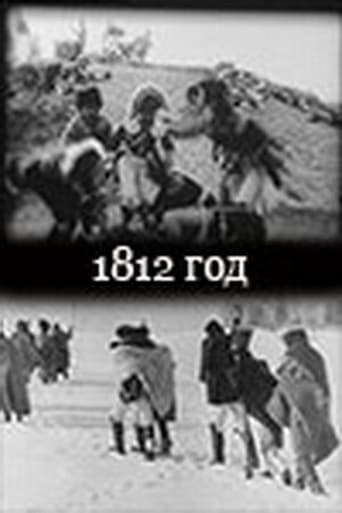
Films
1 film
About A. Veskov
Actor in the very early days of Russian cinema, appearing during the silent era's first wave of historical epics. His entire known filmography consists of a single, yet highly significant, role in the 1912 film '1812,' directed by the Vasili Goncharov. This film was a monumental production for its time, depicting the Napoleonic invasion of Russia and the subsequent patriotic defense of the motherland. Veskov's participation places him among the first generation of professional actors in the burgeoning Russian film industry, a period dominated by adaptations of classic literature and historical events. While his career was exceptionally brief, his contribution to this landmark film ensures his place in the annals of cinematic history. Unfortunately, like many performers from this era, detailed records of his life and career beyond this single credit are scarce, lost to the tumultuous events of the 20th century. His work shows the artists who laid the foundation for one of the world's most celebrated cinematic traditions.
The Craft
On Screen
As a performer in the pre-Revolutionary Russian silent era, A. Veskov's acting style would have been rooted in the theatrical traditions of the time. This typically involved broad, exaggerated gestures and emphatic facial expressions to convey emotion and narrative without the aid of dialogue. Performances were often highly stylized and dramatic, designed to be legible to large audiences in vast theaters. His role in a historical epic would have required a commanding and declamatory presence, embodying archetypal characters of heroism or villainy.
Milestones
- Appeared in '1812' (1912), one of the earliest and most ambitious Russian feature films.
Best Known For
Iconic Roles
Must-See Films
Working Relationships
Worked Often With
Studios
Why They Matter
Impact on Culture
A. Veskov's cultural impact is intrinsically linked to the film '1812,' a foundational work of Russian cinema. By participating in this nationalistic epic, he contributed to a film that helped establish the historical epic as a dominant genre in Russia and demonstrated the potential of cinema as a tool for cultural storytelling and national identity. Though his individual contribution may seem minor, he was part of a collective effort that proved cinema could handle grand, complex narratives, paving the way for the masterpieces of Soviet directors like Eisenstein and Pudovkin. His work represents the nascent stage of a national film culture that would soon become.
Lasting Legacy
The legacy of A. Veskov is that of a pioneer, a representative of the very first generation of film actors in Russia. While he is not a household name, his presence in '1812' makes him a tangible link to the dawn of Russian filmmaking. His legacy is preserved not through a body of work, but through this single, historically significant film that survives as proof of the ambitions and artistry of early 20th-century cinema. He stands as a symbol for the countless anonymous actors and crew members whose collective efforts built the foundations of film history.
Who They Inspired
Given his limited filmography and the obscurity surrounding his career, it is impossible to trace any direct influence that A. Veskov may have had on subsequent performers. His influence is best understood in a collective sense, as part of the early Russian film community that established a professional standard and artistic vocabulary for future generations of actors. The very existence of his work in a major early production helped demonstrate the viability of film acting as a profession, indirectly inspiring others to enter the field.
Off Screen
Due to the extreme scarcity of records from this period and the brevity of his known career, virtually no information is available about the personal life of A. Veskov. Details regarding his family, marital status, or life outside of his single film credit have been lost to history.
Did You Know?
- A. Veskov's entire known film career consists of a single film in a single year.
- The film he appeared in, '1812,' was.
- The film was directed by Vasili Goncharov, a key figure in early Russian cinema.
- Only a partial version of '1812' is known to survive today, making Veskov's performance a rare piece of cinematic history.
- He worked for the Khanzhonkov & Co. Studio, one of Russia's first and most important film companies.
- His career predates the famous 'Kuleshov Effect' and the formalist theories of Soviet montage that would soon revolutionize filmmaking.
- Like many actors from this era, his first initial 'A' may have been used to distinguish him from other performers with the same surname.
Frequently Asked Questions
Who was A. Veskov?
Russian with credits in this catalog. His career was exceptionally brief, with his entire known filmography limited to this single, significant film from the early days of Russian cinema.
What film is A. Veskov best known for?
A. Veskov is known solely for his appearance in the 1912 film '1812', a landmark production depicting the Napoleonic Wars. This film was a major achievement for its time and is considered a foundational work of Russian national cinema.
When was A. Veskov born and when did he die?
Unfortunately, the birth and death dates for A. Veskov are not known. Like many performers from the very early silent era, detailed biographical records have not survived, and he is identified only by his name and single film credit.
What awards did A. Veskov win?
A. Veskov did not receive any known awards or nominations. The film industry in 1912 was in its infancy, and formal award ceremonies like the Oscars would not be established for nearly two decades.
What was A. Veskov's acting style?
As a silent film actor in 1912, his style would have been heavily theatrical, relying on broad gestures and exaggerated facial expressions. This was standard practice before the development of more subtle and naturalistic performance techniques in later years.