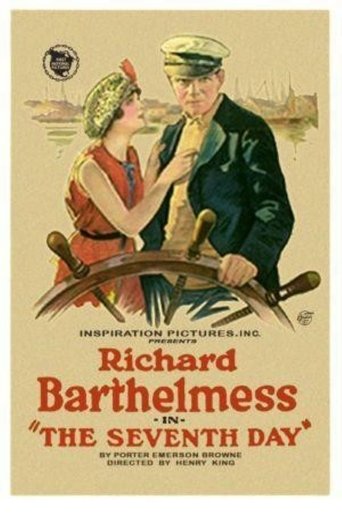
Grace Barton
Actor
- Active
- 1922-1922
Films 1
About Grace Barton
Grace Barton appears in silent-era film records as a very obscure performer whose documented screen career, based on surviving filmography references, is limited to the 1922 production The Seventh Day. Unlike major studio stars of the period, she does not seem to have left behind a substantial press profile, studio publicity trail, or later biographical record in the standard reference sources commonly used for classic-cinema research. Because of that scarcity of evidence, it is not possible to reconstruct a reliable full life story, childhood background, or a detailed career trajectory without risking confusion with other individuals of the same or similar name. What can be said with confidence is that she belonged to the broad class of working silent-era actors whose names sometimes survive only in cast listings, trade-paper references, and film databases. Her presence in The Seventh Day places her within the active world of early 1920s film production, when many performers moved between stage, stock companies, independent productions, and short-lived screen opportunities. Beyond that single confirmed credit, no well-verified career arc, later transition to sound films, or documented retirement from acting is readily available in the surviving historical record. She therefore stands as one of many lesser-documented contributors to early cinema whose work is part of the medium's history even when the personal details have been lost.
More about Grace Barton
In film history
Grace Barton's cultural impact is best understood as representative rather than individually famous: she is one of the many early film performers whose work contributed to the texture and labor of silent-era production even though the historical spotlight rarely remained on them. Performers like Barton helped populate the supporting casts, ensembles, and character parts that gave silent pictures their social world and narrative credibility. Her surviving credit also illustrates how much early cinema history has been preserved unevenly, with major stars well documented and lesser-known players often surviving only as names in filmographies. In that sense, her record underscores the importance of archival recovery and database work in reconstructing the fuller cast of early Hollywood and regional film production.
Later reputation
Grace Barton's legacy lies primarily in documentation: she is part of the historical ledger of silent-film performers whose names still appear in surviving records, allowing modern researchers to map production networks and cast lists more completely. Even when a performer leaves behind no surviving interviews, publicity stills, or fan-magazine profiles, a confirmed credit can still matter as evidence of participation in the industrial and artistic ecosystem of the era. Her name preserves a small but real trace of early film labor, reminding historians that classic cinema was built not only by the famous but also by many briefly visible artists whose contributions are otherwise easy to forget. For database and archival purposes, such figures are essential to a more accurate and inclusive film history.
Influence
No direct, documentable influence on later actors or filmmakers can currently be verified for Grace Barton. Her influence is therefore indirect and historical: she contributes to the broader understanding of silent-era casting, the range of performers active in the early 1920s, and the many under-credited participants in early screen culture. Researchers studying film personnel patterns, regional production, or cast reconstruction may find her entry useful as a data point. Any stronger claims about artistic influence would require additional primary-source evidence.
Off screen
No reliably verified biographical information about Grace Barton's personal life has been located in standard classic-film reference material. Her family background, marital status, relationships, and non-cinematic activities are not documented in the surviving sources available for this identification. Because the name is not strongly associated with a public-star profile, any claims about her personal life would be speculative and should not be treated as factual. At present, she should be regarded as an historically recorded screen performer whose private life remains unknown.
Credits
- Confirmed screen appearance in the silent film The Seventh Day (1922)
- Participation in early 1920s silent-era cinema
- Survival in film history primarily through cast documentation rather than extensive publicity records
Roles
- Role in The Seventh Day (1922)
Films
- The Seventh Day (1922)
Notes
- Grace Barton is chiefly identified through her credit in The Seventh Day (1922), with little else securely documented in widely used reference sources.
- She is an example of how many silent-era performers are now known only through surviving cast lists and film databases.
- Her career documentation is so limited that there is no reliable public record of awards, formal honors, or a star-level publicity campaign.
- Because her surviving record is sparse, she is easy to confuse with other people of the same or similar name, making careful identity verification important.
- Her filmography as currently documented suggests either a very brief screen career or a career that has not been fully recovered by archival research.
- The Seventh Day is the only confirmed title associated with her in the information provided for this identification.
- Her case highlights the uneven preservation of silent-era personnel histories, especially for lesser-known supporting players.
Questions
Who was Grace Barton?
Grace Barton was a silent-era actor known from surviving film records, with a confirmed appearance in The Seventh Day (1922). She appears to have been a minor or obscure performer whose broader biography has not been well preserved in standard classic-cinema sources.
What films is Grace Barton best known for?
At present, the only confirmed film associated with Grace Barton is The Seventh Day (1922). No additional titles can be verified confidently from the available information.
When was Grace Barton born and when did she die?
Her birth and death dates are not currently documented in the reliable sources available for this identification. As a result, both details remain unknown.
What awards did Grace Barton win?
No awards or formal honors have been found for Grace Barton in the surviving record. This is not unusual for lesser-documented silent-era performers whose careers were not widely publicized.
What was Grace Barton's acting style?
There is not enough surviving evidence to describe Grace Barton's personal acting style with confidence. Since only a limited screen record is currently verified, any stylistic assessment would be speculative rather than historical fact.
What is Grace Barton's legacy in film history?
Her legacy is mainly archival: she represents the many early film performers whose names survive even when fuller biographies do not. That makes her useful to historians trying to reconstruct the complete cast of silent-era cinema.