Arthur W. Sterry
Director
- Active
- 1921-1921
Films directed 1
About Arthur W. Sterry
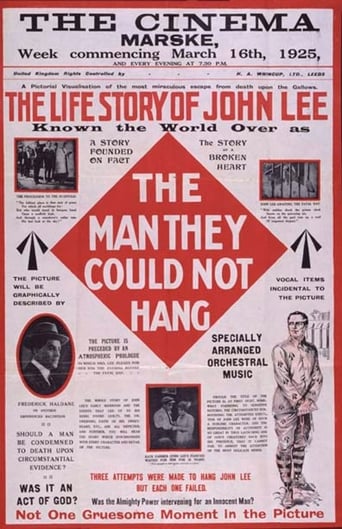
Arthur W. Sterry was a British silent-era filmmaker best remembered for directing the 1921 screen version of The Life Story of John Lee, or The Man They Could Not Hang, a crime-drama based on the notorious John Lee case. Available historical records about Sterry are extremely limited, and he appears to have worked only briefly, or at least only briefly in surviving film documentation, during the silent period. His name is associated with early British production practices in which many directors and crew members remain poorly documented, especially when their careers were confined to a single or small number of regional productions. The film he directed drew on a sensational true-crime story that had already captured public imagination in Britain, suggesting that Sterry had an eye for material with built-in audience appeal. Beyond this credit, surviving evidence does not clearly establish a broader directing career, a later move into sound cinema, or any major studio affiliation. Because of the scarcity of archival material, his personal background, education, and later life remain largely unknown. In film-history terms, Sterry is significant mainly as part of the early silent-era filmmaking network that helped turn popular crime legends into motion-picture entertainment.
More about Arthur W. Sterry
Behind the camera
Arthur W. Sterry's directing style cannot be reconstructed in detail from surviving evidence, but his known work suggests a silent-era approach centered on straightforward storytelling and the dramatization of sensational subject matter. The John Lee story would have required strong visual emphasis, clear staging, and melodramatic suspense to communicate the narrative without synchronized dialogue. As was common in early British feature production, the direction was likely pragmatic and story-driven rather than formally experimental. Because only one film is confidently tied to his name, any more specific description would be speculative.
In film history
Arthur W. Sterry's cultural impact lies less in celebrity or a large body of work than in his participation in the early British silent film industry. His known film dealt with one of the most famous miscarriage-of-justice legends in British popular culture, helping to translate a nationally recognized crime narrative into cinematic form. Films like this contributed to the silent-era tradition of using topical, sensational, or already familiar stories to attract audiences and build public interest in domestic production. Even though Sterry himself is obscure, the film he directed belongs to an important historical pattern in which early cinema preserved and reshaped folklore, criminal legend, and mass-media memory.
Later reputation
Sterry's legacy is primarily archival and historical: he is remembered because he directed a notable silent film tied to a famous true-crime episode, not because of a broad surviving body of work. His career illustrates how many early filmmakers, especially in Britain, remain only partially documented due to lost films, incomplete credits, and limited trade-paper coverage. For researchers of silent cinema, names like Sterry are important reminders that the era was sustained by a wide network of practitioners beyond the handful of famous stars and auteurs. His surviving credit ensures that he retains a place in film history, however modest, as part of the development of British feature filmmaking in the 1920s.
Influence
There is no clear evidence that Arthur W. Sterry directly influenced major later directors or established a recognizable school of filmmaking. His influence is best understood indirectly, through participation in the silent-era practice of adapting sensational real-life stories into dramatic features. By contributing to a film about John Lee, he was part of the broader early-cinema tendency to merge journalism, legend, and melodrama for mass audiences. Any specific artistic influence beyond that cannot be reliably documented.
Off screen
Very little reliable information survives about Arthur W. Sterry's personal life. His birth, family background, marital status, children, education, and later career are not clearly documented in readily available film-reference sources. Like many minor silent-era figures, he appears in the historical record primarily through one surviving screen credit rather than through biographical coverage. Until archival evidence emerges, his private life must be considered undocumented rather than inferred.
Credits
- Directed The Life Story of John Lee, or The Man They Could Not Hang (1921), his known surviving film credit
- Contributed to early British silent cinema through a feature based on a famous true-crime legend
- Worked during a period when British filmmakers were adapting sensational real-life stories for the screen
- Represents one of the many lesser-documented directors active in the silent era whose careers are preserved only through sparse film records
Notes
- Arthur W. Sterry is chiefly remembered today for a single known directing credit.
- His best-known film retold the story of John Lee, the man famously believed to have survived repeated attempts at execution.
- The subject matter of his film connected cinema to one of Britain's most enduring criminal legends.
- His career appears in surviving records as limited to 1921, making him one of the more obscure silent-era directors.
- Because so little archival information survives, many standard biographical details about him remain unknown.
- His film belongs to the tradition of early British crime and sensation pictures.
- He is not to be confused with unrelated people of similar name in other fields or eras.
- The scarcity of information about him is typical of many minor figures from the silent film period, especially in British cinema.
Questions
Who was Arthur W. Sterry?
Arthur W. Sterry was a British silent-era director known for the 1921 film The Life Story of John Lee, or The Man They Could Not Hang. He remains an obscure figure in film history, with very little surviving biographical information beyond his credited work.
What films is Arthur W. Sterry best known for?
He is best known for directing The Life Story of John Lee, or The Man They Could Not Hang (1921). That appears to be his principal surviving screen credit in accessible film-reference sources.
When was Arthur W. Sterry born and when did he die?
His birth date and death date are not currently documented in readily available classic-cinema reference sources. The surviving record places him in film history through a 1921 directing credit, but not through verified biographical dates.
What awards did Arthur W. Sterry win?
No awards or nominations are currently documented for Arthur W. Sterry. Like many early silent-era directors, he appears to have left too small a documented footprint for later award histories to preserve.
What was Arthur W. Sterry's directing style?
His directing style cannot be studied in detail because so little survives about his body of work. Based on his known film, he likely used the direct, visually expressive storytelling typical of silent-era British features, especially in adapting a sensational true-crime narrative.
What is Arthur W. Sterry's legacy in film history?
His legacy is mainly historical and archival: he represents the many lesser-known filmmakers who helped build silent British cinema. He is remembered because of his association with an important true-crime adaptation, not because of a large surviving oeuvre.