Jean de Rovera
Director
- Active
- 1925-1925
Films directed 1
About Jean de Rovera
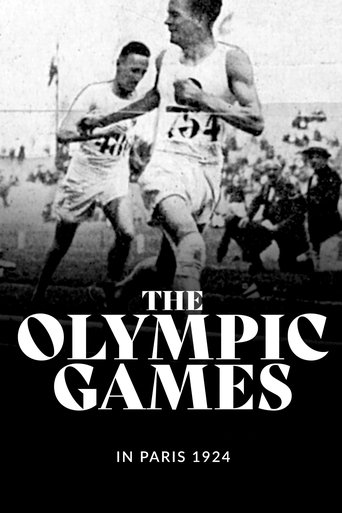
Jean de Rovera is a largely obscure early French filmmaker whose surviving credit is associated with the silent documentary The Olympic Games in Paris 1924, released in 1925. Very little reliably documented biographical information appears to survive in major film-reference sources, and he is not represented as a widely active feature-film director in the historical record. His known career footprint suggests work connected to actuality, documentary, or short-form cinematic coverage rather than the mainstream studio feature system. Because of the scarcity of sources, it is not possible to reconstruct a detailed life story with confidence without risking confusion with other individuals of similar name. What can be said with caution is that he belongs to the generation of filmmakers who helped preserve international sporting events and public spectacles on film during the silent era. His name remains of interest primarily to film historians and archivists studying early Olympic documentation and French nonfiction cinema. Beyond this single identified credit, his broader career arc, personal life, and later activities are not clearly documented in accessible reference sources.
More about Jean de Rovera
Behind the camera
Available evidence suggests a practical documentary approach typical of silent-era actuality filmmaking, with emphasis on recording events, ceremony, spectacle, and movement rather than dramatic reconstruction. His surviving credit implies a style shaped by the limitations and conventions of 1920s nonfiction cinema: observational framing, event coverage, and an emphasis on clarity for audiences who were viewing a historic international sporting occasion. Because no broader body of work is securely attributed to him, it is not possible to identify a distinctive signature style beyond the likely documentary method of the period.
In film history
Jean de Rovera's cultural significance is tied less to fame as an auteur and more to the historical value of the film he is associated with. The Olympic Games in Paris 1924 belongs to a crucial tradition of early nonfiction cinema in which filmmakers documented major civic and international events for public memory and news circulation. Such films helped establish how audiences would later experience Olympic history on screen, contributing to the visual record of sport, ceremony, and modern spectacle. Even when the filmmaker is little known, the surviving work can remain important as a source for historians of the Olympics, French documentary practice, and silent-era event filmmaking.
Later reputation
His legacy is primarily archival and historiographic: Jean de Rovera is remembered, where he is remembered at all, through the preservation of a single credited silent film. This makes him representative of many early cinema workers whose names survive in catalogs and databases even when extensive biographies do not. For scholars of silent nonfiction cinema, his association with an Olympic documentary places him within the lineage of early twentieth-century filmmakers who documented international culture and public ceremony. His lasting importance is therefore not celebrity-based but documentary-based, contributing a small but meaningful piece to the broader historical record of classic cinema.
Influence
There is no securely documented evidence that Jean de Rovera directly mentored major later filmmakers or exerted a visible stylistic influence in the way more prominent directors did. However, by participating in early event documentation, he would have been part of a filmmaking culture that influenced later newsreels, sports coverage, documentary shorts, and the modern visual language of Olympic broadcasting. His work, insofar as it survives in attribution, sits within the foundational practices that helped shape how large-scale public events were filmed and remembered.
Off screen
No dependable public information about Jean de Rovera's personal life, family background, marriages, or private affairs could be verified from readily available classic-cinema reference sources. He appears to have left only a very limited archival footprint under this name. As a result, any detailed discussion of relationships or domestic life would be speculative and is therefore omitted.
Credits
- Directed the silent-era documentary The Olympic Games in Paris 1924, released in 1925
- Associated with early nonfiction cinema and the filming of major public sporting events
- Represents one of the minor documented names connected to early Olympic film history
Films
Notes
- Jean de Rovera is chiefly identified through a single surviving film credit, making him one of the more elusive names in early cinema records.
- His known film is tied to the 1924 Paris Olympic Games, a major international event and an important subject for documentary filmmakers of the silent era.
- Because so little biographical information is available, he is often of interest mainly to archivists and historians rather than general classic-film audiences.
- The film associated with him was released in 1925, after the actual Olympic event it documented.
- His surviving credit suggests participation in nonfiction or actuality filmmaking rather than feature-length narrative cinema.
- No reliable public record of awards, nominations, or honors has been found for him.
- He should not be confused with similarly named individuals from other artistic or professional fields.
Questions
Who was Jean de Rovera?
Jean de Rovera was a French filmmaker associated with the silent-era documentary The Olympic Games in Paris 1924. Very little biographical information about him survives in accessible film-reference sources, so he is known primarily through this single credited work.
What films is Jean de Rovera best known for?
He is best known for The Olympic Games in Paris 1924, released in 1925. No other reliably documented film credits are securely associated with him in the available record.
When was Jean de Rovera born and when did he die?
His birth and death dates are not currently documented in the readily available classic-cinema sources consulted. Because of the scarcity of verified information, those details should be treated as unknown rather than inferred.
What awards did Jean de Rovera win?
No awards or nominations are currently documented for Jean de Rovera in the available record. He appears to have been a minor or poorly documented early filmmaker whose surviving recognition comes mainly from film attribution rather than formal honors.
What was Jean de Rovera's directing style?
His directing style is best understood as silent-era documentary filmmaking, likely focused on straightforward event coverage and visual record-making. Because only one film is securely linked to him, there is not enough evidence to define a unique personal style beyond the conventions of nonfiction cinema in the 1920s.
What is Jean de Rovera's legacy in film history?
His legacy lies in the historical record of early documentary and Olympic filmmaking. Even with very limited biographical data, his name remains part of the archival footprint of silent cinema and the visual documentation of major international sporting events.