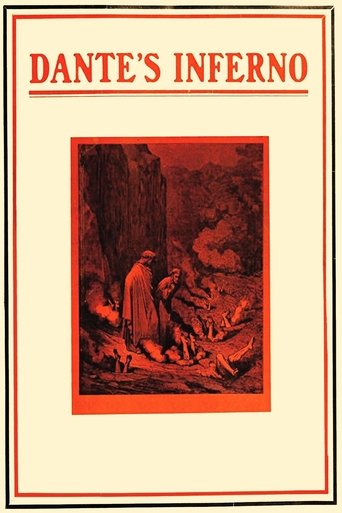
Augusto Milla
Actor
- Active
- 1911
Films 1
About Augusto Milla
Augusto Milla was an Italian actor who worked during the pioneering days of cinema, appearing in the groundbreaking 1911 silent film 'Dante's Inferno' (L'Inferno). This film was one of the earliest full-length feature films ever produced and represented a monumental achievement in early Italian cinema. Milla was part of the ensemble cast that brought Dante Alighieri's epic vision of Hell to life on screen, working during a period when Italian cinema was establishing itself as a major artistic force in Europe. His participation in this ambitious production places him among the early pioneers of the film industry. The film itself was noted for its elaborate special effects and set designs that were revolutionary for their time. Unfortunately, like many actors from this very early period of cinema, detailed records of Milla's career and life are scarce, and his known filmography appears to be limited to this single but historically significant production.
More about Augusto Milla
Impact on culture
Augusto Milla's contribution to cinema, while limited to a single known film, is part of the foundation of cinematic history. His participation in 'Dante's Inferno' (1911) places him among the very first actors to work in feature-length films during cinema's formative years. The film itself was a landmark achievement that demonstrated the artistic potential of cinema as a medium for adapting literary masterpieces, influencing countless subsequent productions. The elaborate visual effects and ambitious scope of the film set new standards for what could be achieved in cinema, and Milla was part of this pioneering effort that helped establish Italian cinema as a major force in the early 20th century.
Lasting legacy
Augusto Milla's legacy is tied to his participation in one of cinema's earliest and most ambitious productions. While he may not be a household name today, his work in 'Dante's Inferno' represents an important contribution to film history as one of the first actors to appear in a feature-length adaptation of a major literary work. The film itself remains historically significant and is preserved as an important artifact of early cinema, ensuring that Milla's contribution, however small, is part of the permanent record of film history.
Who they inspired
As an actor from the very earliest days of feature films, Augusto Milla's direct influence on subsequent performers is difficult to trace, but he was part of the generation of actors who helped establish the conventions of screen acting during the transition from stage to film. His participation in such an ambitious production helped demonstrate that cinema could handle complex, epic narratives, paving the way for future generations of actors to tackle increasingly sophisticated roles in feature films.
Off screen
Very little is documented about Augusto Milla's personal life, which is typical for actors from this very early period of cinema when detailed biographical records were not commonly maintained for film performers.
Career milestones
- Appeared in the groundbreaking 1911 film 'Dante's Inferno', one of the earliest feature-length films ever made
Iconic roles
- Unknown role in Dante's Inferno (1911)
Must-see films
- Dante's Inferno (1911)
Studios
- Milano Films
Did you know?
- Dante's Inferno (1911) was one of the first full-length feature films ever produced, running approximately 68 minutes
- The film was an Italian production that took over three years to complete due to its elaborate special effects and sets
- Dante's Inferno was the first Italian feature film ever screened in the United States
- The film was considered shocking and controversial in its time due to its graphic depictions of Hell
- Augusto Milla was part of a cast of over 100 actors in this ambitious production
- The film's budget was enormous for its time, equivalent to over $2 million in today's currency
- Dante's Inferno was shot in Turin, Italy, which was a major center of early Italian cinema
- The film survives today and is considered a masterpiece of early cinema, preserved by film archives
Questions and answers
Who was Augusto Milla?
Augusto Milla was an Italian actor from the silent era who appeared in the groundbreaking 1911 film 'Dante's Inferno', one of the earliest feature-length films ever made. He was part of the pioneering generation of actors who helped establish cinema as an art form during its formative years.
What films is Augusto Milla best known for?
Augusto Milla is known exclusively for his appearance in 'Dante's Inferno' (1911), an ambitious Italian silent film that adapted Dante Alighieri's Divine Comedy. This film was a landmark achievement in early cinema and remains his only known credited work.
When was Augusto Milla born and when did he die?
Specific birth and death dates for Augusto Milla are not documented, which is common for actors from this very early period of cinema when detailed biographical records were not maintained. He was active as an actor in 1911.
What awards did Augusto Milla win?
Augusto Milla did not receive any formal awards or recognition, as the film industry's award systems, including the Academy Awards, would not be established until many years after his known work in 1911.
What was Augusto Milla's acting style?
Specific details about Augusto Milla's acting style are not documented, but actors of this period typically used exaggerated gestures and expressions adapted from stage theater to compensate for the lack of synchronized sound in silent films.
Why is Dante's Inferno (1911) historically significant?
Dante's Inferno is historically significant as one of the first feature-length films ever made, demonstrating cinema's potential for epic storytelling. Its elaborate special effects and set designs were revolutionary for 1911, and it helped establish Italian cinema as a major artistic force in early 20th century Europe.