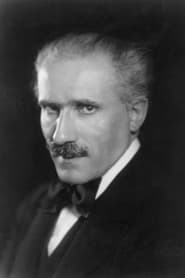
Arturo Toscanini
Actor
Born: March 25, 1867 in Parma, Italy Died: January 16, 1957 Active: 1886-1954
Films
1 film
About Arturo Toscanini
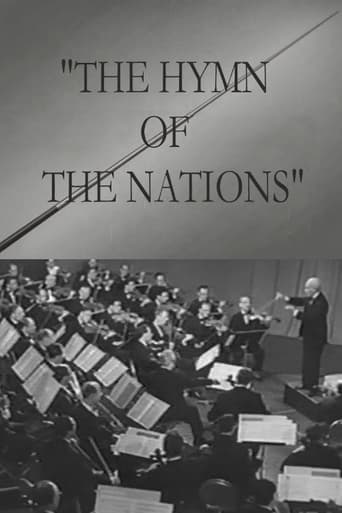
Arturo Toscanini was acclaimed and influential conductors of the late 19th and 20th centuries, renowned for his intensity, perfectionism, and phenomenal memory. While primarily a musical figure, his cinematic contribution is immortalized in the 1944 Office of War Information film 'Hymn of the Nations,' directed by Alexander Hammid, where he appeared as himself to conduct the NBC Symphony Orchestra. Born in Parma, Italy, he began his career as a cellist before a debut as a conductor in Rio de Janeiro at age 19. He served as the music director of La Scala in Milan and the Metropolitan Opera in New York, becoming a symbol of artistic resistance against Fascism during World War II. His move to the United States led to the creation of the NBC Symphony Orchestra specifically for him, reaching millions through radio and television broadcasts. Throughout his career, he was celebrated for his 'literalist' approach to scores, insisting on absolute fidelity to the composer's original intent, which revolutionized modern conducting standards.
The Craft
On Screen
Toscanini did not 'act' in the traditional sense; in his cinematic appearances, he displayed a fierce, authentic intensity and a magnetic screen presence characterized by his vigorous conducting technique and piercing gaze.
Milestones
- Music Director of La Scala, Milan (1898–1908, 1921–1929)
- Music Director of the Metropolitan Opera, New York (1908–1915)
- Music Director of the New York Philharmonic (1928–1936)
- Founding conductor of the NBC Symphony Orchestra (1937–1954)
- Star of the Academy Award-nominated documentary 'Hymn of the Nations' (1944)
- Conducted the world premieres of 'La Bohème', 'Pagliacci', and 'Turandot'
- First non-German conductor to appear at the Bayreuth Festival (1930)
Best Known For
Iconic Roles
Must-See Films
Accolades
Won
- Grammy Lifetime Achievement Award (1987, Posthumous)
- Grammy Award for Best Classical Performance - Orchestra (1960)
- Grammy Award for Best Classical Performance - Instrumental Soloist (1960)
Nominated
- Academy Award nomination for Best Documentary Short Subject for 'Hymn of the Nations' (1944) - Featured Subject
Special Recognition
- Knight Grand Cross of the Order of Merit of the Italian Republic
- Royal Philharmonic Society Gold Medal (1937)
- Inducted into the Gramophone Hall of Fame
- Named Senator for Life by the Italian Government (which he declined)
Working Relationships
Worked Often With
Studios
Why They Matter
Impact on Culture
Toscanini's impact on culture was profound as he bridged the gap between high art and mass media. Through his NBC broadcasts and the film 'Hymn of the Nations,' he brought classical music into the living rooms of millions of Americans, making the conductor a household celebrity. His refusal to play the fascist anthem 'Giovinezza' and his subsequent exile made him a global symbol of moral integrity and the defense of artistic freedom against totalitarianism.
Lasting Legacy
His legacy is defined by the 'Toscanini Sound'—a lean, transparent, and rhythmically driven approach that moved away from Romantic excess and set the template for modern orchestral performance. He was one of the first 'superstar' conductors whose image and recordings were marketed globally, and his meticulous rehearsal techniques influenced generations of musicians to prioritize the composer's score above the performer's ego.
Who They Inspired
He influenced the entire field of conducting by standardizing the use of the baton for clarity and insisting on rehearsals that were rigorous and exhaustive. His influence extends to the technical side of recording and filming music, as he demanded high fidelity and specific camera angles to capture the essence of a performance.
Off Screen
Toscanini was the son of a tailor who had been a soldier under Garibaldi. He married Carla De Martini in 1897, and they remained married until her death in 1951. He was known for his fiery temperament and his staunch anti-fascist political views, which led him to leave Italy and refuse to perform in Germany or Austria during the Nazi era.
Education
Parma Conservatory (Scholarship student in Cello and Composition)
Family
- Carla De Martini (1897–1951)
Did You Know?
- He conducted the world premiere of Puccini's 'La Bohème' in 1896.
- He had such a prodigious memory that he was known to have memorized every note for every instrument in over 100 operas.
- He famously broke his baton and threw scores during rehearsals when musicians failed to meet his standards.
- His son-in-law was the pianist Vladimir Horowitz.
- The film 'Hymn of the Nations' was originally censored to remove footage of the 'Internationale' during the Cold War.
- He was the first conductor to be featured on the cover of Time Magazine (1934).
- He conducted the inaugural concert of the Palestine Symphony Orchestra (now Israel Philharmonic) in 1936 to support Jewish musicians fleeing Nazism.
In Their Own Words
I kissed my first girl and smoked my first cigarette on the same day. I haven't had time for tobacco since.
God tells me how the music should sound, but you stand in the way.
Is not my merit; it is the composer's. I am only a conductor.
To some, 'Eroica' is Napoleon, to others it is a philosophical struggle. To me, it is Allegro con brio.
Frequently Asked Questions
Who was Arturo Toscanini?
World-renowned Italian conductor known for his tenure at La Scala and the NBC Symphony Orchestra. He is considered one of the greatest conductors of all time due to his precision and dedication to the composer's original score.
What films is Arturo Toscanini best known for?
Titles linked here include Hymn of the Nations (1944), The General Motors Concert Schools (1930s Short Films).
When was Arturo Toscanini born and when did he die?
Born March 25, 1867; died January 16, 1957.
What awards did Arturo Toscanini win?
While he predated many modern film awards, he received several posthumous Grammys, including a Lifetime Achievement Award, and the film he starred in, 'Hymn of the Nations,' was nominated for an Academy Award.
What was Arturo Toscanini's conducting style?
His style was characterized by extreme rhythmic discipline, fast tempos, and a literal interpretation of the musical score. He was famous for his 'tyrannical' pursuit of perfection and his ability to conduct entirely from memory.