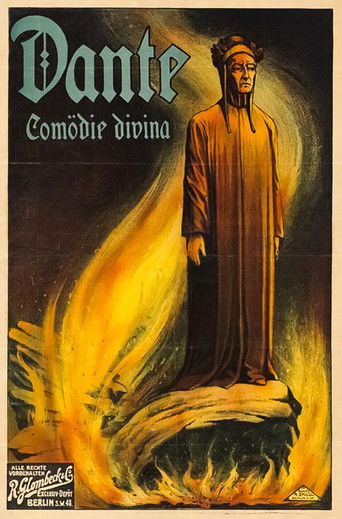
Films
1 film
About Giuseppe Berardi
Early Italian filmmaker who emerged during the days of cinema, specifically active in 1911. He is primarily remembered for his ambitious adaptation of Dante Alighieri's 'Divine Comedy,' particularly the 'Inferno' section, which was one of the earliest full-length feature films produced in Italy. Berardi both directed and acted in this 1911 production, demonstrating the multifaceted nature of early filmmakers who often wore multiple hats. His work came during a golden period of Italian cinema, when the country was producing elaborate historical and literary epics that competed internationally. The film 'Dante's Inferno' was notable for its special effects and elaborate sets, representing the technical ambitions of early Italian cinema. Unfortunately, like many early cinema pioneers, Berardi's career appears to have been brief, with no other documented film credits beyond this single notable work. His contribution represents the important role Italian filmmakers played in establishing the feature film format and adapting classic literature to the new medium of cinema.
The Craft
On Screen
As an actor in the silent era, Berardi likely employed the exaggerated gestures and dramatic expressions typical of early cinema, where visual storytelling had to compensate for the absence of dialogue. His performance in Dante's Inferno would have emphasized the theatrical traditions of the period, with broad physical movements and intense facial expressions to convey the epic and supernatural nature of Dante's journey through Hell.
Behind the Camera
Berardi's directing approach in Dante's Inferno reflected the ambitious spectacle-oriented style of early Italian cinema, emphasizing elaborate set designs, special effects, and large-scale compositions. His adaptation demonstrated a commitment to visual storytelling that could translate Dante's complex literary visions into cinematic imagery, utilizing the technical innovations available in 1911 to create convincing depictions of Hell's various circles.
Milestones
- Directed and acted in Dante's Inferno (1911)
- Pioneered early Italian feature filmmaking
- Contributed to early literary adaptations in cinema
Best Known For
Iconic Roles
Must-See Films
Working Relationships
Studios
Why They Matter
Impact on Culture
Giuseppe Berardi's work on Dante's Inferno represents an important milestone in early cinema history, particularly in the development of the feature film format and the adaptation of classic literature to the screen. His 1911 film was part of a wave of Italian literary adaptations that helped establish cinema as a legitimate artistic medium capable of handling complex, epic narratives. The film's ambitious special effects and set designs pushed the boundaries of what was technically possible in early cinema, influencing subsequent horror and fantasy films. Berardi's contribution, though brief, exemplifies the crucial role Italian filmmakers played in establishing many cinematic conventions and genres during cinema's formative years.
Lasting Legacy
While Giuseppe Berardi himself remains an obscure figure in film history, his work on Dante's Inferno (1911) has endured as an important example of early Italian cinema's technical and artistic ambitions. The film is studied by film historians as a significant early attempt to bring complex literary works to the screen, and its surviving footage provides valuable insight into the visual techniques and storytelling approaches of the silent era. Berardi's multifaceted role as both director and actor exemplifies the versatile nature of early filmmakers who helped establish the foundations of cinematic art.
Who They Inspired
Direct influence by Giuseppe Berardi on subsequent filmmakers is difficult to trace due to his brief career and limited filmography. However, his work on Dante's Inferno contributed to the broader tradition of literary adaptations in cinema and helped demonstrate the potential for films to handle complex, supernatural subject matter. The technical innovations in his film likely influenced other Italian and international filmmakers working in fantasy and horror genres during the silent era.
Off Screen
Very little is documented about Giuseppe Berardi's personal life, which is common for many early cinema pioneers whose careers were brief and occurred before comprehensive film industry record-keeping was established. As an Italian filmmaker working in 1911, he would have been part of the vibrant early Italian film scene centered around production companies in Turin and Rome.
Did You Know?
- Dante's Inferno (1911) was one of the earliest full-length feature films ever made
- The film was an Italian production released during the peak of early Italian cinema's international influence
- Berardi both directed and acted in the film, common practice among early cinema pioneers
- The film featured elaborate special effects for its time, including depictions of Hell's various punishments
- Dante's Inferno (1911) was part of Italy's early dominance in epic and historical film productions
- The film's sets and visual design influenced later cinematic depictions of Hell and the afterlife
- Berardi's career appears to have been limited to this single year, 1911
- The film represents an early example of adapting classic literature to the new medium of cinema
Frequently Asked Questions
Who was Giuseppe Berardi?
Early Italian filmmaker active in 1911, best known for directing and acting in the silent film Dante's Inferno. He was part of the generation of Italian filmmakers who helped establish cinema as an art form during its earliest years.
What films is Giuseppe Berardi best known for?
Titles linked here include Dante's Inferno (1911).
When was Giuseppe Berardi born and when did he die?
Specific birth and death dates for Giuseppe Berardi are not documented in historical records, which is common for many early cinema pioneers. He was active as a filmmaker in 1911 and was of Italian nationality.
What awards did Giuseppe Berardi win?
No awards or honors are documented for Giuseppe Berardi, as he worked during the very early years of cinema before formal award systems like the Academy Awards were established. Recognition for early filmmakers often came posthumously through historical study.
What was Giuseppe Berardi's directing style?
Berardi's directing style, as evidenced in Dante's Inferno, emphasized visual spectacle and ambitious set design typical of early Italian cinema. He focused on creating elaborate visual representations of literary concepts, utilizing the technical innovations available in 1911 to bring Dante's visions to life on screen.