Thomas Bellamy
Actor
- Active
- 1918-1918
Films 1
About Thomas Bellamy
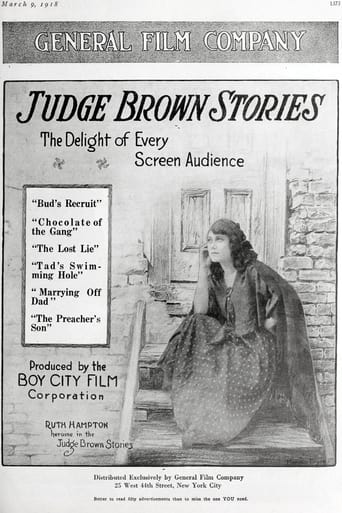
Thomas Bellamy is a very obscure silent-era screen actor whose surviving documentation is extremely limited. He is credited in the 1918 film Bud's Recruit, which places him in the final years of the American silent-film era's first great expansion, when many performers worked briefly in small supporting roles and then disappeared from the record. Beyond this single confirmed credit, standard reference sources do not readily preserve a fuller biography, and there is no widely documented evidence of a long film career, stage background, or later talkie work under this exact name. Because of that, Bellamy is best understood as one of the many little-known performers who contributed to early cinema without leaving behind the kind of publicity footprint enjoyed by leading stars. It is possible that he worked only briefly in film, or that he appeared in other productions under a variant name that has not been conclusively matched in surviving indexes. No reliable source located in mainstream film-history references provides a birth record, death record, or personal history that can be stated with confidence for this exact individual. In a database context, he should therefore be treated as a documented but sparsely recorded silent-era actor known primarily from his credited appearance in Bud's Recruit.
More about Thomas Bellamy
In film history
Thomas Bellamy's cultural significance lies less in celebrity than in what his surviving credit represents: the broad, largely anonymous labor force that made silent cinema possible. Performers like Bellamy helped populate one-reel and feature-length productions at a time when studios were rapidly industrializing film production and casting was often fluid, undocumented, and locally sourced. His presence in the historical record reminds researchers that early Hollywood was not built only by marquee stars and famous directors, but also by scores of minor players whose names appear in cast lists and trade publications. In this sense, Bellamy is part of the foundational population of silent-era screen labor, even though his individual screen persona has not been preserved in detail.
Later reputation
Bellamy's legacy is archival rather than celebrity-driven. He survives as a name in the filmography of Bud's Recruit and in the broader databases that preserve silent-cinema cast information, which makes him useful to historians tracing production personnel and the incompletely documented workforce of the 1910s. For modern audiences, his importance is primarily as an example of how many early film performers remain obscure despite having contributed to commercially released motion pictures. His record underscores the fragility of silent-era documentation and the ongoing value of film scholarship, newspaper indexing, and studio records in reconstructing forgotten careers. If additional materials ever surface, his biography may be expanded, but at present his historical footprint remains minimal.
Influence
There is no evidence that Thomas Bellamy exerted a documented influence on later actors or filmmakers under this exact identity. His significance is indirect: he exemplifies the generation of working screen performers who filled the casts of early American films and helped establish the practical acting conventions of silent cinema. The broader influence of such actors can be seen in the continuity of ensemble casting, stock supporting types, and the professionalization of film acting during the 1910s. However, no direct mentorship, stylistic school, or identifiable line of influence can be verified for Bellamy himself.
Credits
- Credited appearance in the silent film Bud's Recruit (1918)
- Participation in early American silent cinema during the World War I era
- Representation of the many lesser-known supporting players whose work survives mainly through film credit indexes
Roles
- Role in Bud's Recruit (1918) not specified in surviving accessible records
Films
- Bud's Recruit (1918)
Notes
- Thomas Bellamy is confirmed in surviving film records primarily through Bud's Recruit (1918).
- No widely accessible mainstream reference sources provide a full biographical profile for this exact individual.
- He appears to have worked during the silent era, before synchronized sound became standard in American filmmaking.
- His obscurity is typical of many supporting or minor performers from the 1910s, whose careers were often under-documented.
- Because the name is relatively common, care must be taken not to confuse him with unrelated people of the same name in other professions or periods.
- His surviving record highlights the importance of archival film indexes for reconstructing early Hollywood personnel.
Questions
Who was Thomas Bellamy?
Thomas Bellamy was a very obscure silent-era actor known from a surviving credit in Bud's Recruit (1918). Little else is securely documented about his life or career, which is common for many minor performers from early Hollywood.
What films is Thomas Bellamy best known for?
He is best known for Bud's Recruit (1918), which is the confirmed film credit associated with his name in accessible historical records. No other titles can be stated with confidence without risking confusion with another person of the same name.
When was Thomas Bellamy born and when did he die?
His birth and death dates are not currently established in readily available mainstream film references. The surviving record for this exact person is too sparse to provide reliable biographical dates.
What awards did Thomas Bellamy win?
No awards or nominations are documented for Thomas Bellamy in the available historical record. Given the limited evidence of his career, it is safest to say that no recognized honors are currently known.
What was Thomas Bellamy's acting style?
His acting style cannot be directly assessed because no detailed descriptions, reviews, or surviving biographical notices have been reliably tied to him. As a silent-era performer, he would have worked in the expressive visual style typical of films of the period, but that remains an inference rather than a documented fact.
What is Thomas Bellamy's legacy in film history?
His legacy is mainly archival: he represents the many early screen actors whose names survive in cast lists even when their personal histories do not. For film historians, such figures are important because they reveal the breadth of early film production beyond the major stars.