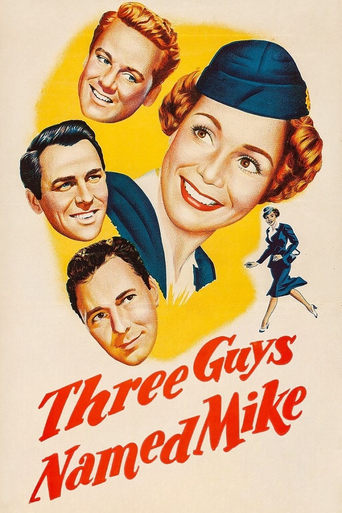

Jane Wyman
Actor
Born: January 5, 1917 in St. Joseph, Missouri, USA Died: September 10, 2007 Active: 1932-1990 Birth Name: Sarah Jane Fulks
Films
1 film
About Jane Wyman
Jane Wyman, born Sarah Jane Fulks, rose from humble beginnings in Missouri to become one of Hollywood's most respected actresses of the Golden Age. She began her career as a bit player and chorus girl at Warner Bros. In the 1930s, gradually working her way up to leading roles. Her breakthrough came with her dramatic performance in 'The Yearling' (1946), which earned her first Academy Award nomination. Wyman reached the pinnacle of her career with her powerful, non-speaking performance as a deaf-mute rape victim in 'Johnny Belinda' (1948), winning the Academy Award for Best Actress. Throughout the 1950s, she starred in numerous successful films including 'Magnificent Obsession' (1954) and 'All That Heaven Allows' (1955), establishing herself excelled in emotional melodrama. Her career continued successfully through the 1960s and 1970s before she made a triumphant return to television with the hit series 'Falcon Crest' (1981-1990), earning multiple Emmy and Golden Globe nominations. Wyman's remarkable over five decades, showcasing her versatility and enduring appeal across different mediums.
The Craft
On Screen
Jane Wyman was known for her naturalistic and emotionally restrained acting style, particularly excelling in melodramatic roles where she conveyed deep emotion through subtle expressions and body language. Her performance in 'Johnny Belinda' as a deaf-mute character demonstrated her ability to communicate complex emotions without dialogue. Wyman specialized in playing strong, resilient women facing personal adversity, often portraying characters who maintained dignity despite overwhelming circumstances. Her technique combined classical Hollywood glamour with a grounded, relatable quality that made her characters accessible to audiences.
Milestones
- Academy Award for Best Actress for 'Johnny Belinda' (1948)
- Three additional Academy Award nominations
- Star of hit TV series 'Falcon Crest' (1981-1990)
- Marriage to future U.S. President Ronald Reagan
- Hollywood Walk of Fame star
- Golden Globe Award for Best Actress
- Multiple Emmy nominations for television work
Best Known For
Iconic Roles
Must-See Films
Accolades
Won
- Academy Award for Best Actress - 'Johnny Belinda' (1948)
- Golden Globe Award for Best Actress - Motion Picture Drama (1949)
- Golden Globe Award for Best Actress - Television Series Drama (1984)
- Laurel Award for Top Female Dramatic Performance (1955)
- Photoplay Award for Most Popular Female Star (1949)
Nominated
- Academy Award nomination for Best Actress - 'The Yearling' (1946)
- Academy Award nomination for Best Actress - 'The Blue Veil' (1951)
- Academy Award nomination for Best Actress - 'Magnificent Obsession' (1954)
- Emmy Award nomination for Outstanding Lead Actress in a Drama Series (1983)
- Emmy Award nomination for Outstanding Lead Actress in a Drama Series (1984)
- Emmy Award nomination for Outstanding Lead Actress in a Drama Series (1985)
- Emmy Award nomination for Outstanding Lead Actress in a Drama Series (1986)
- Golden Globe nomination for Best Actress - Television Series Drama (1983)
- Golden Globe nomination for Best Actress - Television Series Drama (1985)
- Golden Globe nomination for Best Actress - Television Series Drama (1986)
- Golden Globe nomination for Best Actress - Television Series Drama (1987)
Special Recognition
- Hollywood Walk of Fame star (6606 Hollywood Blvd)
- Golden Palm Star on the Palm Springs Walk of Stars
- AFI Life Achievement Award consideration
- Multiple Photoplay Awards
- Screen Actors Guild recognition for lifetime achievement
Working Relationships
Worked Often With
Studios
Why They Matter
Impact on Culture
Jane Wyman significantly impacted Hollywood by demonstrating that actresses could maintain successful careers well into middle age, challenging the industry's ageism. Her Oscar-winning performance in 'Johnny Belinda' broke ground by portraying disability with dignity and authenticity, helping to advance representation in cinema. As one of the first major film stars to successfully transition to television stardom with 'Falcon Crest,' she paved the way for other film actors to embrace the medium. Her marriage to Ronald Reagan made her an early First Lady of California, and she handled the political spotlight with grace while maintaining her own career independence. Wyman's ability to reinvent herself across different decades and media formats made her a model of longevity in show business.
Lasting Legacy
Jane Wyman's legacy endures through her extensive body of work that showcases the evolution of American cinema from the Golden Age through television's golden era. Her four Academy Award nominations and one win place her among Hollywood's most honored actresses of her generation. The melodramas she made with director Douglas Sirk, particularly 'All That Heaven Allows,' have been rediscovered by new generations and are now regarded as masterpieces of the genre. Her portrayal of Angela Channing on 'Falcon Crest' created one of television's most memorable villainesses and influenced the prime time soap opera format. Wyman's career shows the power of adaptability and professionalism in the entertainment industry, inspiring countless performers who followed.
Who They Inspired
Jane Wyman influenced subsequent generations of actresses through her demonstration of how to maintain dignity and depth in melodramatic roles without descending into camp. Her restrained emotional technique inspired actors like Meryl Streep and Sally Field, who also specialized in portraying women in crisis. Her successful transition from film to television in the 1980s showed established film stars that television could offer substantial, challenging roles, influencing stars like Angela Lansbury and Betty White. Wyman's ability to play both sympathetic and villainous characters with equal conviction expanded the range of possibilities for actresses in middle age. Her professional conduct and private nature set a standard for how stars could maintain mystique while engaging with the public.
Off Screen
Jane Wyman's personal life was marked by several high-profile marriages and a dedication to her family. She married five times, with her most famous marriage being to Ronald Reagan, who would later become the 40th President of the United States. Their marriage from 1940 to 1948 produced two children, Maureen and Christine (who died shortly after birth). Wyman was known for being intensely private about her personal life, especially regarding her marriage to Reagan. She converted to Catholicism in 1953 and remained devout throughout her life. After her acting career wound down, she dedicated herself to philanthropic work and her family, maintaining relationships with her children and grandchildren.
Education
Attended University of Missouri briefly, but left to pursue acting career in Hollywood. Also studied drama at the University of Southern California and took acting classes at various studios in Hollywood during her early years.
Family
- Myron Futterman (1937-1938)
- Ronald Reagan (1940-1948)
- Fred Karger (1949-1954)
- Fred Karger (1961-1965)
- A.C. Lyles (1965-1966)
Did You Know?
- Was the first person to win an Academy Award for playing a non-speaking role
- Was married to Ronald Reagan longer than any of his other wives
- Her Oscar win made her the first divorced woman to win Best Actress
- She was a licensed pilot and flew her own plane
- Turned down the role of Martha Kent in 'Superman' (1978)
- Was a Republican like her ex-husband Ronald Reagan but rarely discussed politics
- Her daughter Maureen Reagan also ran for political office
- Was close friends with Bette Davis and Joan Crawford despite their famous rivalry
- Never publicly discussed her marriage to Ronald Reagan after their divorce
- Was offered the role of Sue Ellen Ewing on 'Dallas' but turned it down
- Spoke fluent French and considered moving to Paris in the 1950s
- Was a talented painter and her artwork was exhibited in galleries
In Their Own Words
I'm not a star. I'm an actress. There's a difference.
I never wanted to be a movie star. I wanted to be an actress.
The best thing about being an actress is that you can be so many different people.
I've always believed that if you're not learning something new every day, you're not living.
When I'm working, I'm happy. When I'm not working, I'm not happy.
I never think about my age. I just think about the work.
Frequently Asked Questions
Who was Jane Wyman?
Academy Award-winning American actress who enjoyed a career spanning nearly six decades, from the 1930s through the 1980s. She was best known for her dramatic roles in films like 'Johnny Belinda' and later for starring in the television series 'Falcon Crest.' Wyman was also notable for being the first wife of Ronald Reagan, who would later become President of the United States.
What films is Jane Wyman best known for?
Titles linked here include Johnny Belinda (1948), The Yearling (1946).
When was Jane Wyman born and when did she die?
Born January 5, 1917; died September 10, 2007.
What awards did Jane Wyman win?
Jane Wyman won the Academy Award for Best Actress for her role in 'Johnny Belinda' (1948) and received three additional Oscar nominations. She also won a Golden Globe Award for her performance in the same film and later won another Golden Globe for her television work in 'Falcon Crest.' She received numerous Emmy nominations for her television career.
What was Jane Wyman's acting style?
Jane Wyman was known for her naturalistic and emotionally restrained acting style, excelling at conveying deep emotions through subtle expressions and body language rather than overt theatrics. She specialized in melodramatic roles, often playing strong, resilient women facing adversity with dignity and grace. Her performance as a deaf-mute in 'Johnny Belinda' demonstrated her ability to communicate complex emotions without dialogue.