Films
1 film
About Mikhail Dubrava
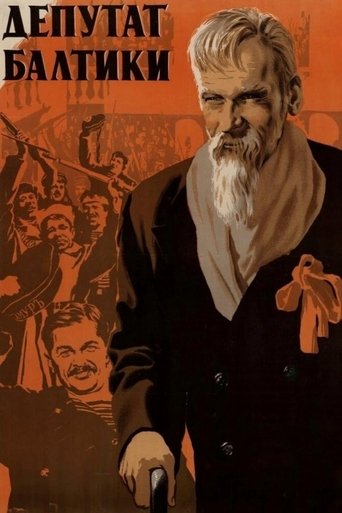
The 1937 film Baltic Deputy is the only title linked here for Mikhail Dubrava. Most notably in the 1937 political drama 'Baltic Deputy.' His career appears to have been brief, with film records indicating only a single credited role in this significant Soviet production. The film itself was a propaganda piece celebrating the Soviet system and the role of scientists in building socialism, directed by Iosif Kheifits and Aleksandr Zarkhi. Dubrava was part of the ensemble cast that supported lead actor Nikolai Cherkasov, who played Professor Dmitri Illarionovich Polezhaev. His appearance in this film came during a crucial period in Soviet cinema when artistic expression was heavily controlled by state authorities, and films served as vehicles for socialist ideology. Unfortunately, detailed records about Dubrava's life, training, or other potential work appear to have been lost to history, which was not uncommon for supporting actors of this era.
The Craft
Milestones
- Appeared in the Soviet propaganda film 'Baltic Deputy' (1937)
Best Known For
Iconic Roles
Must-See Films
Working Relationships
Worked Often With
Studios
Why They Matter
Impact on Culture
Mikhail Dubrava's contribution to cinema, while minimal in scope, represents the collective effort of hundreds of Soviet actors who participated in the state-controlled film industry of the 1930s. His appearance in 'Baltic Deputy' places him within the broader context of Soviet propaganda cinema, which played a crucial role in shaping public opinion and promoting socialist values during Stalin's rule. Even minor roles in these films were significant as they helped create the illusion of a unified, thriving Soviet society. The film itself was part of a larger cultural project that celebrated scientific achievement within the socialist framework, and every actor, regardless of the size of their role, contributed to this ideological narrative.
Lasting Legacy
Mikhail Dubrava's legacy is primarily preserved through his participation in 'Baltic Deputy,' a film that has become historically significant as an example of Soviet cinema from the late 1930s. While his individual contribution may have been small, he remains part of the historical record of Soviet filmmaking during one of its most politically charged periods. The film itself continues to be studied by film historians and scholars of Soviet culture, ensuring that even the smallest participants are remembered as part of this important cinematic and historical document.
Who They Inspired
As a supporting actor with only one known film credit, Mikhail Dubrava's direct influence on other actors or filmmakers appears to have been minimal. However, like all actors who worked within the Soviet system, he contributed to the development of a distinctive style of socialist realism in film that would influence cinema throughout the Eastern Bloc for decades to come.
Off Screen
Very little is documented about Mikhail Dubrava's personal life, which was typical for many supporting actors in Soviet cinema of the 1930s whose records were not extensively preserved.
Did You Know?
- 'Baltic Deputy' was
- The film celebrated Soviet scientists and their contribution to building socialism
- Lead actor Nikolai Cherkasov would later become one of the Soviet Union's most celebrated performers
- The film was directed by the duo Iosif Kheifits and Aleksandr Zarkhi, who were prominent Soviet directors
- 1937 was also the year of the Great Purge, making it a dangerous time for Soviet artists
- The film's title character was based on real Soviet scientists of the period
- Soviet cinema of this era was heavily subsidized by the state and served as propaganda
- Many Soviet actors from this period had their careers cut short by political persecution
Frequently Asked Questions
Who was Mikhail Dubrava?
Soviet with credits in this catalog.' His career appears to have been brief, with this being his only documented film role.
What films is Mikhail Dubrava best known for?
Titles linked here include Baltic Deputy (1937).
When was Mikhail Dubrava born and when did he die?
Specific birth and death dates for Mikhail Dubrava are not documented in available historical records, which was common for supporting actors in Soviet cinema of this period.
What awards did Mikhail Dubrava win?
There are no documented awards or nominations for Mikhail Dubrava, which is not unusual for actors who had brief careers or minor roles in Soviet cinema of the 1930s.
What was Mikhail Dubrava's acting style?
Due to limited documentation and only one known film appearance, Mikhail Dubrava's specific acting style cannot be definitively determined from available historical records.