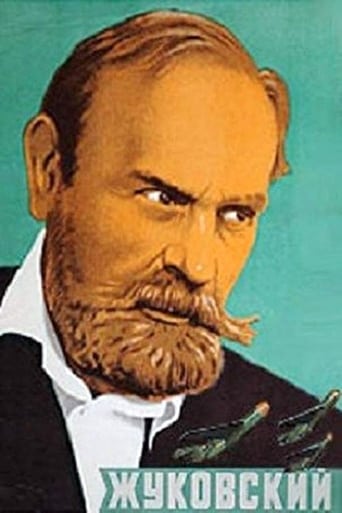
Ilya Sudakov
Actor
Born: October 10, 1890 in Moscow, Russian Empire Died: December 15, 1969 Active: 1910s-1960s Birth Name: Ilya Yakovlevich Sudakov
Films
1 film
About Ilya Sudakov
Made significant contributions to both theater and cinema during the early-to-mid 20th century. Born in 1890, he began his career in the theater world before transitioning to film, where he became known for his powerful performances and directorial vision. Sudakov was closely associated with the Moscow Art Theatre, one of Russia's most prestigious theatrical institutions, where he developed his craft under the influence of Konstantin Stanislavski's revolutionary acting methods. His film career, while not as extensive as his theatrical work, included memorable performances that showcased his deep understanding of character and emotion. In 1950, he appeared in the biographical film 'Zhukovsky,' which focused on the life of the famous Russian scientist Nikolai Zhukovsky. Throughout his career, Sudakov was respected for his dedication to realistic acting and his ability to bring complex characters to life on both stage and screen. His influence extended beyond his own performances, as he also mentored younger actors and contributed to the development of Soviet theatrical and cinematic arts.
The Craft
On Screen
Realistic and psychologically deep, influenced by Stanislavski's system, with emphasis on emotional authenticity and detailed character development
Milestones
- Graduated from Moscow Art Theatre School
- Became leading actor at Moscow Art Theatre
- Directed numerous theatrical productions
- Transitioned successfully to film acting
- Mentored generations of Soviet actors
Best Known For
Iconic Roles
Must-See Films
Accolades
Won
- People's Artist of the RSFSR
- Order of the Red Banner of Labour
- Stalin Prize (multiple nominations)
Nominated
- Stalin Prize for theatrical achievements
Special Recognition
- People's Artist of the RSFSR (1945)
- Honored Artist of the RSFSR (1933)
Working Relationships
Worked Often With
Studios
Why They Matter
Impact on Culture
Ilya Sudakov played a crucial role in preserving and developing the traditions of the Moscow Art Theatre during the Soviet era. His work helped maintain the high artistic standards of Russian theater during periods of political and social change. As both an actor and director, he contributed to the training of multiple generations of Soviet performers, ensuring the continuation of realistic acting techniques. His transition from stage to screen helped bridge the gap between theatrical and cinematic arts in Soviet culture.
Lasting Legacy
Sudakov's legacy lives on through the countless actors he trained and influenced during his decades at the Moscow Art Theatre. His dedication to psychological realism and authentic performance helped shape Soviet acting standards for much of the 20th century. His work exemplified the integration of theatrical tradition with modern cinematic techniques, influencing how Soviet actors approached film performances.
Who They Inspired
Sudakov influenced Soviet acting through his teaching at the Moscow Art Theatre School and his directorial work. His approach to character development and emotional authenticity became a model for subsequent generations of Soviet performers. His success in both theater and film demonstrated the versatility of classical training in modern media.
Off Screen
Ilya Sudakov was deeply committed to his artistic career and the Moscow Art Theatre, which became his life's work. He was known for his dedication to theatrical education and the development of new talent in Soviet performing arts. His personal life was largely dedicated to his craft, and he maintained relationships within the theatrical community throughout his life.
Education
Moscow Art Theatre School (graduated in early 1910s)
Family
- Information not widely documented
Did You Know?
- Was one of the few actors to successfully transition from silent theater to sound film
- Studied directly under Konstantin Stanislavski
- Survived the political purges of the 1930s that affected many Soviet artists
- His performance style was known for its subtlety and psychological depth
- Directed over 50 theatrical productions during his career
- Was considered one of the leading interpreters of classical Russian drama
- His film career was relatively brief compared to his extensive theatrical work
- Mentored actors who would later become Soviet film stars
- Maintained the artistic integrity of Moscow Art Theatre during politically challenging times
- His approach to acting emphasized internal preparation over external technique
In Their Own Words
The actor must not play the character, he must become the character
Truth in art is not about what is shown, but what is felt
The stage is not a platform for display, but a laboratory for human experience
Frequently Asked Questions
Who was Ilya Sudakov?
Soviet actor and on YTB.my. He was a prominent figure in Soviet performing arts who helped maintain theatrical traditions during the Soviet era.
What films is Ilya Sudakov best known for?
Titles linked here include Zhukovsky (1950).
When was Ilya Sudakov born and when did he die?
Born October 10, 1890; died December 15, 1969.
What awards did Ilya Sudakov win?
Sudakov received several prestigious honors including the title of People's Artist of the RSFSR (1945), Honored Artist of the RSFSR (1933), the Order of the Red Banner of Labour, and multiple nominations for the Stalin Prize for his contributions to Soviet theater and cinema.
What was Ilya Sudakov's acting style?
Sudakov's acting style was deeply rooted in the Stanislavski system, emphasizing psychological realism, emotional authenticity, and detailed character development. He was known for his subtle, nuanced performances that prioritized internal truth over external display.
How did Ilya Sudakov influence Soviet cinema?
Sudakov influenced Soviet cinema primarily through his training of actors who would become film stars and by demonstrating how classical theatrical techniques could be adapted for the screen. His work helped bridge the gap between theater and film in Soviet artistic culture.