Films
2 films
About Aleksandr Kulakov
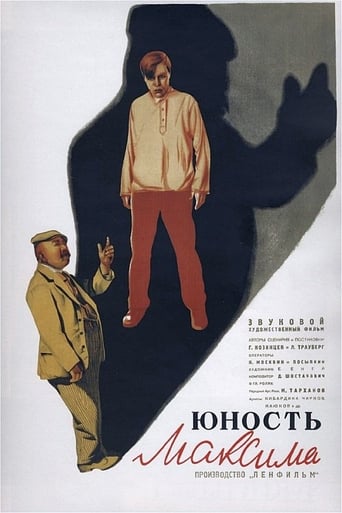
The 1935 film The Youth of Maxim is the only title linked here for Aleksandr Kulakov. Most notably in the 1935 film 'The Youth of Maxim' (Юность Максима), the first installment of the acclaimed Maxim trilogy directed by Grigori Kozintsev and Leonid Trauberg. His brief film career appears to have been confined to the year 1935, suggesting he may have been a character actor or someone who transitioned out of the film industry quickly. The film in which he appeared was significant in Soviet cinema as it portrayed the revolutionary transformation of a young factory worker, reflecting the ideological narratives favored during this period. Kulakov's participation in this production places him within the important movement of Soviet socialist realism cinema that emerged in the 1930s. Despite the limited scope of his filmography, his involvement in such a historically significant work connects him to the golden era of Soviet filmmaking. The Maxim trilogy became film series in Soviet cinema history, though Kulakov's specific role remains less documented than those of the principal cast members.
The Craft
Milestones
- Appeared in 'The Youth of Maxim' (1935), the first film in the acclaimed Maxim trilogy
Best Known For
Must-See Films
Working Relationships
Worked Often With
Studios
Why They Matter
Impact on Culture
While Aleksandr Kulakov's individual impact on cinema was limited due to his brief career, his participation in 'The Youth of Maxim' connects him to a significant movement in Soviet film history. The Maxim trilogy was instrumental in establishing the conventions of socialist realism in cinema and became widely known. The films helped shape the narrative of revolutionary heroism that dominated Soviet cultural production during the Stalin era. Kulakov, as a participant in this landmark production, contributed to the creation of cinematic works that would influence generations of Soviet filmmakers and actors.
Lasting Legacy
Aleksandr Kulakov's legacy is primarily tied to his involvement in one of Soviet cinema's most important film series. While he may not have achieved lasting fame as an individual actor, his contribution to 'The Youth of Maxim' places him within the historical context of early Soviet cinema's development. The film itself has endured as a classic of the socialist realist genre and continues to be studied by film historians and scholars interested in Soviet cultural history. Kulakov represents the many character actors and supporting performers who were essential to creating the Soviet cinema during its formative years, even if their individual names have been largely forgotten by time.
Who They Inspired
Given the brief nature of his film career, there is no documented evidence of Aleksandr Kulakov directly influencing other actors or filmmakers. However, his participation in the Maxim trilogy means he was part of a production that would go on to influence numerous Soviet filmmakers in their approach to depicting revolutionary themes and working-class heroes. The trilogy's directorial style and narrative techniques became influential in Soviet cinema, though Kulakov's personal influence on other artists remains undocumented.
Off Screen
Very little is documented about Aleksandr Kulakov's personal life, which is not uncommon for character actors from early Soviet cinema who had brief careers and minor roles.
Did You Know?
- Appeared in 'The Youth of Maxim' (1935), which was the first film in a trilogy about a revolutionary factory worker
- The film was directed by the acclaimed duo Grigori Kozintsev and Leonid Trauberg
- The Maxim trilogy is considered
- 1935 was a significant year in Soviet cinema, marking the establishment of socialist realism as the official artistic style
- The film was produced by Lenfilm, one of the major Soviet film studios based in Leningrad
- His film career appears to have lasted only one year, suggesting he may have been a character actor or someone who left the industry quickly
- The Youth of Maxim was part of a cultural effort to create heroic narratives about the Russian Revolution
- The film's success led to two sequels: 'The Return of Maxim' (1937) and 'The Vyborg Side' (1939)
Frequently Asked Questions
Who was Aleksandr Kulakov?
Screen credits include the 1935 film 'The Youth of Maxim,' the first installment of the acclaimed Maxim trilogy. His film career appears to have been brief, confined to the year 1935, suggesting he was likely a character actor in Soviet cinema during the early Stalinist period.
What films is Aleksandr Kulakov best known for?
Titles linked here include The Youth of Maxim (1935).
When was Aleksandr Kulakov born and when did he die?
Specific birth and death dates for Aleksandr Kulakov are not documented in available historical records, which is not uncommon for supporting actors from early Soviet cinema who had brief careers.
What awards did Aleksandr Kulakov win?
There are no documented awards or nominations for Aleksandr Kulakov, which is typical for character actors with limited filmographies in early Soviet cinema.
What was Aleksandr Kulakov's acting style?
Specific details about Aleksandr Kulakov's acting style are not documented in available sources. As an actor in a socialist realist film, he would have worked within the conventions of that style, which emphasized clear character types and ideological clarity.
Why is 'The Youth of Maxim' significant in cinema history?
'The Youth of Maxim' is significant as it helped establish the conventions of socialist realism in Soviet cinema and became the first film in. The film was instrumental in creating the narrative of revolutionary heroism that dominated Soviet cultural production.