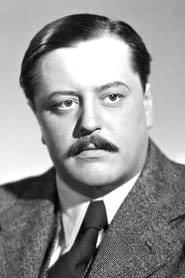
Paul Dahlke
Actor
- Born
- April 12, 1904, Gross Streitz, Pomerania, Imperial Germany (now Strzeżenice, Poland)
- Died
- November 23, 1984
- Active
- 1929-1984
- Birth name
- Paul Victor Ernst Dahlke
Films 1
About Paul Dahlke
Paul Dahlke was a towering figure in German theater and cinema, whose career spanned over five decades and survived multiple political eras. Born in Pomerania, he initially pursued studies in mining and engineering before a passion for the arts led him to the Max Reinhardt Seminar in Berlin in 1927. He quickly established himself as a formidable stage presence at the Deutsches Theater, where he became an ensemble member in 1934 and remained until the theaters were closed in 1944. During the Third Reich, he was a prolific film actor, often cast in robust, energetic roles or as simple-minded characters, though he also appeared in state-sponsored propaganda like 'Venus on Trial' (1941). Despite his prominence during this period, he successfully transitioned into post-war cinema, becoming one of West Germany's most beloved character actors. In the 1950s and 60s, he was frequently seen as a warm yet firm patriarch or in witty comedies directed by Kurt Hoffmann. His later years were defined by significant television work and a prolific career as a dubbing artist, providing the German voice for international stars like Charles Laughton and Vincent Price.
More about Paul Dahlke
On screen
Dahlke was known for his robust, stocky physical presence and a versatile acting range that allowed him to portray both quick-tempered, energetic figures and phlegmatic, simple-minded souls. He possessed a distinctive, resonant voice that made him a natural for the stage and a sought-after dubbing artist. His performances often balanced a sense of authority with a hidden sensitivity, making him ideal for roles as patriarchs, professors, or high-ranking officials.
Impact on culture
Dahlke served as a bridge between the classical theatrical traditions of the Weimar Republic and the commercial cinema of post-war West Germany. His ability to maintain a high level of artistic integrity while appearing in popular 'Heimat' films helped stabilize the German film industry during its reconstruction. He was a familiar face to generations of Germans, representing a reliable, fatherly figure in the collective cultural consciousness of the 1950s.
Lasting legacy
His legacy is defined by his immense versatility and his status as one of the most prolific character actors in German history. He is remembered not only for his film roles but as a master of the German language through his extensive work in radio plays and as the definitive German voice for Charles Laughton. His grave in Grundlsee remains a site of interest for historians of German cinema.
Who they inspired
He influenced a generation of German character actors through his disciplined approach to the 'Staatsschauspieler' tradition, emphasizing vocal clarity and physical presence. His transition from propaganda-era films to post-war success served as a template for many actors of his generation navigating the complex political landscape of 20th-century Germany.
Off screen
Paul Dahlke was the son of a teacher and grew up in a strict household, which he later credited with instilling his professional discipline. He was married to the actress Elfe Gerhart from 1948 until his death. The couple lived for many years in Grundlsee, Austria, where Dahlke was eventually buried.
Education
Studied mining at the Bergakademie Clausthal and engineering at the Technische Hochschule Berlin-Charlottenburg; trained in acting at the Max Reinhardt Seminar (1927-1928).
Career milestones
- Named Staatsschauspieler (State Actor) in 1937, the highest honor for an actor in Germany at the time
- Long-term ensemble member of the Deutsches Theater Berlin (1934-1944)
- Starred in the critically acclaimed 'Romance in a Minor Key' (1943) directed by Helmut Käutner
- Became a staple of post-war German 'Heimat' and comedy films in the 1950s
- Awarded the Filmband in Gold for his lifetime contributions to German cinema in 1974
- Received the Great Cross of Merit of the Federal Republic of Germany in 1979
Iconic roles
- Gottlieb Böller in Venus on Trial (1941)
- Ruprecht in The Broken Jug (1937)
- Professor Higgins in Pygmalion (Stage)
- Harras in Des Teufels General (Stage)
- Justus in Das fliegende Klassenzimmer (1954)
- The Governor in Liebe, Tod und Teufel (1934)
Must-see films
- The Broken Jug (1937)
- Venus on Trial (1941)
- Romance in a Minor Key (1943)
- The Flying Classroom (1954)
- Confessions of Felix Krull (1957)
- Three Men in the Snow (1955)
Awards
- Filmband in Gold (1974) for Lifetime Achievement
- Great Cross of Merit of the Federal Republic of Germany (1979)
- Culture Award of the Pomeranian Landsmannschaft (1966)
Nominations
- Staatsschauspieler (Honorary Title, 1937)
Special recognition
- Staatsschauspieler (1937)
- Great Cross of Merit (1979)
Worked often with
- Helmut Käutner
- Kurt Hoffmann
- Emil Jannings
- Hansi Knoteck
Studios
- UFA
- Bavaria Film
- Terra Film
Family
- Elfe Gerhart (1948-1984)
Did you know?
- He lost a part of his left ear during a 'Mensur' (academic fencing duel) while a member of a student fraternity in Clausthal.
- Before becoming an actor, he worked in a coal mine in Dorstfeld to support his studies.
- He was the primary German dubbing voice for Charles Laughton, most notably in 'Witness for the Prosecution'.
- Dahlke was an accomplished amateur painter and wood sculptor in his private life.
- Despite his success in film, he always considered himself a stage actor first, performing in over 100 theatrical productions.
- He was a member of the 'Burschenschaft Schlägel und Eisen', a traditional German student fraternity.
In their own words
In Streitz an der Ostsee bin ich geboren... Dieses Lehrerhaus war mein Vaterhaus. (On his humble beginnings in Pomerania)
I didn't choose acting; it was a small step that felt like a leap into a new world. (On his career change from engineering)
Questions and answers
Who was Paul Dahlke?
Paul Dahlke was a prominent German stage and film actor known for his versatile career spanning from the 1930s to the 1980s. He was a celebrated character actor in both the Third Reich and post-war West Germany.
What films is Paul Dahlke best known for?
He is best known for 'The Broken Jug' (1937), the propaganda film 'Venus on Trial' (1941), the poetic realist 'Romance in a Minor Key' (1943), and the 1954 adaptation of 'The Flying Classroom'.
When was Paul Dahlke born and when did he die?
He was born on April 12, 1904, in Gross Streitz, Pomerania, and died on November 23, 1984, in Salzburg, Austria.
What awards did Paul Dahlke win?
His major awards include the Filmband in Gold (1974) for lifetime achievement and the Great Cross of Merit of the Federal Republic of Germany (1979).
What was Paul Dahlke's acting style?
He was known for a robust and energetic style, often playing authoritative patriarchs or simple-hearted characters with a distinctive, powerful voice.