Films
1 film
About Olev Tinn
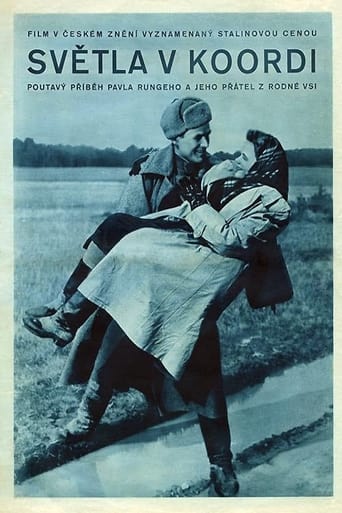
Estonian actor: brief but notable career was primarily centered in the Estonian film industry during the Soviet era. He is best known for his role in the 1951 film 'Valgus Koordis' (Light Over Koordi), a significant production from Tallinna Kinostuudio that reflected the socialist realist aesthetic prevalent at the time. Tinn's work, though limited to this single credited film role, contributed to the cultural landscape of post-war Estonian cinema, which was heavily influenced by Soviet ideological directives. His performance in 'Light Over Koordi' was part of a broader effort to promote collectivization and the virtues of collective farming, themes that were central to Soviet propaganda films of the period. Despite the brevity of his documented filmography, Tinn's involvement in this key historical film places him within the context of Estonian actors who navigated the complex political and artistic demands of their time. Little is known about his broader career, which may have included stage work or other uncredited film roles, as was common for actors in the Soviet bloc. His legacy remains tied to this specific cinematic work, which serves as a valuable artifact of its era.
The Craft
Milestones
- Starred in the significant Estonian feature film 'Light Over Koordi' (1951)
Best Known For
Iconic Roles
Must-See Films
Working Relationships
Studios
Why They Matter
Impact on Culture
Olev Tinn's cultural impact is intrinsically linked to his role in 'Light Over Koordi,' a film that serves as a historical document of the Soviet-era Estonian cinema. The film itself was a product of its time, designed to promote collectivization and socialist ideals, and Tinn's participation placed him within the state-sanctioned artistic movement. While not a major star, his contribution adds to the understanding of how local Estonian talent was utilized in the creation of politically motivated cinema. His work provides a window into the lives of working actors who operated under the strict cultural policies of the Soviet Union, where art was a tool for ideology.
Lasting Legacy
The legacy of Olev Tinn is that of a representative figure of mid-20th century Estonian actors whose careers were shaped by the political realities of the Soviet era. His single credited film role ensures his place in the annals of Estonian film history, however minor it may be. For film historians and enthusiasts, Tinn represents the countless supporting actors who were essential to the functioning of national film industries but whose individual stories have often been lost to time. His legacy is preserved through the archival status of 'Light Over Koordi,' which continues to be studied for its artistic, political, and historical significance.
Who They Inspired
Due to the limited scope of his documented career, there is no available information on Olev Tinn's direct influence on other actors or filmmakers. His influence is more accurately understood as part of the collective contribution of his generation to the Estonian cultural sphere under Soviet rule. The actors in these state-produced films, by their participation, helped establish a cinematic language and tradition that subsequent Estonian filmmakers would later react to and redefine, especially after the re-establishment of independence.
Off Screen
Details about Olev Tinn's personal life are not widely documented in available historical or cinematic records. His life spanned a transformative and often tumultuous period in Estonian history, encompassing the interwar independence, the Soviet and German occupations during World War II, and the subsequent incorporation into the Soviet Union. Like many artists of his generation, his personal experiences were deeply intertwined with the major political and social upheavals of the 20th century in the Baltic region.
Did You Know?
- His entire documented film career consists of a single film, 'Light Over Koordi', released in 1951.
- The film he starred in, 'Light Over Koordi', is also known by the title 'Light on the Farm' in some English-language references.
- Tinn's career was active during the Stalinist era, a period of intense political and artistic control in the USSR.
- He worked with Tallinna Kinostuudio, the primary state-run film studio in Soviet Estonia.
- Very little personal information about him is available in international film databases, highlighting the often obscured histories of actors from smaller national cinemas during the Soviet period.
- His birth year is cited as 1910, meaning he was 41 years old at the time of his only known film appearance.
- The film he starred in was a drama focused on the ideological struggle between individual farmers and the push for collectivization.
Frequently Asked Questions
Who was Olev Tinn?
Estonian with credits in this catalog. His documented film career is limited to this single production, making him a minor but recorded figure in the history of Estonian cinema.
What films is Olev Tinn best known for?
Titles linked here include Light Over Koordi (1951).
When was Olev Tinn born and when did he die?
Born 1910; died 1975.
What awards did Olev Tinn win?
There are no records of Olev Tinn receiving any major awards or nominations for his acting work. His recognition is primarily historical, for his participation in a notable Estonian film from the Soviet era.
What was Olev Tinn's acting style?
Specific details about Olev Tinn's acting style are not well-documented. However, based on the film he appeared in, his performance would have been within the conventions of Socialist Realism, the official artistic style of the Soviet Union, which emphasized clear, heroic, and ideologically sound characterizations.