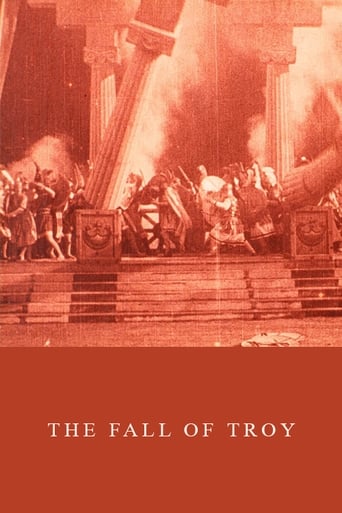
Films
1 film
About Giulio Vinà
Italian actor who worked during the era of silent cinema, specifically active in 1911. His career appears to have been brief but significant during the formative years of Italian filmmaking, when the country was establishing itself as a major force in global cinema production. Vinà participated in 'The Fall of Troy' (1911), one of the early Italian epic spectacles that showcased the country's ambition to create grand historical and mythological narratives on screen. This period saw Italian filmmakers pushing the boundaries of cinematic technology and storytelling, with elaborate sets, large casts, and ambitious productions that rivaled those of other European nations. While detailed records of Vinà's complete filmography are scarce, his involvement in such a notable production suggests he was part of the emerging professional acting community in early Italian cinema. The brevity of his documented career (1911 only) was not uncommon for actors of this era, as many appeared in only a handful of films before either transitioning to other professions or being lost to incomplete historical records. His contribution, though small in scope, represents the collective effort of countless performers who helped establish the foundation of cinematic art during its most experimental decade.
The Craft
On Screen
Like most actors of the early silent era, Vinà likely employed exaggerated gestures and facial expressions typical of pre-1915 cinema, when acting techniques were still heavily influenced by stage traditions and the need to convey emotion without dialogue
Milestones
- Appeared in 'The Fall of Troy' (1911), an early Italian epic silent film
- Participated in the era of Italian cinema during its golden age of silent epics
Best Known For
Iconic Roles
Must-See Films
Working Relationships
Worked Often With
Studios
Why They Matter
Impact on Culture
Giulio Vinà represents the countless anonymous performers who contributed to the birth of cinema as an art form. During the early 1910s, Italian cinema was experiencing what would later be recognized as its first golden age, producing spectacular epics that amazed international audiences. Actors like Vinà, even those with brief careers, were essential components of these productions that helped establish cinematic language and techniques. Their work in mythological and historical spectacles helped prove that film could handle complex narratives and grand visual scope, paving the way for the feature film format that would dominate cinema in subsequent decades. The preservation of their names in cast lists, however brief their filmographies, ensures recognition of the collaborative nature of early filmmaking.
Lasting Legacy
While Giulio Vinà's individual legacy may be limited to his appearance in 'The Fall of Troy,' his contribution is part of the broader legacy of early Italian cinema pioneers. The film itself represents an important milestone in cinematic history, showcasing the ambition and technical prowess of Italian filmmakers during the silent era. Vinà's name, preserved in historical film records, shows the many actors who participated in cinema's formative years, often without recognition or lasting fame. His brief career exemplifies the transient nature of early film stardom, where many performers appeared in only a few productions before fading from historical record, yet their collective work laid the groundwork for the film industry that would follow.
Who They Inspired
As an actor with such a brief documented career, Giulio Vinà's direct influence on subsequent performers is difficult to trace. However, as part of the cast of an early Italian epic, he contributed to the development of acting techniques for the silent screen that would evolve throughout the 1910s. The grand, theatrical style prevalent in 1911 would gradually give way to more naturalistic performances, but early performers like Vinà were essential in establishing the basic vocabulary of film acting. Their work in mythological subjects helped establish conventions for portraying historical and characters that would influence cinema for decades.
Off Screen
Very little is documented about Giulio Vinà's personal life, which was common for many actors who worked in the earliest days of cinema. Like many performers from this period, detailed biographical information was not systematically preserved, and many actors from working-class backgrounds who entered the fledgling film industry left few personal records behind.
Did You Know?
- 'The Fall of Troy' (1911) was part of a wave of Italian historical and mythological epics that dominated international cinema before World War I
- Early Italian films like 'The Fall of Troy' were often very long by contemporary standards, sometimes running over an hour
- 1911 was the year of the 50th anniversary of Italian unification, which sparked increased cultural production including films
- Many actors from this period had stage backgrounds and brought theatrical techniques to their film performances
- The complete cast list of many early Italian films has been lost to time, making Vinà's documented appearance relatively rare
- Italian cinema of 1911 was among the most technically advanced in the world, with sophisticated camera movements and special effects
- Early film actors often worked anonymously or under pseudonyms, making complete identification difficult for historians
Frequently Asked Questions
Who was Giulio Vinà?
Italian with credits in this catalog. His career appears to have been brief, with his only documented film work occurring in 1911 during the early golden age of Italian cinema.
What films is Giulio Vinà best known for?
Titles linked here include The Fall of Troy (1911).
When was Giulio Vinà born and when did he die?
Specific birth and death dates for Giulio Vinà are not documented in available historical records, which is common for many actors who worked in the very early days of cinema before systematic record-keeping became standard in the film industry.
What awards did Giulio Vinà win?
No awards or honors for Giulio Vinà are documented in available records. The formal award systems for cinema, such as the Academy Awards, were not established until many years after his brief career in 1911.
What was Giulio Vinà's acting style?
Like most actors of the 1911 silent era, Giulio Vinà likely employed the theatrical, exaggerated acting style common in early cinema, which emphasized broad gestures and expressive facial features to convey emotion without dialogue, before the development of more naturalistic film acting techniques.