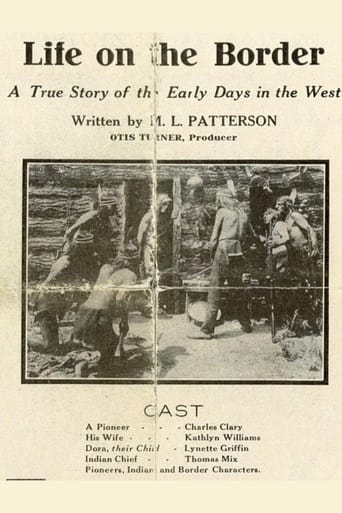
Lynette Griffin
Actor
- Active
- 1912-1912
Films 1
About Lynette Griffin
Lynette Griffin is a little-documented silent-era screen performer credited with appearing in the 1912 film Life on the Border. Available historical records on early American cinema preserve her primarily through cast listings rather than biographical profiles, which suggests she was one of the many working actors whose careers were briefly recorded in the earliest years of the film industry. Because surviving contemporary documentation is sparse, little can be stated with confidence about her training, later life, or whether she continued acting after 1912. Her surviving screen presence belongs to the formative period when short subjects, frontier stories, and one-reel dramas were central to the developing American cinema repertoire. Like many performers of the era, she appears to have worked in a production environment where credits were often inconsistent and performers frequently went unpublicized. Her name remains of historical interest mainly to silent-film researchers and database compilers seeking to reconstruct the earliest cast rosters. No reliable evidence has surfaced in standard reference sources to confirm a broader career arc, personal biography, or later appearances beyond this early credit.
More about Lynette Griffin
In film history
Lynette Griffin's cultural impact lies less in a body of well-documented performances than in what her surviving credit represents: the thousands of early film workers whose contributions helped establish cinematic storytelling in the United States. Early silent film depended on a large and often unheralded pool of actors, and Griffin is part of that foundational generation whose names sometimes survive only in cast records. Her presence in an early frontier picture also reflects the popularity of Western and borderland narratives that helped define American screen mythology in the 1910s. For historians, even a single surviving credit can be valuable evidence of casting practices, production scale, and the kinds of performers employed in the industry’s formative years.
Later reputation
Griffin's legacy is archival rather than celebrity-based: she remains a traceable name in the silent-film record, illustrating both the breadth and the fragility of early cinema documentation. Because many films from the era are lost and many performers were not consistently credited, names like hers are important to preservation work and database reconstruction. She stands as a reminder that the silent era was built not only by major stars and directors, but also by many lesser-known actors whose work has been partially obscured by time. Her documented credit ensures that she remains part of film history, even if the details of her life and career have not survived.
Influence
There is no documented evidence that Lynette Griffin exerted a direct influence on later actors or directors in the conventional sense, nor that she held a prominent industry position as a mentor or stylistic innovator. Her influence is indirect and historical: she contributes to the surviving record of early screen acting at a time when the medium was still defining its conventions. In that broader sense, she is part of the collective body of performers whose work helped normalize acting for the camera in short-form silent cinema.
Off screen
No reliable biographical information about Lynette Griffin's personal life has been located in standard classic-cinema reference sources. Her family background, marital status, residence, education, and later life are not documented in the surviving materials commonly used to reconstruct silent-era careers. As a result, any claims about her private life would be speculative and are best left unasserted until primary-source evidence is discovered.
Credits
- Credited appearance in the silent-era film Life on the Border (1912)
- Participation in one of the earliest years of commercial screen production in the United States
- Presence in early frontier-themed cinema, a popular subject in the 1910s
- Documented screen work during the transitional period when film credits were still irregular and incomplete
- Historical significance as part of the under-recorded body of early silent-film performers
Films
- Life on the Border (1912)
Notes
- Lynette Griffin is chiefly known today from a single surviving film credit rather than from extensive publicity or press coverage.
- Her documented film Life on the Border dates from 1912, one of the early formative years of American narrative cinema.
- Because silent-era records are often incomplete, it is possible that she appeared in additional productions that have not been securely identified.
- Her name appears in the historical record as part of frontier or border-themed screen storytelling, a popular genre in the 1910s.
- She is an example of how many early film performers remain obscure despite having contributed to cinema's development.
- No standardized biographical entry has yet established her birth and death details with confidence.
- Surviving information about her is limited enough that she is primarily of interest to archivists and silent-film researchers.
Questions
Who was Lynette Griffin?
Lynette Griffin was a silent-era actor known from an early screen credit in Life on the Border (1912). Beyond that, surviving reference material is extremely limited, so she is best understood as one of the many little-documented performers active in the infancy of American cinema.
What films is Lynette Griffin best known for?
She is currently known for Life on the Border (1912), the only reliably identified film credit associated with her in the available record. Additional appearances may have existed, but they are not securely documented in standard sources.
When was Lynette Griffin born and when did she die?
Her birth and death dates are not currently documented in reliable classic-cinema reference sources. The surviving record preserves her name as a film credit, but not enough biographical data to establish those details confidently.
What awards did Lynette Griffin win?
No awards or formal honors are known for Lynette Griffin. This is not unusual for many early silent-era performers, especially those whose careers were brief or poorly documented.
What was Lynette Griffin's acting style?
Her acting style is not documented in surviving criticism or biographies. Since her known work dates from the silent period, any performance would have relied on visual expression, gesture, and physical clarity typical of early screen acting.
What is Lynette Griffin's legacy in film history?
Her legacy is primarily archival: she represents the many early screen actors whose names survive in cast records even when fuller biographies do not. That makes her a small but meaningful part of silent-film history and of efforts to preserve the record of early cinema.