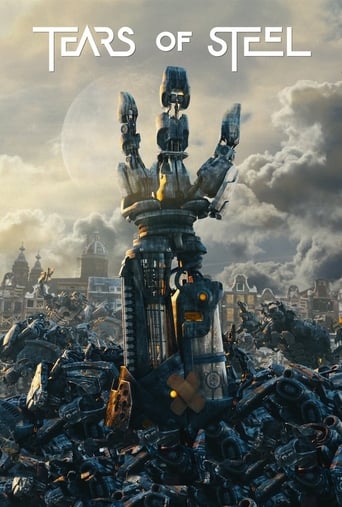

Films
1 film
About Rogier Schippers
Rogier Schippers is a contemporary screen performer best known for appearing in the 2012 science-fiction short film Tears of Steel, a production associated with the Blender Foundation and the open movie project movement rather than with the classic Hollywood or silent-era studio system. Available public information on Schippers is very limited, and he does not appear to have a documented career as a performer across the silent, early sound, or Golden Age periods of cinema. He is therefore best understood as a modern screen actor whose recorded filmography is sparse and centered on a single notable credit. Because authoritative biographical sources about his life, training, and broader career are not readily available, many personal details such as birth date, birthplace, and education cannot be reliably confirmed. There is no evidence from the available record that he maintained a long-running career in theatrical film, radio, or studio-era productions. His significance in cinema databases is primarily tied to the visibility of Tears of Steel as an influential open-source digital filmmaking project. Beyond that, public documentation does not currently provide enough verified detail to reconstruct a fuller biography without risking speculation.
The Craft
On Screen
No reliable, detailed public documentation is available describing Rogier Schippers's acting style, technique, or screen persona. Based on the single known film credit, any assessment would be speculative rather than evidence-based. He is not widely profiled in the historical record in the way classic-era actors were, so there are no verified contemporary reviews or trade-paper accounts outlining a distinctive performance approach.
Milestones
- Appeared in the 2012 open movie Tears of Steel, one of the best-known Blender Foundation showcase productions
- Became part of a widely circulated experimental digital-cinema project that demonstrated high-end visual effects workflows using open tools
- Maintained a documented screen credit in a production that attracted attention from filmmakers, animators, and technology-focused cinema audiences
Best Known For
Iconic Roles
Must-See Films
Working Relationships
Worked Often With
Why They Matter
Impact on Culture
Rogier Schippers's cultural footprint is tied less to stardom than to participation in a landmark open-cinema experiment. Tears of Steel became notable for demonstrating that a small, software-centered production environment could create a polished science-fiction film with professional-level visual effects, practical design, and a coherent dramatic premise. Within that context, Schippers's contribution belongs to the broader culture of digital filmmaking, open-source production, and collaborative media-making that influenced how artists and technicians think about independent visual effects work. While he is not a major figure in classic cinema history, his credit survives in a film that is often cited in discussions of modern production workflows and the democratization of filmmaking tools.
Lasting Legacy
Schippers's legacy, as far as the public record shows, is archival rather than star-driven. He is preserved in filmographies because Tears of Steel remains a frequently referenced title in conversations about open movie initiatives, Blender-powered production, and experimental digital filmmaking. For database purposes, his lasting value lies in documentation of a notable early-2010s media project rather than in a large body of performances or an established classic-cinema career. If future archival sources emerge, they may broaden this picture, but based on currently verifiable information, his legacy is limited to this single credited contribution.
Who They Inspired
There is no verified evidence that Rogier Schippers influenced later actors or directors in a direct, documented sense. Any broader influence would be indirect, through participation in a production that helped showcase open filmmaking methods and advanced digital tools to a wider audience. In that way, his screen credit belongs to a lineage of work that supported experimentation and accessibility in modern independent cinema rather than to a traditional actor's body of influence in studio-era film.
Off Screen
No dependable public biographical information is currently available about Rogier Schippers's personal life, including family background, relationships, residence, or long-term career path. There is no verified public record in the available source base of marriages, children, or personal milestones. Because of the limited documented footprint, it is not possible to provide a reliable narrative of his private life without making unsupported assumptions.
Did You Know?
- His best-known and apparently only widely documented screen credit is in Tears of Steel (2012).
- Tears of Steel is part of the Blender Foundation's open movie project series, which makes it unusual among screen credits because it is closely associated with open-source software development.
- Public biographical details such as birth date, birthplace, and family background are not readily documented in major reference sources.
- He does not appear to have a broad filmography in the public record, making him difficult to profile like a classic Hollywood actor.
- Because his credit is tied to a technology-forward short film, his name is more likely to appear in film-tech and animation contexts than in classic cinema histories.
- No verified awards, nominations, or honor citations are currently associated with his public profile.
- There is no reliable evidence that he used a stage name different from Rogier Schippers.
Frequently Asked Questions
Who was Rogier Schippers?
Rogier Schippers is a screen performer best known for appearing in the 2012 film Tears of Steel. Publicly available information about his broader life and career is very limited, and he does not appear to have a substantial classic-era filmography.
What films is Rogier Schippers best known for?
Titles linked here include Tears of Steel (2012).
When was Rogier Schippers born and when did he die?
His birth date and death date are not publicly documented in the available reference material. He is not known to be a historically documented silent-era or early Hollywood figure, and no reliable biographical data confirms these details.
What awards did Rogier Schippers win?
No awards or official nominations are currently associated with Rogier Schippers in the available record. His prominence comes from participation in a notable digital filmmaking project rather than from an award-heavy acting career.
What was Rogier Schippers's acting style?
There is not enough verified information to define a distinctive acting style. With only limited public documentation of his work, any detailed assessment of technique or persona would be speculative.
What is Rogier Schippers's legacy in film history?
His legacy is primarily archival and tied to Tears of Steel, a landmark open-source filmmaking project. He is remembered as part of a modern digital-cinema experiment rather than as a major classic Hollywood or silent-era personality.
Was Rogier Schippers involved with classic cinema?
No verifiable evidence suggests that he worked in silent-era, early talkie, or Golden Age Hollywood productions. The available record places him in a 2012 contemporary digital film context.