Berta Monnard
Actor
- Active
- 1923-1923
Films 1
About Berta Monnard
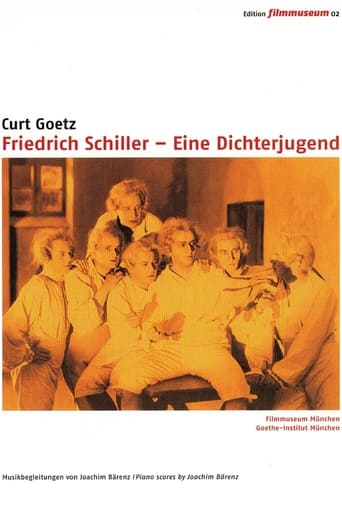
Berta Monnard is a little-documented silent-era film performer whose surviving screen credit places her in the German-language historical biographical film Friedrich Schiller - Eine Dichterjugend (1923). Beyond this single known appearance, publicly accessible reference sources provide very little verifiable information about her life, making her one of many early cinema figures whose careers are partially obscured by incomplete archival preservation. Her participation in a prestige literary subject suggests she worked within the culturally important world of Weimar-era production, where stage-trained and locally known performers were often cast in supporting or ensemble roles. Because no reliable contemporary biographical profile, interview, or later retrospective has been securely identified, many aspects of her career remain undocumented. She appears to have been active at least in 1923, but no further filmography has been confidently confirmed in standard reference materials available to this database. As a result, her historical significance lies less in a large surviving body of work than in representing the many early cinema contributors whose names endure even when their full careers do not. Any deeper reconstruction of her life would require archival research in German film periodicals, studio records, or regional theater sources.
More about Berta Monnard
In film history
Berta Monnard's cultural impact is best understood through the broader historical context of early German cinema rather than through a large surviving body of work. Her known appearance in a literary prestige film connects her to the Weimar-era tendency to adapt major cultural figures and national classics for the screen, helping cinema establish itself as an art form worthy of serious literary subjects. Even when performers like Monnard are not widely documented, their credited presence in such productions contributed to the texture of silent-era filmmaking and to the labor of ensemble performance that supported star and director recognition. For modern film historians, she is also significant as an example of how many silent-era actors remain only partially visible in the historical record due to incomplete archival survival, lost prints, and sparse trade-paper coverage.
Later reputation
Berta Monnard's legacy is primarily archival and historical. She stands as part of the immense population of early film actors whose names survive in cast lists even when biographies, photographs, and critical commentary have not. Her known credit in a film about Friedrich Schiller places her within a tradition of culturally ambitious German cinema that sought to merge national literature, biography, and visual storytelling. For databases, archives, and historians, preserving her name helps maintain a fuller and more accurate account of silent-era production networks, especially the supporting performers who made prestige films possible. Her legacy therefore lies in representation: she reminds researchers how much of early cinema history remains to be recovered, verified, and contextualized.
Influence
No direct influence on later actors or directors can be securely documented from currently available sources. However, by participating in early German historical cinema, she was part of the performance culture that helped normalize restrained, expressive acting for the silent screen and supported the evolution of serious literary filmmaking. Her presence in the record contributes indirectly to historical understanding of casting practices and the ecosystem of lesser-known performers in the Weimar period. Any claim of specific influence would be speculative without additional archival evidence.
Off screen
No reliable public information has been confirmed about Berta Monnard's personal life, family background, marriage, or residence. Standard film reference sources do not presently provide verifiable details about her relationships, household, or later years. Because of that, any biographical reconstruction would be speculative, and no unsupported claims are included here.
Credits
- Appeared in the 1923 silent German production Friedrich Schiller - Eine Dichterjugend
- Worked during the early Weimar-era period of German cinema, when literary and historical subjects were prominent
- Represents an early screen performer whose surviving credit has been preserved in film databases despite limited biographical documentation
Roles
- Role in Friedrich Schiller - Eine Dichterjugend (1923)
Films
Notes
- Berta Monnard is known in surviving reference material for only one confirmed screen credit.
- Her documented film appearance is in a German-language silent film from 1923.
- The title Friedrich Schiller - Eine Dichterjugend places her in a film about the youth of a major German literary figure.
- She is an example of the many early cinema performers whose careers are only fragmentarily preserved.
- No verified portrait, interview, or later biography has been securely identified in standard sources.
- Her surviving credit suggests she worked during the culturally rich Weimar Republic film era.
- Because of the sparse record, it is unclear whether she was also active on stage or in other films.
Questions
Who was Berta Monnard?
Berta Monnard was a little-documented silent-era actor known from surviving film reference records for appearing in Friedrich Schiller - Eine Dichterjugend (1923). Very little verified biographical information has survived about her life or broader career. She is remembered mainly as one of the many early film performers whose names remain in cast lists even when fuller histories are lost.
What films is Berta Monnard best known for?
She is currently best known for Friedrich Schiller - Eine Dichterjugend (1923), the only confirmed credit readily available in standard reference material. No additional film appearances have been securely verified from accessible sources. If further work exists, it likely requires archival research in period trade publications or studio records.
When was Berta Monnard born and when did she die?
Her birth and death dates are not presently confirmed in reliable public sources. The available record is too sparse to establish her place of birth, nationality, or later life with confidence. As a result, both dates must be treated as unknown unless new archival evidence is found.
What awards did Berta Monnard win?
No awards or nominations are currently documented for Berta Monnard in the surviving reference record. This is not unusual for early silent-era performers, especially those whose credits were limited or whose careers were not extensively covered by the press. Her historical importance lies more in her screen credit than in formal honors.
What was Berta Monnard's acting style?
Her individual acting style cannot be reliably described from the surviving evidence, since no performance analysis, reviews, or detailed visual documentation have been confirmed. Given the era and the type of film in which she appeared, she likely worked within the expressive but controlled conventions of silent-era screen acting. Any more specific assessment would be speculative.
Why is Berta Monnard still of interest to film historians?
She is of interest because early cinema history is often reconstructed from incomplete records, and every preserved name helps clarify the production landscape of the period. Her credit in a 1923 German film places her within Weimar-era cultural filmmaking, which is an important chapter in world cinema. Preserving her entry helps ensure that lesser-known contributors are not lost to film history.