
Films
2 films
About Ivan Nikitchenko
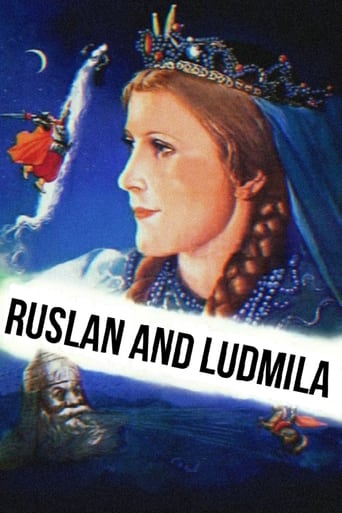
Soviet film director active during the late 1930s and 1940s, a period of significant development in Soviet cinema. He is best known for co-directing the 1939 film 'Ruslan and Ludmila,' an ambitious adaptation of Alexander Pushkin's celebrated narrative poem, which was notable for being one of the first Soviet color films produced using a three-color process. His collaboration with Viktor Nevezhin on this project demonstrated his ability to handle large-scale literary adaptations during the Stalinist era when such productions were heavily scrutinized. Following his work on this fantasy epic, Nikitchenko transitioned to documentary and technical filmmaking, as evidenced by his 1946 film 'Optical Relays,' which focused on scientific and technological subjects. His the critical period of World War II and its aftermath, reflecting the Soviet Union's shifting priorities from cultural entertainment to scientific advancement. While his filmography appears limited, his contributions to early Soviet color cinema and technical documentary filmmaking represent important milestones in the development of the national film industry. The brevity of his known directorial career is typical of many Soviet filmmakers of this era, whose work was often constrained by political circumstances and the demanding requirements of the state-controlled film system.
The Craft
Behind the Camera
Nikitchenko demonstrated versatility in his directing approach, capable of handling both elaborate fantasy adaptations and technical documentaries. His work on 'Ruslan and Ludmila' showed a willingness to embrace new technologies and visual spectacle, while his documentary work revealed a more precise, educational approach to filmmaking suited to Soviet technical and scientific priorities.
Milestones
- Co-directed 'Ruslan and Ludmila' (1939), one of the first Soviet color films
- Directed technical documentary 'Optical Relays' (1946)
- Pioneered color filmmaking techniques in Soviet cinema
- Adapted classic Russian literature for the screen
Best Known For
Must-See Films
Working Relationships
Worked Often With
Studios
Why They Matter
Impact on Culture
Ivan Nikitchenko's contribution to Soviet cinema, while not extensively documented, represents an important chapter in the development of color filmmaking in the USSR. His work on 'Ruslan and Ludmila' came at a time when the Soviet film industry was experimenting with color technology, and his participation in this effort helped establish technical foundations for future Soviet color productions. The adaptation of Pushkin's beloved poem also reflected the cultural importance of bringing classic Russian literature to the screen during a period when the state heavily emphasized cultural heritage that aligned with Soviet values. His later work in technical documentary filmmaking contributed to the Soviet Union's emphasis on scientific and technical education through cinema, which was a crucial aspect of the postwar reconstruction and modernization efforts.
Lasting Legacy
Ivan Nikitchenko's legacy, though not widely recognized in international film circles, is preserved through his contributions to early Soviet color cinema and technical documentary filmmaking. His work on 'Ruslan and Ludmila' remains historically significant as an example of the Soviet Union's early attempts to produce color feature films, demonstrating the technical ambitions of the national film industry during the late 1930s. The film itself serves as a cultural artifact showing how classic Russian literature was interpreted and presented during the Stalinist era. His transition to technical documentary work in 1946 reflects the broader shift in Soviet cinema priorities following World War II, when educational and scientific films gained increased importance in the national cinema landscape.
Who They Inspired
While specific information about Ivan Nikitchenko's influence on other filmmakers is limited, his work in early Soviet color cinematography would have contributed to the technical knowledge base that subsequent Soviet directors and cinematographers drew upon. His experience with the three-color process used in 'Ruslan and Ludmila' represented part of the collective learning curve for Soviet filmmakers as they mastered color technology. His documentary work on technical subjects also aligns with the Soviet tradition of using cinema as an educational tool, a practice that influenced generations of Soviet documentary filmmakers who followed.
Off Screen
Very limited information is available about Ivan Nikitchenko's personal life, which is common for Soviet-era filmmakers whose biographies were often not extensively documented in accessible sources. His career appears to have been concentrated during a particularly challenging period in Soviet history, encompassing the Great Purge, World War II, and the immediate postwar reconstruction era.
Did You Know?
- 'Ruslan and Ludmila' (1939) was one of the first Soviet color films, using an experimental three-color process
- The film was an adaptation of Alexander Pushkin's 1820 narrative poem of the same name
- Nikitchenko co-directed 'Ruslan and Ludmila' with Viktor Nevezhin
- His active years covered the critical WWII period in Soviet history
- 'Optical Relays' (1946) demonstrates his versatility in technical documentary filmmaking
- The timing of his color film work coincided with similar experiments in American and European cinema
- Soviet color films from this era are extremely rare, with many prints lost during WWII
- His documentary work reflects the Soviet emphasis on scientific and technical education through cinema
Frequently Asked Questions
Who was Ivan Nikitchenko?
Soviet on YTB.my.
What films is Ivan Nikitchenko best known for?
Titles linked here include Ruslan and Ludmila (1939), Optical Relays (1946).
When was Ivan Nikitchenko born and when did he die?
Specific birth and death dates for Ivan Nikitchenko are not readily available in accessible sources, though his known film active years covered from 1939 to 1946.
What awards did Ivan Nikitchenko win?
There are no documented awards or nominations for Ivan Nikitchenko in available sources, which was not uncommon for many Soviet-era filmmakers whose recognition may have been primarily within the Soviet film industry system.
What was Ivan Nikitchenko's directing style?
Nikitchenko demonstrated versatility in his directing approach, handling both elaborate fantasy adaptations with technical innovation in color cinematography and precise technical documentaries suited to Soviet educational priorities.