Jackie Robinson
Actor
Born: January 31, 1919 in Cairo, Georgia, USA Died: October 24, 1972 Active: 1950-1950 (film career) Birth Name: Jack Roosevelt Robinson
Films
1 film
About Jackie Robinson
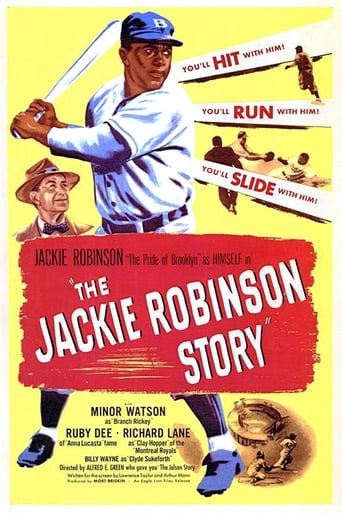
Jackie Robinson was primarily known as a baseball player who broke Major League Baseball's color barrier in 1947, but he also made a significant foray into cinema with his starring role in 'The Jackie Robinson Story' (1950). Born in Georgia and raised in California, Robinson attended UCLA where he excelled in multiple sports before serving in the U.S. Army during World War II. His signing with the Brooklyn Dodgers in 1947 marked a watershed moment in American sports history and civil rights. The biographical film 'The Jackie Robinson Story' was released just three years after his historic MLB debut, with Robinson courageously portraying himself on screen despite having no formal acting training. This film represented one of the earliest instances of a major African American athlete starring in a Hollywood production about their own life. Robinson's brief but impactful film career demonstrated his ability to transcend sports and become a cultural icon across multiple media platforms. His post-baseball career included business ventures and continued civil rights activism until his death in 1972.
The Craft
On Screen
Naturalistic and authentic approach, essentially playing himself with genuine emotion and sincerity rather than adopting traditional acting techniques
Milestones
- Broke MLB color barrier with Brooklyn Dodgers (1947)
- Starred in 'The Jackie Robinson Story' (1950)
- First African American MLB Hall of Famer (1962)
- Jersey number 42 retired across all MLB teams
- Presidential Medal of Freedom (posthumous, 1984)
Best Known For
Iconic Roles
Must-See Films
Accolades
Special Recognition
- Baseball Hall of Fame induction (1962)
- Presidential Medal of Freedom (posthumous, 1984)
- Congressional Gold Medal (posthumous, 2003)
- MLB Rookie of the Year (1947)
- NL MVP (1949)
- MLB All-Star (6 times)
Working Relationships
Worked Often With
Studios
Why They Matter
Impact on Culture
Jackie Robinson's appearance in 'The Jackie Robinson Story' represented a significant milestone in Hollywood history, as it was one of the first times a major African American athlete starred in a mainstream film about their own life. The film was released during a period of intense racial segregation in America, yet it was distributed nationwide and helped humanize the struggle for civil rights for white audiences. Robinson's dignified portrayal of himself challenged racial stereotypes and demonstrated that African Americans could carry leading roles in major films. The film's success paved the way for future sports biopics and increased representation of African American stories in cinema.
Lasting Legacy
Jackie Robinson's legacy extends far beyond his brief film career, encompassing his revolutionary impact on baseball and American society. His decision to star in his own biographical film demonstrated his understanding of media's power to shape public perception and advance civil rights. The film remains an important historical document, capturing Robinson's authentic portrayal of his own struggles and triumphs. Robinson's courage in both sports and entertainment helped break down racial barriers across American culture, influencing countless athletes and entertainers who followed. His number 42's retirement across all MLB teams and his posthumous recognition with the Presidential Medal of Freedom underscore his enduring cultural significance.
Who They Inspired
Robinson influenced subsequent generations of athletes who transitioned to entertainment, including Jim Brown, Kareem Abdul-Jabbar, and LeBron James. His authentic portrayal of himself in 'The Jackie Robinson Story' set a precedent for autobiographical films featuring real-life subjects. His success demonstrated that African American athletes could be marketable stars in both sports and entertainment, encouraging studios to invest in diverse stories. Robinson's dignified approach to confronting racism through media inspired future civil rights activists to utilize film and television as tools for social change.
Off Screen
Jackie Robinson married Rachel Isum in 1946, and their partnership lasted until his death in 1972. Rachel was a crucial supporter throughout his career and later became an educator and author, preserving his legacy. The couple had three children: Jackie Jr., Sharon, and David. Robinson faced significant personal challenges including racism, death threats, and the tragic death of his eldest son Jackie Jr. In a car accident in 1971. Despite these hardships, Robinson maintained his commitment to civil rights and community service throughout his life.
Education
University of California, Los Angeles (UCLA) - attended 1939-1941
Family
- Rachel Isum (1946-1972)
Did You Know?
- The Jackie Robinson Story was filmed during the baseball off-season in 1949
- Robinson was paid $25,000 for his role in the film, a substantial sum at the time
- The film was released just three years after Robinson broke MLB's color barrier
- Robinson performed his own baseball stunts in the movie
- The film was one of the first Hollywood productions to feature an African American actor in a leading role
- Robinson's wife Rachel made a brief appearance in the film
- The movie was shot in just 23 days
- Robinson received no formal acting training before making the film
- The film's premiere was held in Brooklyn, near Ebbets Field where Robinson played
- Despite limited acting experience, Robinson's performance was praised for its authenticity
In Their Own Words
A life is not important except in the impact it has on other lives
I'm not concerned with your liking or disliking me. All I ask is that you respect me as a human being
There's not an American in this country free until every one of us is free
Baseball is like a poker game. Nobody wants to quit when he's losing; nobody wants you to quit when you're ahead
Life is not a spectator sport
Frequently Asked Questions
Who was Jackie Robinson?
Legendary baseball player who broke Major League Baseball's color barrier in 1947 and also starred in the 1950 biographical film 'The Jackie Robinson Story.' He was a civil rights pioneer who used his platform to fight racial discrimination in America.
What films is Jackie Robinson best known for?
Titles linked here include The Jackie Robinson Story (1950).
When was Jackie Robinson born and when did he die?
Born January 31, 1919; died October 24, 1972.
What awards did Jackie Robinson win?
While Robinson didn't receive traditional film awards, he won numerous baseball honors including Rookie of the Year (1947), NL MVP (1949), and was inducted into the Baseball Hall of Fame in 1962. He posthumously received the Presidential Medal of Freedom in 1984.
What was Jackie Robinson's acting style?
Robinson's acting style was naturalistic and authentic, essentially playing himself rather than adopting traditional acting techniques. His performance was praised for its genuine emotion and sincerity despite having no formal training.
Did Jackie Robinson have other film roles?
No, 'The Jackie Robinson Story' (1950) was Robinson's only major film role. His primary career was in baseball, though he made occasional television appearances discussing civil rights and his experiences.
How did 'The Jackie Robinson Story' impact cinema?
The film was groundbreaking as one of the first Hollywood productions to feature an African American actor in a leading role, and it helped humanize the civil rights struggle for mainstream American audiences during the segregation era.