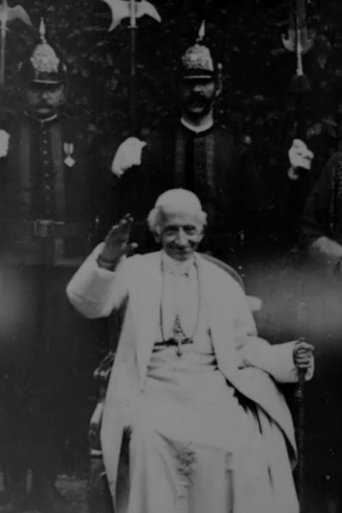

Pope Leo XIII
Actor
Born: March 2, 1810 in Carpineto Romano, Papal States (now Italy) Died: July 20, 1903 Active: 1896 Birth Name: Vincenzo Gioacchino Raffaele Luigi Pecci
Films
1 film
About Pope Leo XIII
Pope Leo XIII, born Vincenzo Gioacchino Raffaele Luigi Pecci, served as the 256th Pope of the Catholic Church from 1878 until his death in 1903. While not a professional actor, he holds a unique place in cinema history as one of the first people ever captured on motion picture film. In 1896, at the age of 86, he was filmed by W.K.L. Dickson and William Heise from the Edison Manufacturing Company in the short film 'Pope Leo XIII Being Seated Bestowing Blessing.' This historic moment occurred when the filmmakers received special permission to record the Pontiff in the Vatican gardens. The film shows the Pope being seated in his chair and making the sign of the cross, essentially blessing the camera and thus the audience. His appearance in this early motion picture made him prominent religious figures of the 19th century to be immortalized on film, bridging the gap between ancient religious tradition and modern technology.
The Craft
On Screen
Not applicable - appeared as himself in a documentary-style recording
Milestones
- Elected Pope in 1878
- Appeared in one of the earliest motion pictures in 1896
- Authored the encyclical Rerum Novarum (1891)
- Longest-reigning Pope of the 19th century
- First Pope to be captured on motion picture film
Best Known For
Iconic Roles
Must-See Films
Accolades
Special Recognition
- Sainthood cause opened in 2007
- Servant of God (Catholic Church title)
Working Relationships
Worked Often With
Studios
Why They Matter
Impact on Culture
Pope Leo XIII's appearance in the 1896 film represents a pivotal moment in cinema history, marking one of the earliest instances of a major world leader being captured on motion picture. This historic filming demonstrated the new technology's ability to document and preserve images of significant contemporary figures for posterity. The film also symbolized the intersection of ancient religious tradition with modern technological innovation, showing how even the most traditional institutions were adapting to the changing world of the late 19th century.
Lasting Legacy
Pope Leo XIII's cinematic legacy, though brief, is historically significant as it represents one of the earliest surviving motion pictures of a world leader. His willingness to be filmed demonstrated an openness to new technologies that was unusual for religious leaders of his time. The film itself has become an invaluable artifact for both film historians and those studying the history of the papacy, serving as a bridge between centuries-old religious traditions and the dawn of the modern media age.
Who They Inspired
While Pope Leo XIII did not directly influence filmmaking as an artist, his appearance in an early motion picture helped establish the precedent for filming world leaders and religious figures. This opened the door for future documentary and newsreel footage of important historical personalities, contributing to the development of film as a medium for historical documentation and journalism.
Off Screen
Pope Leo XIII dedicated his entire life to the Catholic Church, entering the seminary at a young age and rising through the ecclesiastical hierarchy. He never married, adhering to the Catholic priestly vow of celibacy. His papacy lasted 25 years, making him the longest-reigning pope of the 19th century. He was known for his intellectual pursuits, diplomatic skills, and efforts to modernize the Church's approach to social issues.
Education
Studied at the Accademia dei Nobili Ecclesiastici in Rome, earned doctorates in theology and civil and canon law
Did You Know?
- He was 86 years old when filmed, making him one of the oldest people ever captured in early motion pictures
- The film was only 30 seconds long but required special permission from the Vatican
- He was the first reigning Pope to be captured on motion picture film
- The film was shot in the Vatican gardens, not inside the Vatican itself
- His papacy lasted 25 years, the longest of the 19th century
- He spoke multiple languages fluently, including Latin, Italian, French, German, and English
- He was the first Pope to be photographed extensively
- The film was part of Edison's 'Vitascope' exhibition program
- He was born in the same year as Chopin and Robert Schumann
- His encyclical Rerum Novarum is considered a foundational document of Catholic social teaching
In Their Own Words
"The new wine of democracy cannot be put into the old bottles of autocracy." (from his encyclicals)
"The working man has been surrendered, isolated and helpless, to the hardheartedness of employers and the greed of unchecked competition." (from Rerum Novarum, 1891)
"The Church has always opposed the concentration of wealth in the hands of a few." (from Rerum Novarum)
"Let us pray for the unity of all Christians, that we may be one as Christ and the Father are one." (from his prayers for Christian unity)
Frequently Asked Questions
Who was Pope Leo XIII?
Pope Leo XIII was the 256th Pope of the Catholic Church who served from 1878 to 1903. He is historically significant in cinema as one of the first people ever captured on motion picture film in 1896, appearing in 'Pope Leo XIII Being Seated Bestowing Blessing'.
What films is Pope Leo XIII best known for?
Pope Leo XIII appeared in only one film, 'Pope Leo XIII Being Seated Bestowing Blessing' (1896), which is historically significant as one of the earliest motion pictures ever made and the first to feature a reigning Pope.
When was Pope Leo XIII born and when did he die?
Pope Leo XIII was born on March 2, 1810, in Carpineto Romano, Papal States (now Italy), and died on July 20, 1903, in Rome, Italy, at the age of 93.
What awards did Pope Leo XIII win?
Pope Leo XIII did not receive any film-related awards, as his appearance was in the very early days of cinema. However, his cause for sainthood was opened in 2007, granting him the title Servant of God in the Catholic Church.
What was Pope Leo XIII's acting style?
Pope Leo XIII did not have an acting style as he was not an actor. His appearance in the 1896 film was a documentary-style recording where he appeared as himself, performing his customary blessing while being seated.
Why is Pope Leo XIII important to film history?
Pope Leo XIII is important to film history as one of the first major world leaders ever captured on motion picture. His 1896 appearance represents a pivotal moment in cinema, demonstrating the new technology's ability to document significant contemporary figures.
How was Pope Leo XIII filmed in 1896?
Pope Leo XIII was filmed by W.K.L. Dickson and William Heise from the Edison Manufacturing Company, who received special permission to record the Pope in the Vatican gardens. The 30-second film showed the Pope being seated and bestowing a blessing.