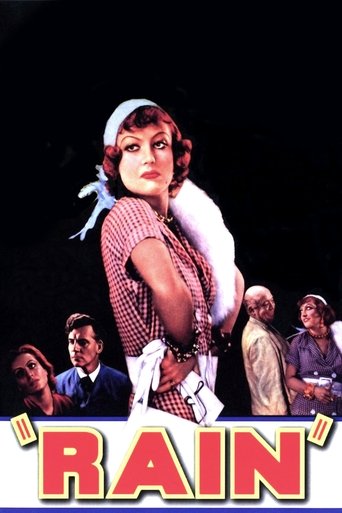
Films
1 film
About Mary Shaw
Mary Shaw appears once in this catalog: Rain (1932). ' Based on the limited filmography available, she appears to have been a character actress or bit player who had a very brief career in motion pictures. The 1932 film 'Rain' was a significant production directed by Lewis Milestone, based on Somerset Maugham's play, and starred major stars like Joan Crawford and Walter Huston. Shaw's role in this prestigious production suggests she may have been part of a studio contract player system or perhaps a stage actress making a brief foray into films. The fact that her career appears to have been confined to 1932 indicates she may have returned to other pursuits, possibly stage work, or left the entertainment industry entirely after this single film appearance. Unfortunately, detailed records about her life and career beyond this single film credit are scarce, which was not uncommon for supporting players and character actors of this era who often worked anonymously and left minimal paper trails.
The Craft
Milestones
- Appeared in the 1932 film 'Rain' alongside Joan Crawford and Walter Huston
Best Known For
Iconic Roles
Must-See Films
Why They Matter
Impact on Culture
Mary Shaw's cultural impact appears to be minimal due to her extremely brief film career, limited to a single appearance in the 1932 production of 'Rain.' However, her participation in this significant early sound film places her within the historical context of Hollywood's transition from silent films to talkies, a period that dramatically changed the film industry and acting styles. The film itself, based on Somerset Maugham's work and starring major talents like Joan Crawford, represents an important example of pre-Code Hollywood cinema, and all performers involved contributed to this transitional period in American film history.
Lasting Legacy
Mary Shaw's legacy in cinema history is primarily that of a representative example of the many character actors and supporting players who populated early sound films but whose careers were brief or undocumented. Her appearance in 'Rain' (1932) ensures she has a permanent place in film credits, though like many actors of her era with limited filmographies, she remains largely unknown to modern audiences. Her story illustrates the transient nature of Hollywood careers during the studio system, where countless performers appeared briefly in films before disappearing from public records.
Who They Inspired
Due to her extremely limited filmography, there is no documented evidence of Mary Shaw having influenced other actors or directors in any significant way. This was typical for many bit players and supporting actors during the early 1930s who often worked anonymously and had minimal impact on the broader industry or future generations of performers.
Off Screen
Very little information is available about Mary Shaw's personal life, which was common for many supporting actors and bit players during the early sound era who often maintained private lives outside of their brief film careers.
Did You Know?
- Mary Shaw's entire known film career consists of just one movie: 'Rain' (1932)
- The film 'Rain' was based on a play by W. Somerset Maugham
- Mary Shaw appeared in the same film as Joan Crawford during Crawford's early career phase
- The 1932 version of 'Rain' was directed by Lewis Milestone, who won two Academy Awards during his career
- Mary Shaw represents the many anonymous character actors who populated early sound films
- Her career coincided with the transition period between silent films and established sound cinema
- The film 'Rain' was considered controversial for its time due to its themes of prostitution and redemption
Frequently Asked Questions
Who was Mary Shaw?
Screen credits include only one known film, 'Rain' (1932). She was likely a character actress or bit player whose career in motion pictures was extremely brief, confined to the single year of 1932.
What films is Mary Shaw best known for?
Titles linked here include Rain (1932).
When was Mary Shaw born and when did she die?
Unfortunately, specific birth and death dates for Mary Shaw are not available in historical records, which was not uncommon for supporting actors and bit players from the early 1930s who often left minimal documentation of their lives.
What awards did Mary Shaw win?
There are no records of Mary Shaw receiving any major awards or nominations for her work in film, which is typical for character actors with very limited filmographies during the early sound era.
What was Mary Shaw's acting style?
Due to the limited documentation of her career and the fact that she appeared in only one known film, there is insufficient information to determine Mary Shaw's specific acting style or techniques.
Why was Mary Shaw's career so short?
While specific reasons are unknown, many actors during the early 1930s had brief careers due to the competitive nature of Hollywood, the transition to sound films, or personal choices to pursue other careers outside of the film industry.