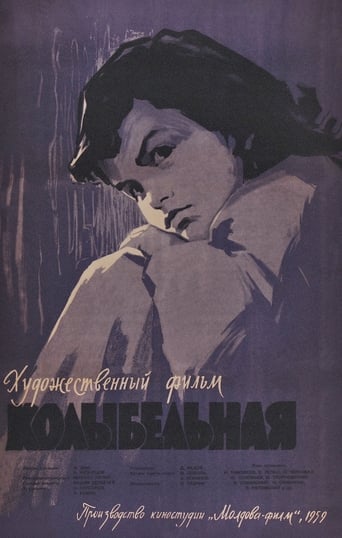

Mikhail Kalik
Director
Born: January 29, 1927 in Arkhangelsk, Soviet Union (now Russia) Died: March 31, 2017 Active: 1955-1971, 1990s-2010s Birth Name: Mikhail Iulianovich Kalik
Films
1 film
About Mikhail Kalik
Mikhail Iulianovich Kalik — prominent Soviet film director active from the late 1950s through the early 1970s, marked by both artistic success and political persecution. Born in Arkhangelsk in 1927, Kalik graduated from the prestigious Gerasimov Institute of Cinematography (VGIK) in 1952, where he studied under influential Soviet filmmakers. His directorial debut came with short films in the mid-1950s, followed by his first feature film which established his reputation as a sensitive humanist filmmaker. Kalik's most celebrated work, 'The Man Who Follows the Sun' (1961), showcased his poetic visual style and deep concern for human dignity, earning him international acclaim at film festivals. His career was severely disrupted in the 1960s when he faced political persecution from Soviet authorities, who accused him of 'anti-Soviet activities' and banned several of his films. In 1971, Kalik emigrated to Israel, where he continued filmmaking but struggled to regain his earlier success. He eventually returned to Russia in the 1990s, where he was recognized as an important figure in Soviet cinema history before his death in 2017.
The Craft
Behind the Camera
Poetic humanism with lyrical visual storytelling, focusing on ordinary people's lives with deep empathy and psychological insight. Kalik's direction combined documentary-like realism with poetic imagery, often exploring themes of human dignity, freedom, and moral choice. His camera work was characterized by long takes and naturalistic performances, creating an intimate connection between characters and audience.
Milestones
- Graduated from VGIK (1952)
- Directed 'The Man Who Follows the Sun' (1961)
- International recognition at Cannes Film Festival
- Political persecution and film bans in USSR (1960s)
- Emigration to Israel (1971)
- Return to Russia (1990s)
- Recognition as master of Soviet cinema
Best Known For
Must-See Films
Accolades
Won
- Cannes Film Festival - Special Jury Prize (1961)
- All-Union Film Festival - First Prize (1961)
- State Prize of the RSFSR (1967)
Nominated
- Cannes Film Festival - Palme d'Or nomination (1961)
- Moscow International Film Festival (1959)
Special Recognition
- People's Artist of the RSFSR
- Order of Friendship (Russia)
- Honored Artist of the Russian Federation
Working Relationships
Worked Often With
Studios
Why They Matter
Impact on Culture
Mikhail Kalik represented the humanist tradition in Soviet cinema, creating works that transcended ideological constraints to explore universal human experiences. His films, particularly 'The Man Who Follows the Sun,' became symbols of artistic resistance to political oppression, influencing generations of Soviet and post-Soviet filmmakers. Kalik's ability to find beauty and dignity in ordinary lives helped expand the possibilities of socialist realist cinema, pushing boundaries while maintaining artistic integrity.
Lasting Legacy
Kalik's legacy endures as proof of artistic courage in the face of political persecution. His films are studied in film schools worldwide as examples of how cinema can serve as both art and conscience. Despite having many of his works suppressed during his lifetime, Kalik is now recognized as.
Who They Inspired
Kalik influenced the Soviet New Wave movement of the 1960s, inspiring directors like Andrei Tarkovsky and Sergei Parajanov with his poetic visual style and humanist themes. His approach to documentary-style narrative influenced filmmakers across Eastern Europe, while his resistance to political censorship inspired artists working under authoritarian regimes. His later work in Israel contributed to the development of Israeli documentary cinema.
Off Screen
Mikhail Kalik's personal life was marked by the political turmoil of his time. He was married twice, first to fellow filmmaker Inna Tumanyan, with whom he had a son, and later to his second wife. His political persecution in the Soviet Union significantly impacted his family life, forcing him into exile. Despite these challenges, Kalik maintained his artistic integrity and continued creating meaningful cinema throughout his life.
Education
Gerasimov Institute of Cinematography (VGIK), Moscow - Graduated 1952
Family
- Inna Tumanyan (1950s-1960s)
- Second wife (1970s-2017)
Did You Know?
- Several of Kalik's films were banned in the Soviet Union for decades
- He was accused of 'anti-Soviet activities' and faced KGB persecution
- His film 'The Man Who Follows the Sun' was screened at Cannes despite Soviet objections
- Kalik taught filmmaking at Israeli universities during his exile
- Many of his 'lost' films were rediscovered and restored after the fall of the Soviet Union
- He was friends with poet Boris Pasternak
- Kalik's films often featured non-professional actors for authenticity
- He returned to Russia after the collapse of the Soviet Union
- His final years were spent teaching and writing about cinema
- Kalik's personal archives are preserved at the Russian State Film Archive
In Their Own Words
Cinema is not entertainment; it is a way of understanding the human soul
Every frame must contain truth, even if it's a painful truth
The camera should be like a compassionate eye, not a judging one
In Soviet cinema, we learned to speak in metaphors, but our hearts spoke directly
Frequently Asked Questions
Who was Mikhail Kalik?
Soviet on YTB.my. His most famous work, 'The Man Who Follows the Sun' (1961), earned international acclaim and established him as an important voice in 1960s Soviet cinema.
What films is Mikhail Kalik best known for?
Titles linked here include The Man Who Follows the Sun (1961), The Red Snowball Tree (1974).
When was Mikhail Kalik born and when did he die?
Born January 29, 1927; died March 31, 2017.
What awards did Mikhail Kalik win?
Kalik won the Special Jury Prize at Cannes Film Festival in 1961, the First Prize at the All-Union Film Festival, and later received the State Prize of the RSFSR. He was also named People's Artist of the RSFSR and received the Order of Friendship from the Russian government.
What was Mikhail Kalik's directing style?
Kalik's directing style combined poetic humanism with documentary-like realism, using long takes and naturalistic performances to explore universal themes of human dignity and moral choice. His work was characterized by lyrical visual storytelling and deep empathy for ordinary people.