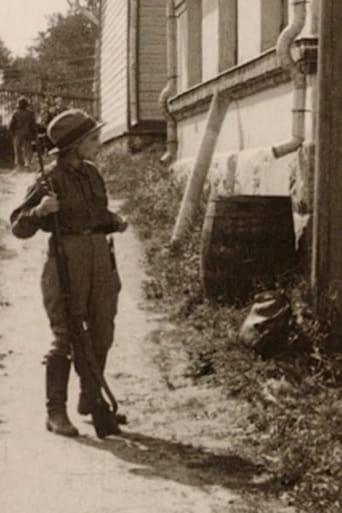
Teuvo Pakkala
Director
Born: April 9, 1862 in Oulu, Finland Died: May 17, 1925 Active: 1922 Birth Name: Teodor Oskar Frosterus
Films
1 film
About Teuvo Pakkala
Figure in Finnish culture, primarily celebrated as a realist novelist and playwright before his brief but significant foray into the nascent Finnish film industry. Born into a humble family in Oulu, he rose to prominence as a chronicler of the urban poor and children, becoming a central figure in the 'Young Finland' (Nuori Suomi) literary circle. In 1922, at the age of 63, Pakkala transitioned to the medium of cinema by writing and directing 'Sotapolulla' (On the Warpath), a silent film produced by Suomi-Filmi. This venture was part of a broader movement where established literary figures sought to elevate the artistic merit of Finnish cinema. Although his film career was limited to this single production, his transition from literature to film represented a crucial moment in the professionalization of Finnish filmmaking. Pakkala's work in both mediums was characterized by a deep empathy for the marginalized and a commitment to authentic regional storytelling.
The Craft
Behind the Camera
Pakkala's directing style in 'Sotapolulla' was heavily influenced by his literary background in realism. He focused on naturalistic performances and utilized the Finnish landscape to create a sense of national identity and authenticity. His approach was characterized by a narrative-driven structure that emphasized character motivation over the melodramatic tropes common in early silent cinema. He sought to bring the same level of psychological depth to the screen that he had achieved in his prose, though he was limited by the technical constraints of the era's production standards.
Milestones
- Directed the silent film 'Sotapolulla' in 1922
- Established himself as a leading figure in Finnish literary realism with 'Lapsia' (1895)
- Authored the highly popular play 'Tukkijoella' (1899), which became a staple of Finnish theater and was later adapted into several films
- Served as a key member of the Nuori Suomi literary movement
- Pioneered the psychological depiction of children in Finnish literature
Best Known For
Must-See Films
Accolades
Won
- State Prize for Literature (Multiple years for his prose work)
Special Recognition
- Commemorative statue in Oulu, Finland
- Teuvo Pakkala Street named in his honor in Oulu
- Subject of various Finnish postage stamps celebrating national literature
Working Relationships
Worked Often With
Studios
Why They Matter
Impact on Culture
Teuvo Pakkala's impact on Finnish culture is profound, primarily through his ability to give a voice to the 'little people' of society. By directing 'Sotapolulla', he helped bridge the gap between high literature and the then-lowly medium of cinema, lending the film industry a degree of intellectual respectability. His play 'Tukkijoella' (The Logfloaters) remains.
Lasting Legacy
Pakkala is remembered as a giant of Finnish realism whose legacy persists in both literature and film. His singular directorial effort is preserved as a vital artifact of the Finnish silent era. He is credited with introducing a psychological complexity to Finnish storytelling that moved away from romanticism toward a more grounded, social-conscious perspective. Every major adaptation of his literary works in the decades following his death is seen as a continuation of his artistic vision.
Who They Inspired
His influence is seen in the works of later Finnish directors like Edvin Laine and Valentin Vaala, who frequently turned to classic Finnish literature for their source material. Pakkala's focus on rural life and the working class became a cornerstone of the Finnish cinematic identity.
Off Screen
Pakkala was born to a gold-miner father and faced financial hardships early in life. He married Hanna Maria Kuosmanen in 1889, and the couple had several children. His life was marked by a constant struggle between his artistic ambitions and the need to provide for his family, leading him to work various jobs including journalism and teaching. Despite his fame as a writer, he lived a relatively modest life, deeply rooted in the social issues of his time.
Education
Studied at the University of Helsinki, though he did not complete a degree, focusing instead on his burgeoning career in journalism and literature.
Family
- Hanna Maria Kuosmanen (1889-1925)
Did You Know?
- Pakkala's birth name was Frosterus, but he adopted the Finnish name Pakkala to reflect his nationalistic pride.
- He was one of the first Finnish writers to successfully depict the inner world of children without sentimentality.
- The film 'Sotapolulla' was based on his own script and was intended to be a patriotic adventure.
- He spent time in the United States in the late 1880s, which influenced his perspectives on social structures.
- Despite his literary success, he often worked as a primary school teacher to make ends meet.
- His play 'Tukkijoella' has been filmed three times: in 1928, 1937, and 1951.
In Their Own Words
The child's world is a world of its own, with its own laws and its own joys, which an adult can only understand through empathy.
Art must reflect the truth of the people, not the fantasies of the elite.
Frequently Asked Questions
Who was Teuvo Pakkala?
Renowned Finnish author, playwright, and filmmaker who was a key figure in the realist movement of the late 19th and early 20th centuries. He is best known for his literary works about children and the working class, as well as for directing the 1922 silent film 'Sotapolulla'.
What films is Teuvo Pakkala best known for?
Titles linked here include Sotapolulla (1922).
When was Teuvo Pakkala born and when did he die?
Born April 9, 1862; died May 17, 1925.
What awards did Teuvo Pakkala win?
While he lived before the era of major film awards, he was a recipient of the Finnish State Prize for Literature multiple times for his influential prose and plays.
What was Teuvo Pakkala's directing style?
His directing style was rooted in realism, focusing on authentic locations and naturalistic storytelling that avoided the exaggerated theatricality of many early silent films.