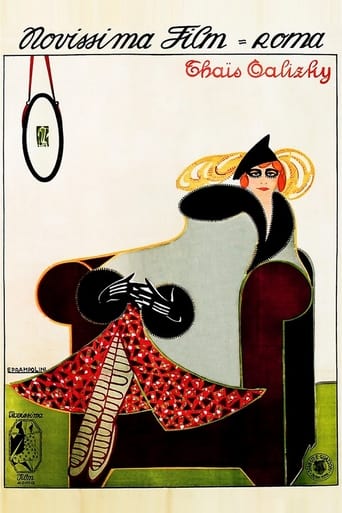
Thaïs Galitzky
Actor
- Active
- 1917-1917
Films 1
About Thaïs Galitzky
Thaïs Galitzky is an obscure silent-era screen performer credited in the 1917 French film "Thaïs," one of the earliest and best-known screen versions inspired by Anatole France’s famous novel. Surviving reference sources on classic cinema offer very little biographical detail about her, and she appears to have had a brief on-screen career rather than a long documented filmography. Because of the scarcity of contemporary records, her life outside this single credited appearance remains largely undocumented in modern film histories and database sources. The surviving evidence places her in the early French silent film period, when literary adaptations and stylized historical dramas were a major part of European production. Her name suggests a likely French connection, but definitive public information about her birth, death, training, or later career has not been reliably established from accessible standard film references. In the absence of fuller archival documentation, Thaïs Galitzky is best understood as one of many early cinema performers whose contributions are preserved chiefly through film credits and scattered archival listings. Her surviving credit in "Thaïs" situates her within the formative years of narrative film, when actors often worked with little enduring publicity and many careers left only fragmentary traces.
More about Thaïs Galitzky
In film history
Thaïs Galitzky’s cultural impact is difficult to measure directly because her documented screen career is extremely limited, but her presence in a 1917 adaptation of "Thaïs" places her inside an important tradition of early French prestige filmmaking. Silent cinema relied heavily on literary adaptations, historical subjects, and visually expressive performances, and every credited performer in such productions contributed to the evolving language of screen acting. Even when an actor’s individual biography is obscure, their participation in a surviving or historically noted film helps preserve the texture of the period’s cinematic culture. In this sense, Galitzky represents the many lesser-documented artists whose work formed part of the foundation of silent-era European cinema. Her credit also underscores how fragile early film fame could be, with many performers remembered only through filmographies rather than personal archives.
Later reputation
Thaïs Galitzky’s legacy is primarily archival and historical rather than star-based. She is remembered, insofar as she is remembered at all, through her association with the 1917 film "Thaïs," which connects her to an important literary source and to the French silent film tradition. Her name survives as evidence of the many performers whose careers were brief, lightly documented, or only partially preserved by the historical record. For film historians, such names are valuable because they illuminate the breadth of participation in early cinema beyond the major stars and directors most often discussed. Her legacy therefore lies in representation of the silent era’s many under-documented contributors and the continuing work of film scholarship to recover forgotten credits.
Influence
No direct influence on later actors or directors can be confidently documented from available sources. However, by participating in an early literary adaptation, she was part of a performance culture that helped shape the conventions of screen dramatization in European silent cinema. The broader influence of such performers is collective: they contributed to the development of visual acting, expressive staging, and the prestige adaptation model that later filmmakers refined. Any individual influence beyond that remains unverified.
Off screen
No reliable public biographical record of Thaïs Galitzky’s personal life has been established in standard accessible film reference sources. Details such as marriages, family background, residence, education, and later life are not currently documented with confidence. Because of the sparse survival of records for many early silent-era performers, it is possible that relevant information may exist only in archival production documents, contemporary press, or regional records that are not broadly available online. As a result, her personal history remains largely unknown to modern researchers.
Credits
- Credited appearance in the 1917 silent film "Thaïs"
- Association with one of the early French literary-film adaptations inspired by Anatole France
- Participation in the European silent cinema era during its formative years
Roles
- Performer in "Thaïs" (1917)
Films
- Thaïs (1917)
Notes
- Thaïs Galitzky is credited in connection with only one known film, making her a highly obscure figure in silent-era records.
- Her only widely noted screen credit is the 1917 film "Thaïs," based on a famous literary source.
- The 1917 "Thaïs" belongs to the French silent cinema tradition, which often adapted celebrated novels and stage works.
- Because early film documentation is incomplete, it is possible that additional credits could exist in archival records not easily accessible online.
- Her obscure status is typical of many early 20th-century performers whose careers were not extensively publicized.
- The survival of her name in film databases helps preserve a small but important part of silent-era production history.
Questions
Who was Thaïs Galitzky?
Thaïs Galitzky was an obscure silent-era screen performer known for appearing in the 1917 film "Thaïs." Very little biographical information survives about her, so she is chiefly remembered through her film credit. She represents the many early cinema artists whose contributions are preserved mainly in archival film records.
What films is Thaïs Galitzky best known for?
She is best known for the 1917 silent film "Thaïs." No other reliably documented screen credits are currently established in accessible standard references. As a result, her filmography appears to be extremely limited or incompletely preserved.
When was Thaïs Galitzky born and when did she die?
Her birth and death dates are not currently documented in the accessible historical record. Likewise, her birthplace and death place have not been reliably established. This lack of detail is common for lesser-documented silent-era performers.
What awards did Thaïs Galitzky win?
No awards or nominations are currently documented for Thaïs Galitzky. This is not unusual for early silent-film performers, many of whom worked before the modern awards system existed. Available sources do not indicate any major honors.
What was Thaïs Galitzky's acting style?
Her specific acting style is not preserved in reliable descriptive sources. Given the period and the film in which she appeared, her performance would have belonged to the expressive, gesture-driven style common in silent cinema. Beyond that, any more precise characterization would be speculative.
What is Thaïs Galitzky’s legacy in film history?
Her legacy is mainly historical and archival rather than celebrity-based. She is part of the record of early French silent cinema and its literary adaptations. For film historians, her surviving credit is valuable because it helps document the wider community of performers active in the era.