Yu Zheguang
Director
- Active
- 1955-1955
Films directed 1
About Yu Zheguang
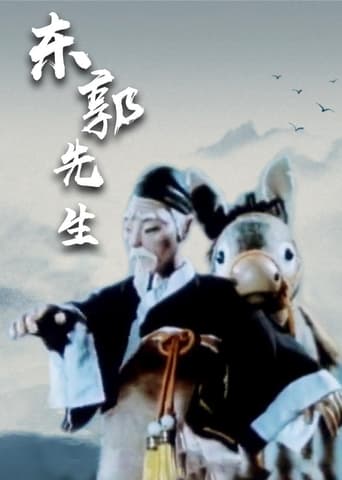
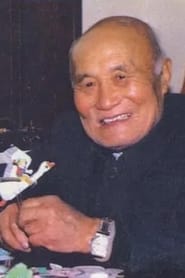
Yu Zheguang was a Chinese film director active in the mid-1950s, known in particular for directing the 1955 feature "Mr Dong Guo and The Wolf of Zhongshan." Because surviving English-language reference material on him is extremely limited, his career can only be reconstructed in broad outline from available film credit data rather than from a long published biographical record. What is clear is that he worked during the early years of the People's Republic of China, a period when the film industry was being reorganized around state studios, socialist themes, and educational or literary adaptations. His credited work places him among the directors contributing to the post-1949 rebuilding of Chinese cinema, when filmmakers often adapted folk stories, classics, and moral parables for a new mass audience. "Mr Dong Guo and The Wolf of Zhongshan" suggests an interest in literary and allegorical storytelling, a common approach in mid-century Chinese filmmaking. No widely documented later directing credits, personal-life details, or major award records are readily available in standard international film references, which makes him a comparatively obscure but still historically relevant figure in vintage Chinese cinema.
More about Yu Zheguang
Behind the camera
Yu Zheguang's directing style can only be inferred from his known work and historical context rather than from extensive critical documentation. His most visible credit, an adaptation of a classical allegorical tale, indicates an approach grounded in didactic storytelling, clear moral framing, and accessible narrative structure. Directors working in mainland China in the mid-1950s often emphasized social meaning, literary heritage, and straightforward presentation over stylistic flamboyance, and Yu Zheguang appears to fit that tradition. If any broader stylistic signature existed, it has not been preserved in widely accessible international sources.
In film history
Yu Zheguang's cultural impact is tied less to celebrity than to participation in a historically significant phase of Chinese cinema. By directing an adaptation of "Mr Dong Guo and The Wolf of Zhongshan," he helped bring a traditional moral tale into the new socialist-era film culture of the 1950s, where older stories were often repurposed to reinforce social lessons and values. Even with a sparse surviving record, directors like Yu contributed to the broader project of reconstructing national cinema after decades of upheaval, war, and political change. His work therefore belongs to the important but often underdocumented layer of filmmakers who sustained the industry beyond the most famous auteur names.
Later reputation
Yu Zheguang's legacy is primarily archival and historical: he stands as one of the many directors whose names preserve the continuity of Chinese film production in the early PRC period. Because so little biographical information survives in standard databases, his importance is measured through the existence of his credited work rather than through a large public reputation. The continued cataloguing of his 1955 film credit ensures that he remains part of the historical record of classic Chinese cinema. For researchers, he represents the many mid-century filmmakers whose contributions were essential to national cinema yet remain lightly documented in international film history.
Influence
Direct influence is difficult to trace because there is no widely documented record of students, protégés, or a large body of work. His influence is therefore best understood in institutional and cultural terms: he participated in a filmmaking environment that shaped the aesthetics and pedagogical aims of Chinese cinema in the 1950s. By working on a literary adaptation, he contributed to a mode of filmmaking that remained important in mainland Chinese production, where folktales and classics continued to be adapted for screen. In that sense, his contribution reflects the broader influence of early PRC directors on later educational and literary film traditions.
Off screen
No reliable public record in widely accessible English-language sources provides detailed information about Yu Zheguang's personal life, family background, marriages, or private activities. Unlike major internationally documented directors of the silent era or Golden Age, he does not appear to have a substantial biographical footprint in common reference works. As a result, his personal history remains largely unavailable to researchers outside specialized Chinese film archives. Any attempt to fill in those details would require verification from Chinese-language archival sources or studio records.
Credits
- Directed the 1955 film "Mr Dong Guo and The Wolf of Zhongshan," his best-documented credit
- Worked during the formative early PRC era of Chinese cinema, when state-sponsored production and literary adaptation were central to the industry
- Participated in the postwar development of mainland Chinese film culture through a feature based on a well-known moral fable
Films
Studios
- Chinese state film production of the mid-1950s
Notes
- Yu Zheguang's best-documented credit is a single 1955 film, which makes him one of the more obscure directors from the classic Chinese cinema period.
- His known film, "Mr Dong Guo and The Wolf of Zhongshan," is based on a traditional Chinese moral fable rather than an original screenplay.
- He appears to have worked during a pivotal era when mainland Chinese cinema was being reorganized under the newly established People's Republic of China.
- Standard international databases provide very little biographical detail about him, which is unusual for more prominent classic-era filmmakers.
- Because his known career is so narrowly documented, he is of particular interest to researchers of incomplete or underarchived film histories.
- His credited work suggests involvement with the culturally didactic and literarily grounded filmmaking favored in the 1950s.
Questions
Who was Yu Zheguang?
Yu Zheguang was a Chinese film director best known for directing the 1955 film "Mr Dong Guo and The Wolf of Zhongshan." He is a comparatively obscure figure in international film references, but he remains part of the historical record of early PRC cinema.
What films is Yu Zheguang best known for?
He is best known for "Mr Dong Guo and The Wolf of Zhongshan" (1955), which is the principal credited work commonly associated with his name. No additional widely documented films are readily available in standard English-language sources.
When was Yu Zheguang born and when did he die?
His birth and death dates are not clearly documented in widely accessible sources. Likewise, his place of birth and death are not readily available in standard international film references.
What awards did Yu Zheguang win?
No major awards or nominations are readily documented for Yu Zheguang in the available reference material. This may reflect both the limited preservation of records and his relatively narrow public filmography in English-language databases.
What was Yu Zheguang's directing style?
His style can be inferred only in broad terms from his known work and historical context. The film he directed suggests a straightforward, literary, and morally oriented approach typical of mid-1950s Chinese cinema.
What is Yu Zheguang's legacy in film history?
Yu Zheguang's legacy lies in his contribution to the rebuilding of Chinese cinema in the 1950s and in the preservation of traditional storytelling on film. Even though he is not widely documented, his credit ensures he remains part of the historical record of classic Chinese directing.
Did Yu Zheguang work in acting as well as directing?
There is no readily available evidence that he was known as an actor. The available record identifies him primarily as a director.