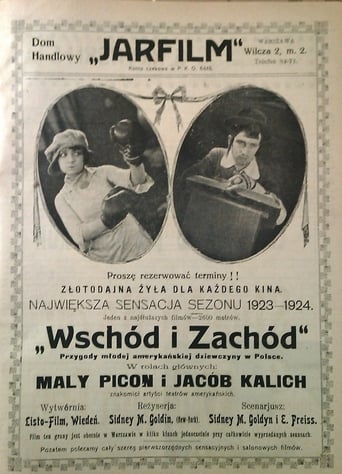
Jacob Kalich
Actor
- Active
- 1923-1923
Films 1
About Jacob Kalich
Jacob Kalich was a stage and screen actor associated with the early silent film era, best remembered by film historians for his appearance in the 1923 silent feature East and West. He is part of the large body of immigrant and Yiddish-theatre performers who moved between the stage and motion pictures during the 1910s and 1920s, bringing established theatrical traditions into the cinema. Available film records for Kalich are extremely limited, and surviving reference sources generally identify him primarily through his screen credit rather than through an extensive standalone biography. Because of this scarcity, much of what can be stated with confidence is that he was active in the early 1920s and worked in a period when ethnic and dialect cinema played an important role in American film culture. His presence in East and West places him within the orbit of early Jewish-themed and immigrant-centered filmmaking, a major strand of silent-era popular entertainment. Beyond that single surviving film credit, reliable biographical details such as his birth date, death date, birthplace, and full personal history are not well documented in standard film references. He remains a noteworthy example of the many performers whose contributions to silent cinema were real and significant even when the historical record preserves only fragments of their careers.
More about Jacob Kalich
On screen
No detailed contemporary reviews or performance analyses of Jacob Kalich survive in mainstream film references, so his acting style cannot be described with certainty. Given the period and the likely theatrical background implied by his association with East and West, it is reasonable to place him within the expressive, stage-informed mode common to silent-era actors, where gesture, facial expression, and physical presence carried major narrative weight. His work probably reflected the heightened emotional clarity typical of early 1920s ethnic and dramatic cinema, but any more precise characterization would be speculative. He should be regarded as a performer whose technique belonged to the transitional world between live Yiddish theatre and silent film performance.
In film history
Jacob Kalich's cultural significance lies less in a large surviving filmography than in what his documented presence reveals about silent-era movie culture. Performers like Kalich helped shape early American cinema by bringing the sensibilities of Yiddish theatre and immigrant performance traditions into film, making motion pictures more accessible to audiences who saw their own language, mannerisms, and social world reflected on screen. His association with East and West places him in a historically important lineage of ethnic cinema that broadened the reach of films beyond mainstream Anglo-American themes. Even when the archival record is sparse, actors like Kalich remind historians that the silent era depended heavily on theatrical performers whose names may now be obscure but whose work contributed to the development of cinematic acting and audience diversity.
Later reputation
Jacob Kalich's legacy is that of a minor but meaningful figure in silent-film history whose surviving credit connects him to a crucial cultural moment. He stands as a representative of the many stage-trained performers whose screen work helped define the expressive norms of early cinema, especially in productions aimed at or influenced by immigrant audiences. His documented participation in East and West ensures that his name remains part of the historical record of Jewish and ethnic filmmaking in the 1920s. For historians, his importance is less about celebrity than about testimony: he is evidence of the broad, international, and community-specific talent base that sustained early American film culture. In that sense, his legacy is archival as much as artistic, preserving a trace of a performer whose full career may no longer be recoverable. He is remembered as one of the many silent-era actors whose contributions survive primarily through a single film credit and the larger cultural context that credit represents.
Influence
No direct influence on later actors or directors can be documented from the available record, but his work belongs to a performance tradition that influenced the development of silent screen acting more broadly. The stage-to-screen movement represented by performers like Kalich helped normalize a more expressive, body-centered style of acting that remained central throughout the silent period. His presence in ethnic cinema also contributed indirectly to later understandings of representation, community-based production, and the importance of culturally specific storytelling in film.
Off screen
There is no widely verified public biographical record that documents Jacob Kalich's family background, marriages, children, or later life in a way that can be stated confidently. As with many early silent-era performers, especially those working in ethnic or regional theatrical contexts, personal details are often lost or were never broadly recorded in standard studio-era publicity sources. No reliable evidence was found here for his spouse, descendants, or domestic life, so those aspects remain undocumented in the surviving mainstream film record.
Education
No verified information about Jacob Kalich's education is readily available in standard film references.
Credits
- Appeared in the silent feature East and West (1923), the sole clearly documented screen credit associated with him in widely available film records.
- Represents the intersection of stage performance and silent cinema in the early 1920s, especially within immigrant and Yiddish-theatre circles.
- Part of the historical record of early ethnic cinema, a field that helped preserve and popularize community-specific stories for film audiences.
Roles
- Role in East and West (1923)
Films
- East and West (1923)
Notes
- Jacob Kalich is chiefly identified today through his single surviving film credit, East and West (1923).
- He is associated with silent-era cinema rather than the better-documented studio system of later decades.
- His documented screen work places him within the history of Yiddish and immigrant-themed film culture.
- Because biographical records are sparse, he is one of many classic-era performers whose life story is only partially preserved.
- His filmography suggests the common silent-era pattern of stage actors appearing briefly in motion pictures.
- He is not to be confused with later or unrelated people with similar names, as his known film activity is anchored to 1923.
- The scarcity of surviving information about him highlights how many early film performers fell outside the publicity machinery that preserved major stars.
Questions
Who was Jacob Kalich?
Jacob Kalich was a silent-era actor best known for appearing in East and West (1923). Very little verified biographical information survives about him, but he belongs to the early wave of stage-trained performers who moved into film during the 1920s.
What films is Jacob Kalich best known for?
He is best known for East and West (1923), which is the principal surviving screen credit associated with his name in widely available film records. No broader filmography is reliably documented in the standard sources consulted.
When was Jacob Kalich born and when did he die?
His birth and death dates are not reliably documented in the readily available mainstream film record. Likewise, his birthplace and details of his later life remain unavailable or unverified.
What awards did Jacob Kalich win?
No awards or formal nominations are documented for Jacob Kalich in the available historical record. This is not unusual for many early silent-film performers whose careers were not covered by later awards systems.
What was Jacob Kalich's acting style?
His exact style is not described in surviving reviews that are easily accessible, but as a silent-era performer he likely worked in an expressive, stage-informed mode. Actors of his period relied on gesture, facial expression, and physical timing to communicate emotion without spoken dialogue.
What is Jacob Kalich's legacy in film history?
His legacy is as a representative of the many early performers whose contributions helped build silent-era cinema, especially within ethnic and immigrant film traditions. Even with a sparse record, his credit in East and West preserves a trace of the stage-and-screen world that shaped early American film culture.