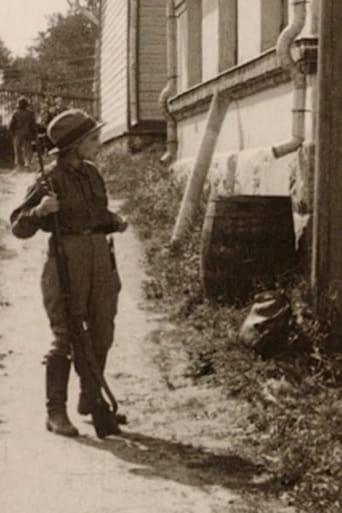
Yrjö Hirviseppä
Actor
Born: April 12, 1891 in Hämeenlinna, Finland Died: April 4, 1935 Active: 1922 (Film); 1910-1935 (Journalism and Music) Birth Name: Yrjö Mikael Vasunta (formerly Palmroth)
Films
1 film
About Yrjö Hirviseppä
Yrjö Hirviseppä was the stage name of Yrjö Mikael Vasunta (born Palmroth), a multifaceted Finnish cultural figure who made a singular but significant contribution to the silent film era. Born into a prominent clerical family in Hämeenlinna, he — classically trained violinist who studied at prestigious conservatories in St. Petersburg, Dresden, and Vienna before serving in the Helsinki Philharmonic Orchestra. During the Finnish Civil War of 1918, he served as a platoon leader for the White Guard, an experience that deeply informed his performance in his only film role. In 1921, he was cast by director Teuvo Pakkala as the lead in 'Sotapolulla' (On the Warpath), where he portrayed the heroic guerrilla leader Karunka, also known as the 'White Devil.' Beyond his brief acting career, Vasunta was a prolific journalist, playwright, and translator who worked for various newspapers and published numerous short stories and travelogues. He spent several years as a foreign correspondent in Central Europe before returning to Finland, where he continued his literary and journalistic pursuits until his untimely death at the age of 43.
The Craft
On Screen
Hirviseppä's acting style was characterized by a rugged, heroic naturalism that drew heavily from his real-life military experience. In 'Sotapolulla,' he avoided the overly theatrical gestures common in silent cinema of the time, instead projecting a stoic and authoritative presence suitable for a guerrilla commander. His performance was noted for its physical intensity and authenticity, particularly in the film's action sequences and outdoor skirmishes.
Milestones
- Starring as the lead character Karunka in the silent film 'Sotapolulla' (1922).
- Member of the Helsinki Philharmonic Orchestra (1913–1914).
- Served as a foreign correspondent in Germany, Austria, and Italy for Nordische Wirtschaftzeitung.
- Published numerous plays and short stories under the pseudonym Yrjö Hirviseppä.
- Awarded the Cross of Liberty for his service during the Finnish Civil War.
Best Known For
Iconic Roles
Must-See Films
Accolades
Won
- Order of the Cross of Liberty (Military honor for wartime service)
Special Recognition
- Recognized as a pioneer of early Finnish action cinema.
Working Relationships
Worked Often With
Studios
Why They Matter
Impact on Culture
Yrjö Hirviseppä's impact on Finnish cinema is tied to the preservation and rediscovery of 'Sotapolulla,' which is one of the few surviving examples of early Finnish adventure-war films. His portrayal of the 'White Devil' helped establish the archetype of the romanticized military hero in Finnish national cinema. The film's focus on the Civil War from a White perspective, featuring a real-life veteran in the lead, made it a significant cultural artifact of the post-independence era.
Lasting Legacy
His legacy is primarily preserved through the National Audiovisual Institute of Finland, which recovered the lost print of his only film in 1958. While his film career was short, he remains a notable figure in Finnish cultural history due to his transition from a professional musician to a war hero and eventually a leading man of the silent screen. His literary work as Mikael Vasunta also remains a point of interest for historians of Finnish journalism and 1920s literature.
Who They Inspired
He influenced the early depiction of military heroism in Finnish film, providing a template for the 'sissipäällikkö' (guerrilla leader) character that would appear in later Finnish war dramas. His brother, Reino Palmroth, later became.
Off Screen
He was the son of Provost Wilhelm Palmroth and Olga Maria Matilda Armfelt. He came from a highly artistic family; his brothers included the famous songwriter Reino Palmroth (known as 'Palle') and the composer/actor Toivo Palmroth. In 1914, he married Aino Maria Tommola, a primary school teacher, with whom he had children, including a son named Pentti Uolevi Mikael Vasunta.
Education
Studied violin at the St. Petersburg Conservatory, Dresden Conservatory, and Vienna Conservatory (1908–1912).
Family
- Aino Maria Tommola (1914–1935)
Did You Know?
- His stage name 'Hirviseppä' was later adopted as a pseudonym by his younger brother, the famous lyricist Reino Palmroth.
- He was a professional violinist who performed extensively across the Finnish countryside before turning to journalism.
- The only known copy of his film 'Sotapolulla' was lost for decades until it was found in a cement warehouse in Kuopio in 1958.
- He served as the commandant of Kyminlinna fortress at the end of the Finnish Civil War.
- His film 'Sotapolulla' was intended for international distribution in the US and UK, though it ultimately saw limited release.
- He was a polyglot who worked as a journalist in several European languages during his time as a correspondent.
In Their Own Words
The film will not be shown in Finland, so mother does not need to be embarrassed by it. It goes straight to England and America. (Context: A letter from director Teuvo Pakkala regarding the production, reflecting the cast's initial expectations for the project.)
Frequently Asked Questions
Who was Yrjö Hirviseppä?
Yrjö Hirviseppä was the stage name of Mikael Vasunta, a Finnish actor, journalist, and violinist best known for starring in the 1922 silent film 'Sotapolulla'. He — classically trained musician and a veteran of the Finnish Civil War.
What films is Yrjö Hirviseppä best known for?
Titles linked here include Sotapolulla (1922).
When was Yrjö Hirviseppä born and when did he die?
Born April 12, 1891; died April 4, 1935.
What was Yrjö Hirviseppä's real name?
His birth name was Yrjö Mikael Palmroth, but he later changed his surname to Vasunta. He used 'Yrjö Hirviseppä' as a stage name and literary pseudonym.
What was his career outside of acting?
Hirviseppä was primarily a journalist and musician. He was a violinist for the Helsinki Philharmonic and worked as a foreign correspondent in Europe for several years.