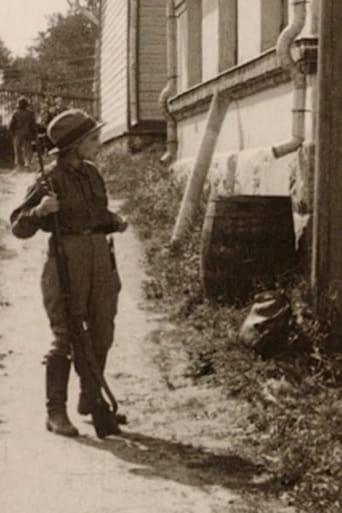
Films
1 film
About Oskari Oka
Made a significant contribution to the early development of Finnish cinema during the silent era. He is best remembered for his dual role in the 1922 silent film 'Sotapolulla' (On the Warpath), directed by the acclaimed writer Teuvo Pakkala. Beyond his limited film appearances, Oka — prominent figure in the Finnish regional theater scene, serving as the director of the Kajaani Theatre (Kajaanin Näyttämö) from 1920 to 1925. His career was deeply rooted in the post-independence cultural awakening of Finland, where he helped establish professional theatrical standards in the northern regions. Although his filmography is sparse, his performance in 'Sotapolulla' as the rebel leader Jäykkä remains a preserved example of early Finnish dramatic acting. Oka's transition from stage management to the screen reflected the era's trend of utilizing established theater professionals to bolster the nascent domestic film industry.
The Craft
On Screen
Oka's acting style was heavily influenced by his background in Finnish stage realism and the expressionistic tendencies of early 1920s silent cinema. In 'Sotapolulla', he employed a physical and commanding presence to portray the rebel leader, contrasting this with a more character-driven, transformative approach for his secondary role as the fisherman Kuuro-Paavo.
Milestones
- Director of the Kajaani Theatre (Kajaanin Näyttämö) from 1920 to 1925
- Starring role in the silent film 'Sotapolulla' (1922), one of the few surviving Finnish films from the early 1920s
- Performed a dual role in 'Sotapolulla', showcasing his versatility as both a villain and a character actor
- Key figure in the Turku theater scene before moving to regional leadership roles
- Collaborated with Finnish author and director Teuvo Pakkala
Best Known For
Iconic Roles
Must-See Films
Accolades
Special Recognition
- Recognized in the annals of the Kajaani City Theatre as one of its founding directors
Working Relationships
Worked Often With
Studios
Why They Matter
Impact on Culture
Oskari Oka's cultural impact lies in his role as a pioneer of regional theater in Finland and his participation in one of the country's earliest feature-length adventure films. 'Sotapolulla' was a significant attempt to create a commercial Finnish cinema that could compete with foreign imports, and Oka's involvement lent the project professional weight. His leadership at the Kajaani Theatre helped cultivate a local audience for the arts in Northern Finland during a politically sensitive time following the Finnish Civil War.
Lasting Legacy
Oka's legacy is preserved primarily through the Finnish National Audiovisual Institute (KAVI), which maintains the restored version of 'Sotapolulla'. He is remembered in Finnish theater history as a transitional figure who helped bridge the gap between traveling theater troupes and permanent municipal theaters. His dual performance in his only major film remains a subject of study for historians interested in early Finnish cinematic portrayals of the 1918 conflict.
Who They Inspired
He influenced the development of the Kajaani theater scene, setting a precedent for the professional directors who followed him in the mid-1920s, such as Arvi Hyrske.
Off Screen
Dedicated professional of the Finnish theatrical circuit. He worked extensively in Turku and Kajaani, often moving between cities to lead different theater companies during the formative years of the Finnish Republic.
Education
Trained in the Finnish theater tradition, likely through apprenticeship in regional theater companies in Turku or Helsinki.
Did You Know?
- He played two completely different characters in the same film: a rebel leader and an old fisherman.
- His film 'Sotapolulla' was lost for decades before a copy was rediscovered in a cement warehouse in Kuopio in 1958.
- The film he starred in was so controversial for its lighthearted take on the Civil War that the director's family famously joked that 'nobody can watch this movie when sober'.
- Oka was the first director of the Kajaani Theatre after it transitioned into a more structured organization in 1920.
- Despite being a major production at the time, his film 'Sotapolulla' never received a premiere in the capital city of Helsinki during its initial run.
Frequently Asked Questions
Who was Oskari Oka?
Finnish actor and theater on YTB.my. He is best known for his roles in the 1922 silent film 'Sotapolulla' and for serving as the director of the Kajaani Theatre.
What films is Oskari Oka best known for?
Titles linked here include Sotapolulla (1922).
When was Oskari Oka active in the film industry?
Born null; died null.
What was Oskari Oka's role in Finnish theater?
He was a significant regional leader, serving as the director of the Kajaani Theatre (Kajaanin Näyttämö) from 1920 to 1925 and working with theater groups in Turku.
Is Oskari Oka's work still available today?
Yes, his performance in 'Sotapolulla' has been preserved by the Finnish National Audiovisual Institute after the film was rediscovered in 1958.