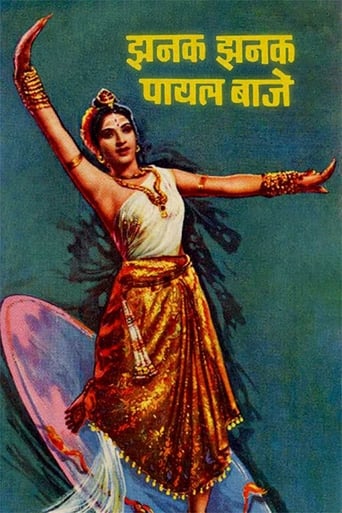
Gopi Krishna
Actor
Born: August 22, 1935 in Calcutta, Bengal Presidency, British India Died: February 18, 1994 Active: 1955-1994
Films
1 film
About Gopi Krishna
Made a significant mark in both the world of Kathak dance and Indian cinema. Born into a family with deep artistic roots, he began his dance training at a young age and quickly established himself as a prodigy in Kathak, one of India's eight major classical dance forms. His breakthrough came with the 1955 film 'Jhanak Jhanak Payal Baaje,' where his extraordinary dance abilities were showcased to national and international audiences, making the film a massive success and earning critical acclaim. Krishna's performance in this film not only demonstrated his technical mastery of Kathak but also his ability to convey deep emotional narratives through dance, bridging the gap between traditional classical arts and popular cinema. Following this success, he dedicated himself primarily to preserving and promoting Indian classical dance, establishing dance schools and performing extensively across India and abroad. Throughout his career, he trained numerous students who went on to become accomplished dancers themselves, ensuring the continuation of his artistic legacy. His contributions to Indian classical dance were recognized with numerous awards and honors, cementing his status as Kathak exponents of the 20th century.
The Craft
On Screen
Primarily known for his expressive dance performances rather than conventional acting, Krishna's screen presence was characterized by his ability to convey complex emotions through the intricate movements and facial expressions of Kathak dance. His performances combined technical virtuosity with deep emotional resonance, making classical dance accessible to mass audiences.
Milestones
- Starred in the landmark film 'Jhanak Jhanak Payal Baaje' (1955)
- Established Gopi Krishna Academy of Indian Dance
- Performed at prestigious venues worldwide including Carnegie Hall
- Received Sangeet Natak Akademi Award for Kathak
- Choreographed numerous dance productions for stage and television
Best Known For
Iconic Roles
Must-See Films
Accolades
Won
- Sangeet Natak Akademi Award (1975)
- Padma Shri (1971)
- Kalidas Samman (1984)
- Maharashtra Gaurav Puraskar
Nominated
- Filmfare Award for Best Actor (1956)
Special Recognition
- Honored with numerous titles including 'Nritya Shiromani' and 'Kathak Samrat'
- Featured on Indian postage stamps
- Several dance institutions named in his honor
Working Relationships
Worked Often With
Studios
Why They Matter
Impact on Culture
Gopi Krishna played a pivotal role in popularizing Kathak dance beyond traditional audiences, bringing classical Indian dance to mainstream cinema and international stages. His performance in 'Jhanak Jhanak Payal Baaje' is considered a watershed moment in Indian cinema, demonstrating that classical arts could achieve commercial success while maintaining artistic integrity. He helped bridge the gap between classical and popular culture, making traditional dance forms accessible and appealing to younger generations. His work contributed significantly to the global recognition of Indian classical dance, performing in numerous countries and cultural festivals, thereby serving as a cultural ambassador for India.
Lasting Legacy
Gopi Krishna's legacy endures through the thousands of students he trained, the dance institutions he established, and the continued influence of his performances on contemporary Indian dance and cinema. He is remembered as. His contributions to preserving and promoting Indian classical dance have ensured that Kathak continues to thrive and evolve. The annual Gopi Krishna Festival of Dance continues to be held in his memory, showcasing emerging talent in classical dance.
Who They Inspired
Gopi Krishna influenced generations of dancers through his innovative teaching methods and performances that combined technical excellence with emotional depth. His success in film inspired other classical dancers to explore cinema as a medium for reaching wider audiences. Many contemporary Kathak performers cite his work as a major influence on their artistic development, particularly his ability to maintain classical purity while creating contemporary appeal. His choreographic innovations continue to be studied and adapted by modern dance companies.
Off Screen
Gopi Krishna was married to Savitri, who was also a dancer and his frequent performing partner. The couple had two children, a son and a daughter, both of whom were trained in classical dance. Despite his fame and success, Krishna maintained a relatively private personal life, focusing primarily on his art and teaching. He was known for his dedication to preserving traditional Indian dance forms and was deeply respected in the artistic community for his humility and generosity in sharing his knowledge.
Education
Trained in Kathak under renowned gurus including Shambhu Maharaj and Acchchan Maharaj of the Lucknow gharana, later received advanced training from various masters of different Kathak traditions
Family
- Savitri (married 1958-1994)
Did You Know?
- Jhanak Jhanak Payal Baaje was the first Indian film to be shot in Eastman Color and won the All India Certificate of Merit for Best Feature Film
- He could perform over 200 different types of footwork patterns in Kathak
- His performance in the film included a 12-minute uninterrupted dance sequence that became legendary
- He established the first Kathak dance academy in Mumbai
- He performed for Queen Elizabeth II during her visit to India in 1961
- His dance style combined elements from both Lucknow and Jaipur gharanas of Kathak
- He was known for his ability to dance continuously for over two hours without showing fatigue
- The film's success led to increased interest in classical dance across India
- He refused many film offers after his debut to focus on classical dance
- His dance performances were known to induce trance-like states in audiences
In Their Own Words
Dance is not just movement; it is the expression of the soul through rhythm and grace.
Classical dance is not a relic of the past; it is a living, breathing art form that evolves with each generation.
When I dance, I don't just perform; I communicate with the divine through every gesture and every beat.
The beauty of Kathak lies in its ability to tell stories without words, to convey emotions through the body alone.
Frequently Asked Questions
Who was Gopi Krishna?
Legendary Indian classical dancer and with credits in this catalog. He gained national fame through his performance in the 1955 film 'Jhanak Jhanak Payal Baaje' and dedicated his life to preserving and promoting Indian classical dance forms.
What films is Gopi Krishna best known for?
Titles linked here include Jhanak Jhanak Payal Baaje (1955).
When was Gopi Krishna born and when did he die?
Born August 22, 1935; died February 18, 1994.
What awards did Gopi Krishna win?
Gopi Krishna received several prestigious awards including the Padma Shri (1971), Sangeet Natak Akademi Award (1975), Kalidas Samman (1984), and Maharashtra Gaurav Puraskar. He was also honored with titles like 'Nritya Shiromani' and 'Kathak Samrat' for his contributions to classical dance.
What was Gopi Krishna's dance style?
Master of Kathak dance, combining elements from both the Lucknow and Jaipur gharanas. His style was characterized by technical virtuosity, intricate footwork, expressive facial expressions, and the ability to convey complex narratives through dance movements.
How did Gopi Krishna influence Indian classical dance?
Gopi Krishna revolutionized the perception of classical dance by bringing it to mainstream cinema and international audiences. He established dance academies, trained thousands of students, and created innovative choreography that maintained classical purity while appealing to contemporary audiences.
Was Gopi Krishna primarily a dancer or actor?
Gopi Krishna was primarily a classical dancer who made one significant foray into acting with 'Jhanak Jhanak Payal Baaje.' After this film, he focused exclusively on dance performances, teaching, and choreography, becoming one of India's most respected Kathak exponents.