Films
1 film
About Teddy the Dog
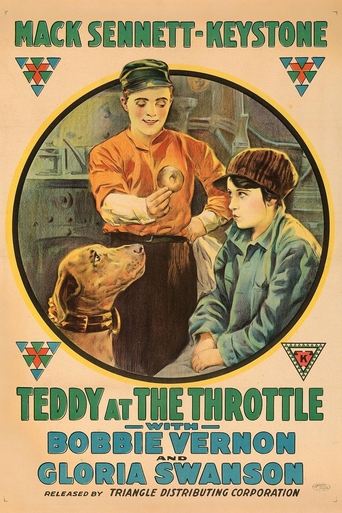
Prominent canine actor during the silent film era, best known for his starring role in the 1917 comedy 'Teddy at the Throttle.' As one of the early animal stars of Hollywood, Teddy demonstrated remarkable training and screen presence that captivated audiences of the time. His performance in 'Teddy at the Throttle' showcased his ability to perform complex physical comedy and stunts, proof of the sophisticated animal training methods being developed in early cinema. Teddy worked during a period when animal actors were becoming increasingly popular in films, following in the paw prints of other famous canine stars like Jean the Vitagraph Dog and later Rin Tin Tin. His brief but notable career in 1917 coincided with the height of silent comedy, where animal performers often provided physical humor and emotional appeal that transcended the lack of dialogue. Teddy's contributions helped establish the template for future animal actors in cinema, demonstrating that well-trained animals could carry narrative weight and become legitimate stars in their own right.
The Craft
On Screen
Teddy specialized in physical comedy and stunt work, utilizing natural canine behaviors enhanced through extensive training to create humorous situations on screen. His performances relied on timing, expression, and the ability to follow complex directional cues from off-screen handlers.
Milestones
- Starred in 'Teddy at the Throttle' (1917)
- Pioneered animal stunt work in silent comedy
- Demonstrated advanced training techniques for early cinema
Best Known For
Iconic Roles
Must-See Films
Working Relationships
Worked Often With
Studios
Why They Matter
Impact on Culture
Teddy the Dog contributed to the early development of animal actors in cinema, helping establish that animals could be more than mere props but actual performers capable of carrying narrative weight. His work in 'Teddy at the Throttle' demonstrated the commercial viability of animal-centered comedies, paving the way for later canine stars like Rin Tin Tin and Strongheart who would become major box office draws. Teddy's performances helped audiences accept animals as legitimate characters in storytelling, expanding the possibilities of cinematic narrative beyond human-centric tales.
Lasting Legacy
Though his career was brief, Teddy the Dog represents an important milestone in the evolution of animal performers in film. His work helped establish training methods and performance techniques that would be refined and expanded upon by subsequent generations of animal actors. Teddy's contribution to silent comedy demonstrates how early filmmakers recognized the universal appeal of animal characters, a tradition that continues in cinema today. His legacy lives on in the continued popularity of animal stars and the sophisticated training methods now used in film and television production.
Who They Inspired
Teddy's performances influenced subsequent animal trainers and filmmakers by demonstrating the commercial and artistic potential of well-trained animal actors. His work helped establish standards for animal stunt work and comedic timing that would be built upon by later canine stars. The success of films like 'Teddy at the Throttle' encouraged studios to invest more in animal talent, leading to the golden age of animal actors in the 1920s and beyond.
Off Screen
As an animal actor, Teddy's personal life details were not documented in the same manner as human performers during the silent era. He was likely owned and trained by professional animal handlers who specialized in film work, a common practice for animal actors of this period.
Education
Trained by professional animal handlers specializing in film performance techniques
Did You Know?
- Appeared in films during the height of silent comedy's popularity
- One of the early animal actors to receive top billing in a film title
- His film 'Teddy at the Throttle' was released during World War I, a period when animal films provided escapist entertainment
- Animal actors like Teddy often performed their own stunts, as special effects technology was limited
- The training methods used for Teddy were likely based on reward-based conditioning, a technique still used today
- Silent era animal actors often had shorter careers than their human counterparts due to the physical demands of performing
- Teddy's film was likely a short comedy, typical of the format for animal-centered features of the era
- Animal actors in silent films didn't need to learn dialogue cues, focusing entirely on physical performance
Frequently Asked Questions
Who was Teddy the Dog?
Canine with credits in this catalog.' He was one of the early animal performers who demonstrated that trained animals could carry leading roles in films during the golden age of silent cinema.
What films is Teddy the Dog best known for?
Titles linked here include Teddy at the Throttle (1917).
When was Teddy the Dog active in films?
Teddy the Dog had a brief but notable career in 1917, during the height of the silent film era. His documented work consists of that single year, which was common for many animal actors of the period.
What was Teddy the Dog's acting style?
Teddy specialized in physical comedy and stunt work, performing complex actions timed for humorous effect. His style relied on natural canine behaviors enhanced through extensive training, creating visual gags that appealed to silent film audiences.
How did Teddy the Dog influence later animal actors?
Teddy helped establish the template for animal performers in cinema, demonstrating that dogs could be legitimate stars rather than just props. His success paved the way for later famous canine actors like Rin Tin Tin and Strongheart who would become major box office draws in the 1920s.