Magnus Stifter
Actor & Director
- Active
- 1916-1916
Films 1
About Magnus Stifter
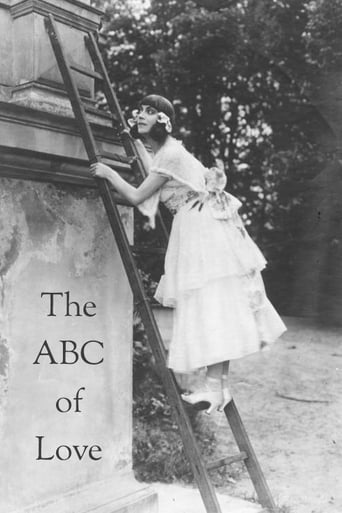
Magnus Stifter was an Austrian actor and film director active during the silent era, best remembered today for his work in early German-language cinema. He is documented as having worked on at least one known production, The ABC of Love (1916), in which he is credited both as director and actor, reflecting the fluid multi-hyphenate roles common in the earliest years of filmmaking. Because surviving records on Stifter are extremely sparse, much of his career beyond this credit is difficult to reconstruct with certainty, and he does not appear to have left behind a large body of widely preserved or heavily discussed work. His name survives primarily through film reference sources and historical catalogues rather than through mainstream fame, which is typical of many early European cinema practitioners whose careers were not exhaustively documented. The available evidence suggests that he was part of the pioneering generation of filmmakers who helped shape narrative screen storytelling in the 1910s, when film direction, performance, and production responsibilities were often concentrated in a single individual. Although detailed personal information about his life is not readily verified, his credit on The ABC of Love marks him as an active participant in the formative silent-film period. In the broader history of classic cinema, Stifter represents the many early artists whose contributions helped build the foundation of European film culture even when later fame eluded them.
More about Magnus Stifter
On screen
No detailed contemporary reviews or surviving performance analyses are readily available for Magnus Stifter. Based on his era and his work in a 1916 silent production, his acting would have relied on the expressive physicality, gesture, and visual clarity typical of silent-film performance. As with many actors of the period, communication of emotion and narrative information would have depended on facial expression, posture, and movement rather than spoken dialogue. Specific identifying traits of his screen style cannot be confirmed from available sources.
Behind the camera
No detailed critical descriptions of Magnus Stifter's directing style are readily available from surviving references. His known directorial credit suggests involvement in early silent-era storytelling, likely emphasizing visual narration, staging, and performance-driven drama, which were standard priorities for filmmakers of the 1910s. Because only limited documentation survives, it is not possible to verify distinctive stylistic trademarks such as editing preferences, thematic concerns, or camera technique. His work should be understood within the general context of early Central European silent cinema.
In film history
Magnus Stifter's cultural impact lies less in widespread public renown than in his place among the early practitioners of European silent cinema. His credit as both actor and director on a 1916 film demonstrates the experimental and collaborative spirit of the medium in its formative period, when artistic roles were still highly flexible and the language of film was being invented in real time. Even without a surviving body of famous work, figures like Stifter are important because they represent the many contributors who helped normalize feature-length narrative filmmaking and performance conventions in the 1910s. His inclusion in film databases and historical catalogues keeps alive evidence of the broader ecosystem of early cinema beyond the handful of internationally famous names.
Later reputation
Stifter's lasting legacy is primarily archival and historical: he remains a traceable name in the record of silent-era filmmaking, attached to a 1916 production that preserves his contribution to early screen culture. For film historians, such figures are valuable because they reveal how international and collaborative the silent era truly was, especially in German-language and Austrian contexts. While he is not known today as a major canonical auteur or star, his survival in the record underscores the importance of preserving credits from the earliest decades of cinema. His legacy is therefore one of participation in the foundation of film history, rather than celebrity.
Influence
Because there is no substantial surviving critical literature on Magnus Stifter, direct influence on later actors or directors cannot be confidently established. His broader influence is best understood indirectly: as one of many early filmmakers whose work helped establish the practical norms of acting, directing, and production in silent cinema. By occupying both performer and director roles, he exemplifies the multi-tasking creative model that influenced the development of early film labor and authorship. His historical presence contributes to our understanding of how the medium evolved in Europe before specialization became the norm.
Off screen
No reliably documented personal-life details, such as marriages, family background, or private career history, were found in the available historical references for Magnus Stifter. This lack of biographical detail is common for many early silent-era figures whose careers were recorded in film credits but not extensively profiled in later reference literature. As a result, his off-screen life remains largely unknown to modern researchers. Any claim beyond this would be speculative.
Education
No verified information about his education is currently available in standard film reference sources.
Credits
- Credited as both director and actor on The ABC of Love (1916)
- Represents an early Austrian-German silent-era filmmaker working in the formative years of narrative cinema
- Helps illustrate the multi-role nature of early film production, when directors often also appeared as performers
- Associated with one of the many now-obscure productions of the mid-1910s that contributed to the development of European screen melodrama and romance
- Listed in historical film records as a classic cinema personality from the silent era
Roles
- Role in The ABC of Love (1916)
Films
- The ABC of Love (1916)
Notes
- Magnus Stifter is credited as both director and actor on the same 1916 film, The ABC of Love.
- He belongs to the silent era, when many filmmakers performed multiple jobs on a production.
- His documented screen activity appears to be extremely limited in surviving reference material.
- He is associated with Austrian cinema history, though detailed biographical data is scarce.
- He is an example of a historically recorded film figure who is better known to researchers than to general audiences.
- His career illustrates how many early cinema contributors have only fragmentary documentation left today.
Questions
Who was Magnus Stifter?
Magnus Stifter was an Austrian actor and director associated with silent-era cinema. He is best documented for his work on The ABC of Love (1916), where he is credited both behind and in front of the camera.
What films is Magnus Stifter best known for?
He is best known for The ABC of Love (1916), the one title consistently associated with his name in available historical records. No broader, widely cited filmography is currently verified from surviving reference material.
When was Magnus Stifter born and when did he die?
Reliable birth and death dates have not been verified in the available sources consulted for this profile. As a result, both his birth date and death date remain unknown in standard reference material.
What awards did Magnus Stifter win?
No awards or nominations are currently documented for Magnus Stifter in the historical sources available. This is not unusual for early silent-era filmmakers, many of whom worked before modern award systems or widespread archival recognition existed.
What was Magnus Stifter's acting or directing style?
There is no surviving critical description of his specific style, but as a 1916 silent-film artist he would have worked within the expressive visual language of the era. That typically meant clear staging, physical expressiveness, and narrative emphasis through images rather than dialogue.
What is Magnus Stifter's legacy in film history?
His legacy is chiefly historical and archival: he is one of the many early film artists whose work helped build silent cinema, even if his personal fame did not endure. His credit on a 1916 film helps document the development of Austrian and German-language screen culture in the formative years of the medium.