
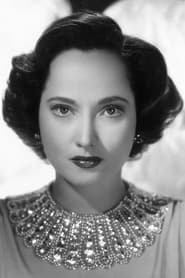
Merle Oberon
Actor
Born: February 19, 1911 in Bombay, British India (now Mumbai, India) Died: November 23, 1979 Active: 1928-1973 Birth Name: Estelle Merle O'Brien Thompson
Films
1 film
About Merle Oberon
British actress who became one of Hollywood's most glamorous leading ladies during the Golden Age of cinema. Born Estelle Merle O'Brien Thompson in Bombay, India, she began her career in British films before being discovered by director Michael Powell and brought to Hollywood by Samuel Goldwyn. Her breakthrough came with 'The Private Life of Henry VIII' (1933), which led to her being cast in major Hollywood productions. She received an Academy Award nomination for Best Actress for her role in 'The Dark Angel' (1935), cementing her status as a major star. Oberon's from the late 1920s through the 1970s, with her most successful period being in the 1930s and 1940s when she appeared in classics like 'Wuthering Heights' (1939). Throughout her life, she concealed her Indian birth and mixed-race heritage, claiming to be born in Tasmania to avoid racial prejudice in Hollywood. Her later career included television work and occasional film roles until her retirement in the 1970s.
The Craft
On Screen
Known for her elegant screen presence and sophisticated demeanor, Oberon brought a refined British sensibility to her Hollywood roles. She excelled in period dramas and romantic comedies, often portraying strong-willed yet vulnerable characters with grace and poise. Her acting style combined classical technique with naturalistic emotion, making her particularly effective in costume dramas where her beauty and refinement could shine through.
Milestones
- Academy Award nomination for The Dark Angel (1935)
- Marriage to director Alexander Korda
- Star role in Wuthering Heights (1939)
- Leading lady status at major studios
- Transition from British to Hollywood cinema
- First Asian-born actress nominated for Best Actress Oscar
Best Known For
Iconic Roles
Must-See Films
Accolades
Won
- New York Film Critics Circle Award for Best Actress (1935) for The Dark Angel
Nominated
- Academy Award nomination for Best Actress (1935) for The Dark Angel
Special Recognition
- Hollywood Walk of Fame star (1960)
- Star on the Walk of Fame at 6273 Hollywood Blvd
Working Relationships
Worked Often With
Studios
Why They Matter
Impact on Culture
Merle Oberon broke barriers as one of the first actresses of Indian birth to achieve international stardom in Hollywood, though she concealed her heritage throughout her career. Her success in both British and American cinema helped bridge the two film industries during the 1930s, paving the way for more international collaborations. Oberon's elegant screen presence and sophisticated style influenced fashion and beauty standards of the era, making her a style icon for many women. Her ability to transition successfully from British films to Hollywood blockbusters demonstrated the growing international nature of cinema during the Golden Age.
Lasting Legacy
Merle Oberon's legacy includes her contribution to classic Hollywood cinema through memorable performances in films like 'Wuthering Heights' and 'The Dark Angel.' Despite the challenges she faced, including a serious car accident and the need to conceal her racial background, she maintained a successful career spanning over four decades. Her life story has become an important part of film history discussions about race, identity, and the pressures faced by actresses in Hollywood's Golden Age. Oberon's films continue to be celebrated by classic cinema enthusiasts and are regularly featured on platforms like Turner Classic Movies.
Who They Inspired
Oberon influenced subsequent generations of actresses through her ability to maintain dignity and elegance in her roles, even when playing characters facing adversity. Her success in period dramas helped establish a template for actresses in costume pieces, combining beauty with emotional depth. The way she navigated the challenges of being a woman of color in an era of extreme racial prejudice in Hollywood, while problematic in its secrecy, has informed modern discussions about representation and identity in cinema and the historical barriers faced by minority performers.
Off Screen
Oberon had a complex personal life marked by her efforts to conceal her mixed-race heritage and Indian birth throughout her career. She married three times: first to director Alexander Korda, who helped launch her international career; then to cinematographer Lucien Ballard; and finally to Robert Wolders. Her marriage to Korda was particularly significant as he helped advance her career, though it ended when she left him for his cinematographer. She suffered severe skin damage from a car accident in 1937, which required extensive makeup to conceal and may have affected her career trajectory.
Education
Limited formal education; attended convent school in Calcutta, India
Family
- Alexander Korda (1939-1945)
- Lucien Ballard (1945-1949)
- Robert Wolders (1975-1979)
Did You Know?
- Born in Bombay, India, she concealed her mixed-race heritage throughout her career, claiming to be born in Tasmania
- Her birth name was Estelle Merle O'Brien Thompson
- She was discovered by director Michael Powell while working as a club hostess
- The car accident in 1937 left her with facial scars that required special makeup techniques created by cinematographer husband Lucien Ballard
- She was the first Asian-born actress to be nominated for an Academy Award for Best Actress
- Her mother was of Sri Lankan (Ceylonese) and Maori descent
- She was one of the highest-paid actresses of the 1930s
- Her final film role was in the 1973 film 'Interval'
- She appeared on the cover of Life magazine in 1937
- Her marriage to Alexander Korda ended when she left him for his cinematographer, Lucien Ballard
In Their Own Words
I've been lucky. I've had a wonderful life. I've worked with wonderful people and I've been in wonderful pictures.
In Hollywood, you have to be careful not to believe your own publicity.
I never wanted to be a star. I just wanted to be an actress.
Beauty is only skin deep, but it's a valuable asset in my profession.
Frequently Asked Questions
Who was Merle Oberon?
British actress who became a Hollywood star during the Golden Age of cinema, known for her beauty and roles in films like 'Wuthering Heights' and 'The Dark Angel.' She was one of the first actresses of Indian birth to achieve international stardom, though she concealed her heritage throughout her career.
What films is Merle Oberon best known for?
Titles linked here include Wuthering Heights (1939), The Dark Angel (1935).
When was Merle Oberon born and when did she die?
Born February 19, 1911; died November 23, 1979.
What awards did Merle Oberon win?
Merle Oberon received an Academy Award nomination for Best Actress for her role in 'The Dark Angel' (1935) and won the New York Film Critics Circle Award for Best Actress for the same performance. She also received a star on the Hollywood Walk of Fame in 1960.
What was Merle Oberon's acting style?
Merle Oberon was known for her elegant screen presence and sophisticated demeanor, excelling in period dramas and romantic comedies. Her acting combined classical technique with naturalistic emotion, making her particularly effective in costume pieces where her beauty and poise could shine.
Was Merle Oberon really born in Tasmania?
No, despite claiming to be born in Tasmania throughout her career, Merle Oberon was actually born in Bombay, India. She concealed her true birthplace and mixed-race heritage to avoid racial prejudice in Hollywood, a fact that only became widely known after her death.
Who did Merle Oberon marry?
Merle Oberon was married three times: to director Alexander Korda (1939-1945), who helped advance her career; to cinematographer Lucien Ballard (1945-1949); and to Robert Wolders (1975-1979), with whom she remained until her death.