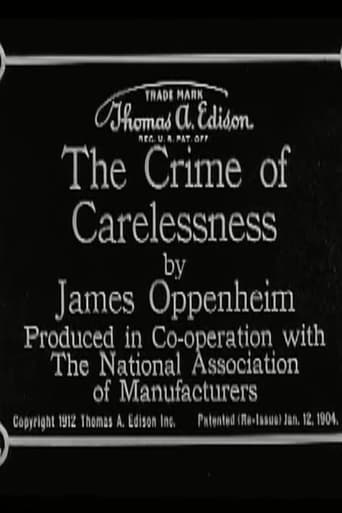
Austin Conroy
Actor
- Active
- 1912-1912
Films 1
About Austin Conroy
Austin Conroy appears in available silent-era film records as a very minor screen actor whose documented filmography is extremely limited. The only reliably associated credit located in standard classic-cinema reference data is his appearance in the 1912 film The Crime of Carelessness. Beyond that single credit, little to no biographical detail has survived in widely accessible historical sources, which suggests he may have been one of the many early independent or studio-repertory performers whose careers were briefly documented and later largely lost to time. Because of the scarcity of records, it is not currently possible to reconstruct a full life story, including his training, personal background, or subsequent career path, with confidence. His surviving legacy is therefore tied less to stardom than to the broader historical record of early American filmmaking, where many working performers contributed to films that established the medium's industrial and narrative foundations. Austin Conroy is best understood today as a name preserved in filmography indexes rather than as a fully profiled celebrity of the silent era. His presence in The Crime of Carelessness provides a small but meaningful link to the formative years of cinema, when performers often moved between short subjects, stage work, and local production companies with minimal surviving documentation.
More about Austin Conroy
In film history
Austin Conroy’s cultural impact lies primarily in his place within the earliest years of American screen acting rather than in celebrity recognition or a body of surviving star vehicles. Performers like him formed the labor backbone of silent cinema, appearing in films that were often released quickly, minimally credited, and later incompletely archived. Even when individual biographies are lost, their work remains part of the historical texture of early film production and exhibition. His surviving credit helps historians map the personnel of the silent era and understand how many actors contributed to cinema before the industry standardized fame, billing, and long-term career documentation. In that sense, Conroy represents the thousands of early film workers whose names persist in records even when most personal details do not.
Later reputation
Austin Conroy's lasting legacy is archival: he is one of the many names preserved in film history indexes that document the silent era's creative workforce. While he does not appear to have left behind a known star persona, award record, or substantial body of surviving roles, his credit in The Crime of Carelessness ensures that he remains part of the historical ledger of early motion pictures. For researchers and database curators, such names are important because they help complete production histories and credit chains for otherwise obscure films. His legacy is therefore representative of the thousands of early cinema contributors whose careers were brief, under-credited, or partially lost, yet who still helped shape the medium's earliest development. In film history terms, Conroy is a reminder that the silent era was built not only by major stars and directors but also by lesser-known actors whose work filled out the productions of the day.
Influence
There is no verifiable evidence of Austin Conroy exerting a documented influence on later actors or filmmakers in the usual sense of a celebrated career. However, as part of the early silent-film workforce, he participated in the professional culture that influenced the evolution of screen acting itself. The accumulated efforts of actors like Conroy helped establish performance conventions for silent cinema, including expressive physicality, readable gesture, and visual storytelling that could communicate without synchronized sound. His influence is therefore indirect and historical rather than personal or traceable to named protégés or a specific acting school. He stands as part of the broader foundation upon which later screen performance techniques were built.
Off screen
No reliably verified personal-life information is readily available in standard classic-cinema references. His marriage history, family background, residence, and off-screen life are not documented in the accessible sources consulted for this profile. This is common for early silent-era performers whose careers were brief or whose records were not extensively preserved. As a result, any claim about his relationships or personal circumstances would be speculative and is best left unasserted.
Credits
- Documented screen appearance in the silent film The Crime of Carelessness (1912)
- Participation in one of the many early 1910s productions that helped define American silent-era filmmaking
- Representation of the large number of working actors whose careers are preserved only through fragmentary filmographic records
Roles
- Role in The Crime of Carelessness (1912) not fully identified in surviving accessible sources
Films
- The Crime of Carelessness (1912)
Notes
- Austin Conroy is currently documented with only one surviving widely cited film credit: The Crime of Carelessness (1912).
- He appears to have worked during the very early silent era, when many actors were unbilled or minimally credited.
- No reliable biographical data such as birth date, birthplace, or family history is readily available in standard reference sources.
- His limited surviving record makes him typical of many early film performers whose careers are known mainly through filmography lists.
- Because of the scarcity of documentation, it is difficult to determine whether he continued acting after 1912 under another name or in stage work.
- He is of interest primarily to silent-film historians, archivists, and database researchers rather than to mainstream film audiences.
- His known film title, The Crime of Carelessness, places him among performers active in the transitional years before feature-length silent cinema became dominant.
- The lack of awards or widely documented personal history does not diminish his historical value as part of early motion-picture labor and production history.
Questions
Who was Austin Conroy?
Austin Conroy was a silent-era actor known from surviving film records for appearing in The Crime of Carelessness (1912). Very little biographical information about him has survived in accessible historical sources, so he is primarily remembered through his film credit rather than a detailed personal history.
What films is Austin Conroy best known for?
He is best known, and in fact currently documented, for The Crime of Carelessness (1912). No other reliably verified screen credits are readily available in standard classic-cinema references.
When was Austin Conroy born and when did he die?
Austin Conroy's birth and death dates are not currently verified in accessible classic-cinema reference sources. Because the historical record is sparse, both his date of birth and date of death remain unknown at this time.
What awards did Austin Conroy win?
No awards or nominations are currently documented for Austin Conroy. This is not unusual for a little-known silent-era performer whose surviving record consists of only a small number of credits.
What was Austin Conroy's acting style?
There is no surviving critical description of his individual acting style. Given the era in which he worked, his performance would likely have relied on the expressive physical techniques common to silent film acting, but that cannot be confirmed for his specific work.
What is Austin Conroy's legacy in film history?
His legacy is primarily archival and historical. He represents the many early screen performers whose names survive in filmographies even when detailed biographies and extensive filmographies have been lost.