Arthur Rosson
Actor & Director
Born: August 24, 1886 in Pau, France Died: June 17, 1960 Active: 1912-1948 Birth Name: Arthur Charles Rosson
Films
3 films
About Arthur Rosson
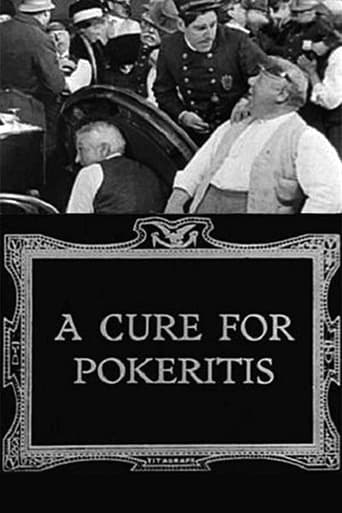
British-American film director and actor who began his career in the silent era before transitioning to become one of Hollywood's most prolific directors. Born in Pau, France, to British parents, Rosson moved to the United States and entered the film industry as an actor in 1912, appearing in comedies like 'A Cure for Pokeritis' alongside John Bunny. However, his true talent emerged behind the camera, and by 1917 he had transitioned to directing, helming numerous short films and features. Throughout the 1920s and 1930s, Rosson became known for his efficient work on westerns, adventure films, and comedies, often serving as a second-unit director on major productions. He worked extensively with Cecil B. DeMille, contributing to epic films like 'The Crusades' and 'Union Pacific.' Rosson's nearly four decades, during which he directed or co-directed over 100 films, showcasing remarkable versatility across genres. His final directorial work came in the late 1940s, after which he retired from the industry.
The Craft
On Screen
As an actor in his early career, Rosson appeared in comedic shorts with exaggerated gestures typical of the silent era, working primarily in supporting roles for Vitagraph Studios
Behind the Camera
Rosson was known for his efficient, no-nonsense approach to filmmaking, particularly excelling in westerns and action sequences. His directing style emphasized clear storytelling, dynamic action choreography, and the ability to work quickly within budget constraints. He had a particular talent for coordinating large-scale action scenes and horse stunts, making him valuable for second-unit work on epics.
Milestones
- Acting debut in 'A Cure for Pokeritis' (1912)
- Transitioned to directing in 1917
- Directed over 100 films throughout his career
- Frequent collaborator with Cecil B. DeMille
- Directed numerous westerns starring Tom Mix
- Served as second-unit director on major Hollywood epics
Best Known For
Iconic Roles
Must-See Films
Accolades
Special Recognition
- Hollywood Walk of Fame star for contributions to motion pictures
Working Relationships
Worked Often With
Studios
Why They Matter
Impact on Culture
Arthur Rosson contributed significantly to the development of the Hollywood studio system, exemplifying the versatile director who could handle any genre or assignment. His work on westerns helped establish many of the genre's conventions during its formative years. As a second-unit director on major epics, Rosson was instrumental in creating some of cinema's most memorable large-scale sequences, particularly in Cecil B. DeMille's productions. His efficient directing methods influenced how studios approached production scheduling and resource management during Hollywood's Golden Age.
Lasting Legacy
Though not as famous as some of his contemporaries, Arthur Rosson's legacy lies in his remarkable productivity and versatility. He represents the quintessential studio system director who could be counted on to deliver quality entertainment regardless of genre or budget constraints. His contributions to major Hollywood epics as a second-unit director helped shape the spectacular sequences that defined Golden Age cinema. The Rosson family's combined contributions to Hollywood - with Arthur as director and brother Harold as cinematographer - left an indelible mark on American film history.
Who They Inspired
Rosson's efficient directing techniques and ability to handle complex action sequences influenced generations of second-unit directors and action filmmakers. His work on westerns helped establish visual and narrative templates that would be refined by later directors like John Ford and Howard Hawks. His collaborative approach to filmmaking, particularly his work with Cecil B. DeMille, demonstrated the importance of teamwork in creating large-scale cinematic productions.
Off Screen
Arthur Rosson came from a family involved in the film industry. His brother Harold Rosson became a renowned cinematographer who won an Academy Award for 'The Wizard of Oz.' Arthur married actress Helene Costello in 1927, though the marriage ended in divorce. He later married actress Jane Frazee. Rosson was known as a reliable workhorse in Hollywood, respected for his professionalism and ability to deliver films on time and within budget.
Education
Limited formal education; learned filmmaking through practical experience in the early film industry
Family
- Helene Costello (1927-1934)
- Jane Frazee (1943-1960)
Did You Know?
- Began his career as an actor before transitioning to directing
- Directed over 100 films in his career
- Was the brother of Oscar-winning cinematographer Harold Rosson
- Frequently worked as a second-unit director on major epics
- Married actress Helene Costello, sister of actress Dolores Costello
- Worked extensively with western star Tom Mix
- Was known for his ability to complete films quickly and under budget
- Contributed to 'The Wizard of Oz' indirectly through his brother's cinematography work
- Directed several films starring John Wayne early in Wayne's career
- Was born in France but held British citizenship before becoming an American
In Their Own Words
In Hollywood, you're only as good as your last picture, and I've been lucky to keep making pictures
Directing is about problem-solving - every day brings a new challenge
The best directors are invisible; the audience should never notice the technique
Frequently Asked Questions
Who was Arthur Rosson?
British-American on YTB.my.
What films is Arthur Rosson best known for?
Titles linked here include A Cure for Pokeritis (1912), The Crusades (1935) - as co-director.
When was Arthur Rosson born and when did he die?
Born August 24, 1886; died June 17, 1960.
What awards did Arthur Rosson win?
Arthur Rosson did not receive major individual awards during his career, though he was honored with a star on the Hollywood Walk of Fame for his significant contributions to the motion picture industry.
What was Arthur Rosson's directing style?
Rosson was known for his efficient, practical directing style that emphasized clear storytelling and dynamic action, particularly excelling in westerns and large-scale sequences. He was valued for his ability to work quickly within budget constraints while delivering quality entertainment.