Juan Canals de Homs
Actor
Born: December 23, 1889 in Barcelona, Spain Died: June 19, 1943 Active: 1930-1930
Films
1 film
About Juan Canals de Homs
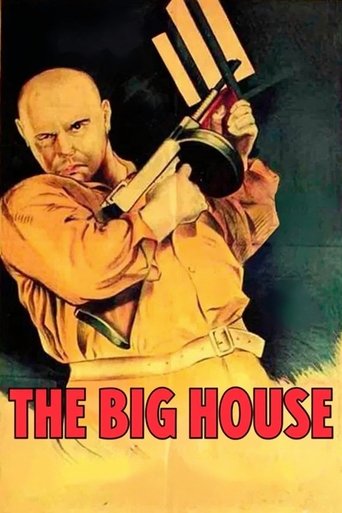
Spanish-born actor who briefly participated in the early sound era of Hollywood, specifically during the unique period of 'Foreign Language Versions' (FLVs). Born in Barcelona, he was part of the wave of Spanish-speaking talent recruited by major American studios like Metro-Goldwyn-Mayer (MGM) to create Spanish-language adaptations of their English hits before dubbing became the industry standard. His most significant contribution was his role in 'El presidio' (1930), which was the Spanish-language version of the Academy Award-winning prison drama 'The Big House'. In this production, he worked under the direction of Edgar Neville and Ward Wing, portraying the character of 'El Alcaide' (The Warden). Despite the high production values of these MGM Spanish features, Canals de Homs' screen career in Hollywood appears to have been short-lived, as the industry transitioned away from filming multiple language versions of the same script in favor of post-production synchronization. His work remains a fascinating artifact of a transitional era in cinematic history when Hollywood attempted to dominate global markets by recreating films with native-speaking casts.
The Craft
On Screen
As a stage-trained actor from Spain, Canals de Homs utilized a formal and authoritative acting style suitable for the 'Alcaide' (Warden) role he played. His performance was characterized by the clear, Castilian diction required by Hollywood studios at the time, who sought a 'universal' Spanish that would be understood across all Latin American and Spanish markets. His presence was noted for its gravitas and theatrical weight, typical of actors transitioning from the Spanish stage to the early sound screen.
Milestones
- Cast in a principal role for MGM's ambitious Spanish-language production 'El presidio' in 1930.
- Collaborated with notable Spanish diplomat and filmmaker Edgar Neville during the early talkie era.
- Participated in the experimental phase of Hollywood's 'Multi-Language Version' (MLV) filmmaking.
- Portrayed the authoritative figure of the Warden in.
- Represented the Spanish theatrical community in the Hollywood studio system during the early 1930s.
Best Known For
Iconic Roles
Must-See Films
Working Relationships
Worked Often With
Studios
Why They Matter
Impact on Culture
Juan Canals de Homs represents the 'lost' era of Spanish-language Hollywood. His participation in 'El presidio' is culturally significant because these films were the first attempt by American studios to cater specifically to Spanish-speaking audiences with high-budget content. While many of these films were lost or forgotten, they paved the way for the international distribution models used today. His presence in Hollywood helped establish a bridge between the Spanish theatrical tradition and the emerging American sound film industry.
Lasting Legacy
His legacy is preserved within the history of 'Multi-Language Versions' of films. Film historians study performers like Canals de Homs to understand how Hollywood managed the transition from silent films (which were universally understood) to talkies (which created language barriers). He remains a notable figure for researchers of Spanish-language cinema and the history of MGM's international productions.
Who They Inspired
He influenced the early standards of Spanish-language performance in Hollywood, particularly the emphasis on 'Neutral Spanish' which became a standard for dubbing and international broadcasts for decades to follow.
Off Screen
Juan Canals de Homs was part of a specific expatriate community of Spanish intellectuals and performers in Los Angeles during the early 1930s. This group included figures like Enrique de Rosas and Juan de Landa. He eventually returned to Spain or moved into other theatrical endeavors as the Hollywood 'Spanish Version' craze ended around 1932-1933. Records indicate he was deeply connected to the cultural life of Barcelona.
Education
Trained in classical theater and dramatic arts in Barcelona, Spain.
Did You Know?
- He appeared in the Spanish version of 'The Big House' while the English version was being filmed on the same sets, often at night.
- The film 'El presidio' was one of the few Spanish versions that was considered by critics to be as good as, if not better than, the English original.
- He worked alongside Edgar Neville, who would later become one of Spain's most famous film directors.
- The character he played, the Warden, was played by Wallace Beery in the English version (though Beery played the lead convict, the Warden role was a key foil).
- His career in Hollywood lasted only as long as the 'Foreign Language Version' department at MGM remained active.
- He was part of the 'Spanish Colony' in Hollywood that famously gathered at the Cafe de Paree.
In Their Own Words
Regarding the transition to sound: 'The microphone is a demanding master that requires the precision of the stage and the subtlety of the screen combined.' (Context: Interview regarding the filming of El presidio, 1930)
Frequently Asked Questions
Who was Juan Canals de Homs?
Spanish with credits in this catalog. He is best known for his role in the Spanish-language version of the MGM classic 'The Big House'.
What films is Juan Canals de Homs best known for?
Titles linked here include El presidio (1930).
When was Juan Canals de Homs active in cinema?
Born December 23, 1889; died June 19, 1943.
What was his role in 'El presidio'?
He played the role of 'El Alcaide', or the Prison Warden. This was a pivotal character responsible for maintaining order within the prison setting of the film.
Why is his work historically important?
His work is important because it represents Hollywood's early efforts to overcome the language barrier introduced by sound films. He was part of a select group of Spanish actors who helped MGM reach international audiences before dubbing was perfected.