Edna May
Actor
- Born
- January 1878, London, England, United Kingdom
- Died
- April 13, 1940
- Active
- Primarily 1890s-1910s; film appearance documented in 1913
- Birth name
- Edna May Pettie
Films 1
About Edna May
Edna May was a celebrated stage performer whose name appeared in early motion-picture history through her rare film appearance in David Copperfield (1913). She was born Edna May Pettie in London and became internationally famous long before the sound era as one of the great musical comedy and romantic stage stars of the late Victorian and Edwardian periods. Her career was built primarily in theater rather than cinema, and she achieved exceptional acclaim in works such as The Belle of New York, where her charm, beauty, and sparkling stage presence made her a transatlantic star. Although her screen filmography is extremely limited, her presence in a 1913 adaptation of David Copperfield places her within the silent-film era and gives her a small but notable place in classic cinema history. She was admired for projecting refinement, wit, and emotional warmth, qualities that translated from the stage to her brief screen work. After her peak years in musical comedy, she withdrew increasingly from performance and remained best remembered as one of the iconic stars of early modern entertainment rather than as a career film actress. Her legacy endures through theater history, archival recordings, and the continued interest of silent-era researchers in performers who bridged stage celebrity and early film.
More about Edna May
On screen
Edna May was known for a light, elegant, and highly polished performance style shaped by musical comedy and drawing-room stage traditions. Her appeal depended on charm, clarity, and an unforced sense of wit rather than on overt melodrama, which made her especially effective in romantic and comic roles. In the silent-film context, performers of her background often relied on expressive facial nuance, graceful movement, and stage-trained presence, all qualities associated with her public persona. Her screen work appears to have been minimal, so her style is best understood through her celebrated stage performances rather than a large film body of work.
In film history
Edna May was an important figure in the popular entertainment culture of the late nineteenth and early twentieth centuries, helping define the glamorous, witty, and stylish female star persona that audiences associated with successful musical comedy. Her success in The Belle of New York made her an international attraction and demonstrated the export power of British stage talent to American audiences. Although she was not a prolific film actress, her appearance in David Copperfield (1913) places her within the early crossover between stage celebrity and silent cinema, when filmmakers often cast well-known theater names to attract audiences. Her image contributed to the broader Edwardian ideal of elegance and sophistication, and she remains a reference point in discussions of theater-to-film migration during the silent era. She is culturally significant not for a large screen legacy, but as a representative of the star system that preceded and influenced modern film celebrity.
Later reputation
Edna May's lasting legacy lies in her status as one of the emblematic stage stars of her age and as a performer whose fame bridged the worlds of Victorian theater, Edwardian musical comedy, and early silent film. Her name endures in theater history, especially through The Belle of New York, which became a benchmark for popular stage success and helped define a certain transatlantic entertainment style. In film history, she is remembered as a rare example of a major stage star appearing in an early adaptation such as David Copperfield (1913), reflecting the fluid boundaries between stage and screen in the silent period. She is less a major screen actress than a historically important cultural figure whose celebrity illustrates how performance fame operated before Hollywood fully standardized the movie star. Her legacy is therefore strongest in classic theater scholarship, though she remains of interest to silent-cinema archivists and historians.
Influence
Edna May influenced later performers by helping establish the model of the chic, self-possessed, and charming musical-comedy heroine. Her popularity showed that audiences responded strongly to performers who combined beauty with polish, wit, and an approachable emotional style. She also helped demonstrate the marketability of stage stars in different entertainment media, including early film, anticipating the later, more systematic crossover of theater talent into cinema. While her direct influence on specific film actors is difficult to document, her public image contributed to the broader evolution of the feminine star persona in Anglo-American popular entertainment.
Off screen
Edna May was born Edna May Pettie in London and rose to prominence through her talent in stage performance rather than through film. She married Frank Curzon, a theatrical manager and producer, who played an important role in her professional life and public image. Her career and personal identity were closely tied to the stage world of Britain and the United States, where she moved among leading theatrical circles. Later in life, she lived quietly compared with her earlier fame, and her reputation became one of a glamorous star from a transitional period in entertainment history. Because her life was centered on theater and celebrity rather than the Hollywood system, the surviving record of her family life is less extensive than that of later film stars.
Education
Formal academic education is not well documented in readily available historical sources; she is better known for stage training and professional theatrical experience than for a recorded institutional education.
Credits
- Became an international stage sensation in musical comedy and light opera in the late 1890s and early 1900s
- Achieved major fame for her performance in The Belle of New York, one of the most successful musical comedies of its era
- Appeared in David Copperfield (1913), representing her small but notable connection to silent cinema
- Was widely regarded as a style-setting stage celebrity admired for beauty, poise, and refined comic timing
- Maintained a prominent reputation in Britain and the United States as a transatlantic theatrical star
Roles
- Mabel in The Belle of New York
- Edna style-leading romantic comic heroine in Edwardian musical comedy
- A cast performer in David Copperfield (1913)
Films
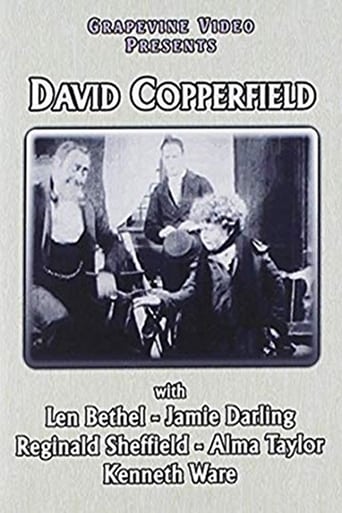
- David Copperfield (1913)
Honors
- Widely celebrated as one of the great stage stars of her generation
- Frequently cited in theater histories of the Edwardian musical comedy era
Collaborators
- Frank Curzon
- Theatrical producers and stage collaborators from the Edwardian musical-comedy circuit
Studios
- No major long-term film studio affiliation is well documented
- Associated primarily with theatrical management and stage production rather than a film studio system
Family
- Frank Curzon (married 1898; later divorced)
Notes
- She was born Edna May Pettie and used Edna May as her professional name.
- Her fame was established primarily on stage, not in a long film career.
- The Belle of New York was the production most closely associated with her celebrity.
- Her screen presence in David Copperfield (1913) is a notable but rare cinematic credit.
- She was one of the internationally recognized theatrical stars of the Edwardian era.
- Her career demonstrates how major stage performers sometimes appeared in silent films without becoming full-time film actors.
- She was admired for a refined, elegant public image that matched the tastes of her era.
Questions
Who was Edna May?
Edna May was a British stage star best known for her success in musical comedy and for becoming an international celebrity in the late Victorian and Edwardian eras. She is also remembered for a rare film appearance in David Copperfield (1913), which places her in silent-cinema history.
What films is Edna May best known for?
Her filmography is extremely limited, and the key screen credit associated with her is David Copperfield (1913). She is far better known for her theatrical triumphs, especially The Belle of New York, than for motion pictures.
When was Edna May born and when did she die?
Edna May was born in January 1878 in London, England, and died on April 13, 1940. Her career peaked well before the sound era, when she was a major stage celebrity.
What awards did Edna May win?
No major formal film awards are documented for Edna May, which is unsurprising given that her fame came mainly from the stage and from an era before modern awards culture. Her recognition was primarily in the form of public acclaim and long-standing reputation rather than official prizes.
What was Edna May's acting style?
She was known for a graceful, polished, and charming performance style well suited to musical comedy and romantic roles. Her appeal came from wit, elegance, and stage poise rather than heavy dramatic intensity.
What is Edna May's legacy in classic entertainment history?
Her legacy lies in her status as a major stage celebrity who helped define the glamorous Edwardian star image. In film history, she is remembered as a theater star who briefly entered the silent era, illustrating the close relationship between stage fame and early cinema.