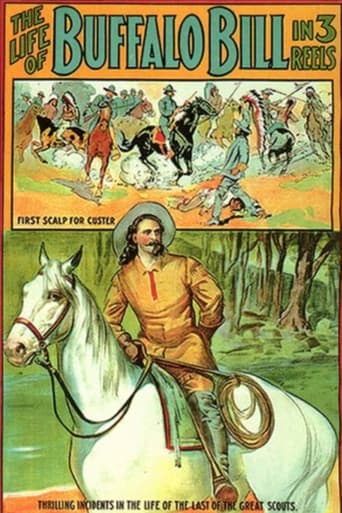
Buffalo Bill Cody
Actor
Born: February 26, 1846 in Le Claire, Iowa Territory, USA Died: January 10, 1917 Active: 1912-1912 Birth Name: William Frederick Cody
Films
1 film
About Buffalo Bill Cody
William Frederick 'Buffalo Bill' Cody — American soldier, bison hunter, and showman who became colorful figures of the American Old West. Born in Iowa Territory in 1846, Cody began his remarkable career as a Pony Express rider at age 14, later serving as a Union Army scout during the Civil War and earning his nickname by supplying buffalo meat to Kansas Pacific Railroad workers. His fame grew exponentially with the creation of Buffalo Bill's Wild West show in 1883, which toured America and Europe for three decades, featuring reenactments of frontier life, sharpshooting exhibitions, and performances by notable figures like Annie Oakley and Sitting Bull. In 1912, at age 66, Cody appeared in 'The Life of Buffalo Bill,' essentially playing himself in what amounted to a filmed version of his Wild West performances, marking his brief but significant contribution to early cinema. His film appearance captured the authentic frontier experience for audiences transitioning from live entertainment to motion pictures. Cody died in Denver in 1917, leaving behind a legacy that profoundly shaped American perceptions of the West and influenced countless Western films that followed.
The Craft
On Screen
Naturalistic and authentic, essentially playing himself with the same showmanship he displayed in his Wild West performances
Milestones
- Created and toured Buffalo Bill's Wild West show (1883-1913)
- Served as Union Army scout during Civil War
- Earned Medal of Honor for gallantry (1872)
- Appeared in 'The Life of Buffalo Bill' (1912)
- Established town of Cody, Wyoming
- Performed for Queen Victoria and European royalty
Best Known For
Iconic Roles
Must-See Films
Accolades
Won
- Medal of Honor (1872, restored posthumously in 1989)
- Congressional Medal of Honor (rescinded 1917, restored 1989)
Special Recognition
- Inducted into Hall of Great Westerners
- Buffalo Bill Center of the West established in his memory
- Multiple towns and landmarks named after him
- U.S. Postage stamp issued in his honor (1994)
Working Relationships
Studios
Why They Matter
Impact on Culture
Buffalo Bill Cody's impact on cinema and American culture extends far beyond his single film appearance. His Wild West shows established many conventions that would become staples of Hollywood Westerns, from staged gunfights to romanticized portrayals of frontier life. By bringing authentic Western experiences to Eastern and European audiences, Cody created a template for how the American West would be depicted in popular culture. His 1912 film appearance helped bridge the gap between live performance and cinema, demonstrating how real frontier figures could be captured on screen. Cody's persona became the archetype for countless Western heroes who followed, influencing everything from costume design to character development in early Hollywood films.
Lasting Legacy
Buffalo Bill Cody's legacy in film history is primarily indirect but profound. While his actual film career was limited to a single appearance, his Wild West shows essentially served as living prototypes for the Western genre that would dominate early Hollywood. The visual language he developed - the sweeping landscapes, the dramatic confrontations, the celebration of frontier skills - became the foundation for cinematic storytelling about the American West. Cody's understanding of spectacle and audience entertainment anticipated the grand scale of Hollywood productions. His authentic frontier credentials gave credibility to the Western genre, and his showmanship demonstrated how real-life experiences could be transformed into compelling entertainment.
Who They Inspired
Cody influenced generations of Western actors and directors by establishing the template for the Western hero. His authentic frontier experiences and charismatic showmanship created a model that actors like Tom Mix, Gary Cooper, and John Wayne would later emulate. Directors such as John Ford drew inspiration from the visual spectacle Cody's shows pioneered. Cody's approach to presenting the West - balancing entertainment with elements of authenticity - influenced how filmmakers approached historical subjects. His ability to mythologize real events while maintaining a connection to actual frontier experiences became a guiding principle for Western filmmakers seeking to balance drama with historical credibility.
Off Screen
Buffalo Bill Cody married Louisa Frederici in 1866, and their marriage lasted 51 years until his death. They had four children together, though their relationship was often strained due to Cody's extensive travels and show business commitments. Despite his celebrity status and constant touring, Cody maintained a connection to his family and established roots in Wyoming, where he helped found the town of Cody. His personal life was marked by both the glamour of international fame and the challenges of maintaining family relationships while living as a traveling showman.
Education
Limited formal education; primarily self-taught through frontier experience and practical knowledge
Family
- Louisa Frederici (1866-1917)
Did You Know?
- Killed over 4,000 buffalo in 18 months to feed railroad workers, earning his nickname
- His Wild West show toured Europe for three years and performed for Queen Victoria
- Medal of Honor was rescinded in 1917 along with 910 others, but restored to him in 1989
- Sitting Bull performed in his Wild West show for one season (1885)
- Annie Oakley was discovered by Cody and became his star performer for 16 years
- Helped found the town of Cody, Wyoming, which he called 'the prettiest place in America'
- Was an early conservation advocate who warned about buffalo extinction
- His show employed up to 600 people and used 100 horses during peak seasons
- Wrote his autobiography in 1879, which became a bestseller
- Was one of the first Americans to understand and leverage celebrity status for business
- His show influenced the development of modern rodeos and circus performances
- Maintained friendships with many Native American leaders despite his Indian fighter reputation
In Their Own Words
All my life I have been a lover of the West. I have lived its life, I have known its men and women.
The West of my youth has vanished beyond recall.
Every Indian outbreak that I have ever known has resulted from broken promises and broken treaties by the government.
I am a believer in the West. I love it, and I love its people.
My Wild West show is not a circus, not a show in the theatrical sense, but an exhibition of the frontier life.
Frequently Asked Questions
Who was Buffalo Bill Cody?
Famous American showman, buffalo hunter, and Army scout who created the legendary Wild West show. He was a real frontier figure who became one of America's first international celebrities, appearing in one film 'The Life of Buffalo Bill' in 1912 where he essentially played himself.
What films is Buffalo Bill Cody best known for?
Titles linked here include The Life of Buffalo Bill (1912).
When was Buffalo Bill Cody born and when did he die?
Born February 26, 1846; died January 10, 1917.
What awards did Buffalo Bill Cody win?
Cody was awarded the Medal of Honor in 1872 for gallantry as an Army scout. Though it was rescinded in 1917 along with many others, it was posthumously restored to him in 1989. He received numerous honors for his contributions to American culture and Western history.
What was Buffalo Bill Cody's acting style?
Cody's acting style was naturalistic and authentic, essentially playing himself with the same showmanship he displayed in his Wild West performances. He wasn't a trained actor but brought genuine frontier credibility to his screen appearance.
How did Buffalo Bill Cody influence Western films?
Cody's Wild West shows established many conventions that became staples of Hollywood Westerns, from staged gunfights to visual spectacle. His authentic frontier persona created the archetype for Western heroes, and his understanding of audience entertainment influenced how filmmakers approached the genre.
What was Buffalo Bill's Wild West show?
Buffalo Bill's Wild West was a traveling circus-like show that ran from 1883 to 1913, featuring reenactments of frontier life, sharpshooting exhibitions, and performances by hundreds of cowboys, Native Americans, and animals. It toured America and Europe, making Cody an international celebrity.
What was Buffalo Bill Cody's relationship with Native Americans?
Despite his reputation as an Indian fighter, Cody maintained complex relationships with Native Americans. He employed many in his shows, including Sitting Bull, and advocated for their rights while still contributing to stereotypical portrayals. His views were considered progressive for his time but problematic by modern standards.