Films
1 film
About Nina Gofman
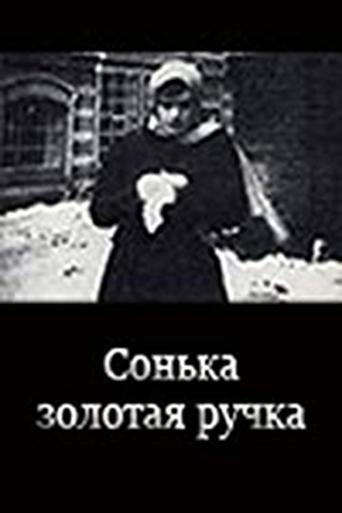
Actress from the early silent film era, specifically active in Russian cinema during the mid-1910s. Her entire known filmography consists of a single, yet significant, role in the 1914 film 'Sonka the Golden Hand' (Sonka-Zolotaya Ruchka), a production based on the exploits of the infamous real-life female con artist Sonya Golden Hand. This film was directed by the Russian filmmaker Yevgeni Bauer, a master of psychological drama and cinematic techniques, which suggests Gofman was part of a sophisticated artistic endeavor. Her role, while not the title character, placed her within the emerging cinematic landscape of pre-revolutionary Russia, a period of intense creativity and innovation. Unfortunately, like many actors from this nascent period of film, detailed records of her life, training, and subsequent career are extremely scarce. Her career appears to have been exceptionally brief, confined to the single year of 1914, a common fate for many early film actors who did not transition to the more established star system of the later silent era or the sound era. The scarcity of information makes her a representative figure of the countless anonymous contributors to the foundational years of cinema, whose work survives but whose personal stories have largely been lost to history.
The Craft
Milestones
- Appeared in the 1914 Russian silent film 'Sonka the Golden Hand' directed by Yevgeni Bauer
Best Known For
Must-See Films
Working Relationships
Worked Often With
Studios
Why They Matter
Impact on Culture
Nina Gofman's cultural impact is not as an individual artist but as a representative of the vast, unheralded workforce of the early silent film era. Her participation in 'Sonka the Golden Hand,' a film by the influential director Yevgeni Bauer, places her within a crucial moment in the development of Russian cinema. While her personal contribution is minor and her role unknown, she is part of the collective effort that created a work of historical significance. Her legacy shows the hundreds of actors and crew members whose names appear on old title cards but whose stories have faded, yet who collectively built the foundation of the film industry. She symbolizes the ephemeral nature of fame in early cinema and the many talents who contributed to art without achieving lasting recognition.
Lasting Legacy
The legacy of Nina Gofman is intrinsically tied to the single surviving film in which she appeared, 'Sonka the Golden Hand' (1914). As this film is studied by film historians as an example of early Russian cinematic art and the work of director Yevgeni Bauer, her name endures as a credit on this historical artifact. She serves as a poignant reminder of the transient careers of many early film actors and the significant gaps in film history. Her legacy is not one of individual stardom but of being a small, yet integral, part of a cinematic work from a bygone era, ensuring her name is preserved, however faintly, in the annals of film history.
Who They Inspired
Given her extremely brief and obscure career, there is no evidence to suggest that Nina Gofman directly influenced other actors or filmmakers. Her influence is passive, existing only as a name on a film that serves as a subject of study for those interested in the origins of Russian cinema and the techniques of its early masters. She is a figure of historical curiosity rather than an artist with a traceable lineage of influence.
Off Screen
There is virtually no documented information available about the personal life of Nina Gofman. Her existence is known only through film credits from a single production in 1914, and historical records do not provide details regarding her family, relationships, or life outside of her brief film appearance.
Did You Know?
- Nina Gofman's entire known film career consists of a single film in 1914.
- She appeared in 'Sonka the Golden Hand,' a film based on the real-life Russian con artist Sonya Golden Hand.
- The film was directed by Yevgeni Bauer,.
- The film was produced by the Khanzhonkov Company, one of Russia's first major film studios.
- No biographical details about her life, including her birth and death dates or place of birth, are known to film historians.
- Her name survives solely through the intertitles or promotional materials of her one known film.
- Like many early film actors, her career predates the establishment of the star system, which would have led to greater documentation and publicity.
- The scarcity of information about her is typical for actors who worked in the first two decades of cinema, especially outside of Hollywood.
Frequently Asked Questions
Who was Nina Gofman?
Russian actress from the silent film era, known exclusively for her single credited role in the 1914 film 'Sonka the Golden Hand.' Details about her life and career are virtually nonexistent, making her a mysterious figure from the early days of Russian cinema.
What film is Nina Gofman best known for?
She is known solely for her appearance in the 1914 Russian silent film 'Sonka the Golden Hand,' directed by the influential filmmaker Yevgeni Bauer. This is the only film in her known filmography.
When was Nina Gofman born and when did she die?
The birth and death dates for Nina Gofman are unknown. No biographical records about her life outside of her 1914 film credit have been discovered by historians.
What awards did Nina Gofman win?
There are no records of Nina Gofman receiving any awards or nominations for her work. Her career was too brief and occurred during a period before most formal film awards were established.
What was Nina Gofman's acting style?
Due to the lack of surviving films featuring her in a prominent role and the absence of any contemporary reviews, her specific acting style is unknown. She was part of the theatrical, melodramatic style common in Russian silent cinema of the 1910s.