
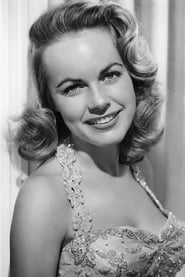
Terry Moore
Actor
Born: January 1, 1929 in Los Angeles, California, USA Active: 1940-2020s Birth Name: Helen Luella Koford
Films
1 film
About Terry Moore
Terry Moore, born Helen Luella Koford, began her career as a child model before transitioning to acting in the early 1940s. She rose to prominence in the late 1940s and early 1950s, earning critical acclaim and an Academy Award nomination for Best Supporting Actress for her performance in 'Come Back, Little Sheba' (1952). Moore became one of Hollywood's notable young actresses, appearing in films like 'Beneath the 12-Mile Reef' (1953) alongside Robert Wagner and 'Peyton Place' (1957). Her career was marked by versatility, spanning film, television, and theater, while her personal life, including her controversial relationship with Howard Hughes, often generated as much attention as her professional work. She continued acting well into the 21st century, making her one of Hollywood's longest-working performers. Moore authored several books about her life and experiences in Hollywood, including her famous relationship with Hughes. Her career represents the transition from Golden Age Hollywood to modern entertainment, demonstrating remarkable adaptability across different eras of filmmaking.
The Craft
On Screen
Natural and emotionally authentic, Moore specialized in portraying vulnerable yet resilient young women with a subtle blend of innocence and strength. Her performances were characterized by a genuine emotional depth that resonated with audiences, particularly in dramatic roles. She had a distinctive ability to convey complex inner turmoil through understated expressions and nuanced delivery, making her particularly effective in coming-of-age stories and romantic dramas.
Milestones
- Academy Award nomination for 'Come Back, Little Sheba' (1952)
- Starred in 'Beneath the 12-Mile Reef' (1953)
- Appeared in 'Peyton Place' (1957)
- Long-term relationship with Howard Hughes
- Published autobiography 'The Beauty and the Billionaire' (1984)
- Continued acting career spanning over 80 years
Best Known For
Iconic Roles
Must-See Films
Accolades
Won
- Academy Award nomination for Best Supporting Actress (1953)
Nominated
- Academy Award for Best Supporting Actress for 'Come Back, Little Sheba' (1953)
Special Recognition
- Hollywood Walk of Fame star (1960)
Working Relationships
Worked Often With
Studios
Why They Matter
Impact on Culture
Terry Moore represented the quintessential Hollywood ingénue of the early 1950s, embodying the transition from the studio system to more independent approaches to filmmaking. Her Academy Award-nominated performance in 'Come Back, Little Sheba' helped establish the archetype of the emotionally complex young woman in post-war American cinema. Her relationship with Howard Hughes made her a symbol of the intersection between Hollywood glamour and business power, while her longevity in the industry demonstrated the changing nature of celebrity and career sustainability in entertainment.
Lasting Legacy
Moore's legacy extends beyond her film performances to encompass her role as a bridge between Golden Age Hollywood and contemporary entertainment. Her career spanning over eight decades makes her one of the longest-working performers in Hollywood history. As an author and public figure, she has preserved and shared insights about Hollywood's golden era, contributing to the historical record of American cinema. Her resilience and adaptability in an industry known for its fleeting nature of fame serve as an inspiration for performers seeking sustained careers.
Who They Inspired
Moore influenced subsequent generations of actresses through her naturalistic acting style, which helped move away from the more theatrical performances common in earlier Hollywood films. Her ability to maintain relevance across decades demonstrated the importance of versatility and adaptation in an evolving entertainment landscape. Her candid discussions about her experiences, including her relationship with Howard Hughes, have contributed to greater understanding of the power dynamics in classic Hollywood and have encouraged more transparency in the industry.
Off Screen
Moore's personal life was as dramatic as her film roles, marked by multiple marriages and a highly publicized relationship with billionaire Howard Hughes. She claimed to have married Hughes in 1949, though this was never legally proven, and their relationship continued intermittently for years. She married five times, including to football star Heisman Trophy winner Glenn Davis, and had three children. In later years, she became an author and public speaker, sharing her experiences in Hollywood and her knowledge about healthy living and longevity.
Education
Los Angeles High School, studied acting at the Actors Lab in Hollywood
Family
- Glenn Davis (1951-1954)
- Stuart Cramer (1956-1958)
- Eugene McGrath (1960-1964)
- Richard Carey (1965-1972)
- Jerry Rivers (1992-2001)
Did You Know?
- Changed her name to Terry Moore after her mother's maiden name
- Was discovered by a talent scout while working as a photographer's model
- Claimed to have a secret marriage to Howard Hughes in 1949
- Appeared on the cover of Life magazine in 1953
- Was a competitive swimmer in her youth
- Published multiple books including cookbooks and health guides
- Appeared in over 80 films and television shows
- Was a regular on the TV series 'The Man from U.N.C.L.E.'
- Became a licensed real estate agent in the 1970s
- Practiced transcendental meditation for decades
In Their Own Words
Howard Hughes taught me that you don't have to be loud to be powerful.
I've been lucky to have had a life that's been interesting enough to write about.
Acting is not about being someone else, it's about finding parts of yourself in the character.
The secret to longevity is staying interested in life and never stop learning.
Frequently Asked Questions
Who was Terry Moore?
American actress who rose to fame in the early 1950s, earning an Academy Award nomination for 'Come Back, Little Sheba' and appearing in films like 'Beneath the 12-Mile Reef'. She was also known for her long-term relationship with Howard Hughes and her career spanning over eight decades in Hollywood.
What films is Terry Moore best known for?
Titles linked here include Come Back, Little Sheba (1952), Beneath the 12-Mile Reef (1953).
When was Terry Moore born and when did she die?
Born January 1, 1929; died death date not listed.
What awards did Terry Moore win?
Terry Moore received an Academy Award nomination for Best Supporting Actress for 'Come Back, Little Sheba' (1952) and has a star on the Hollywood Walk of Fame awarded in 1960.
What was Terry Moore's acting style?
Moore was known for her natural, emotionally authentic acting style, specializing in portraying vulnerable yet resilient young women. She brought genuine emotional depth to her roles, particularly effective in dramatic performances requiring nuanced expression.
What was Terry Moore's relationship with Howard Hughes?
Moore claimed to have married Howard Hughes in 1949, though this was never legally proven. Their relationship continued intermittently for years and became one of Hollywood's most talked-about romances, eventually leading to legal disputes over Hughes's estate.