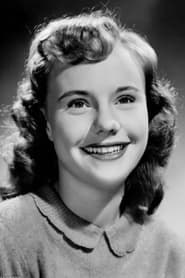
Peggy Ann Garner
Actor
Born: February 3, 1932 in Canton, Ohio, USA Died: October 16, 1984 Active: 1938-1961
Films
1 film
About Peggy Ann Garner
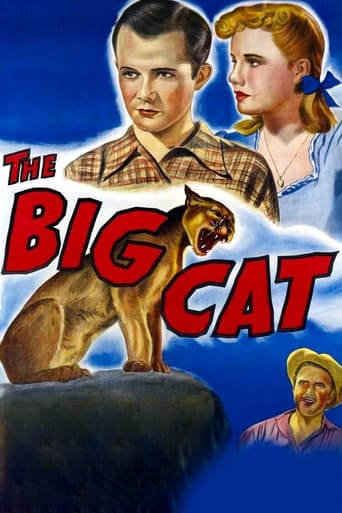
Peggy Ann Garner was one of Hollywood's most accomplished child actresses of the 1940s, beginning her career at age three when her mother moved the family to New York for modeling and radio work. She made her film debut in 1938 and quickly rose to prominence with her naturalistic acting style that her from the more theatrical child performers of the era. Her breakthrough role came in 1945's 'A Tree Grows in Brooklyn,' where her poignant performance as Francie Nolan earned her an Academy Juvenile Award and critical acclaim. Throughout the late 1940s, she appeared in numerous films including 'Junior Miss' (1945) and 'Home Sweet Homicide' (1946), often playing intelligent, sensitive young girls that audiences found relatable. As she transitioned into her teen years, she appeared in 'The Big Cat' (1950), one of her final major film roles before her career began to wane in the 1950s. She made occasional television appearances in the 1950s and 1960s but never regained the level of success she achieved as a child star. Her life was marked by personal struggles in adulthood, and she died of cancer at age 52, leaving behind a legacy as one of cinema's most authentic child performers.
The Craft
On Screen
Naturalistic and emotionally authentic, avoiding the exaggerated mannerisms common among child actors of her era. She brought remarkable depth and sensitivity to her roles, particularly in dramatic performances. Her acting was characterized by subtle facial expressions and an ability to convey complex emotions with remarkable maturity for her age.
Milestones
- Academy Juvenile Award for 'A Tree Grows in Brooklyn' (1945)
- Starred in over 20 films as a child actress
- Successful transition from child to teenage roles
- Radio and television career in the 1950s
- Broadway appearances in adulthood
Best Known For
Iconic Roles
Must-See Films
Accolades
Won
- Academy Juvenile Award (1945) for 'A Tree Grows in Brooklyn'
Nominated
- None documented beyond her Juvenile Award win
Special Recognition
- Hollywood Walk of Fame star (located at 6927 Hollywood Blvd)
Working Relationships
Worked Often With
Studios
Why They Matter
Impact on Culture
Peggy Ann Garner represented a significant shift in child acting during Hollywood's Golden Age, moving away from the precocious, theatrical performances of earlier child stars toward a more naturalistic, emotionally authentic style. Her performance in 'A Tree Grows in Brooklyn' set a new standard for child actors, demonstrating that young performers could handle complex dramatic material with nuance and depth. She helped pave the way for future generations of child actors by proving that audiences would respond positively to realistic portrayals of childhood rather than idealized versions. Her work also contributed to the evolution of family dramas in the 1940s, which increasingly explored serious themes from a child's perspective.
Lasting Legacy
Garner's legacy endures through her landmark performance in 'A Tree Grows in Brooklyn,' which remains. She is remembered as one of the few child stars of the 1940s who achieved critical recognition for genuine acting ability rather than mere precocity. Her career trajectory, marked by early success followed by the difficulty of transitioning to adult roles, became a familiar pattern in Hollywood and has been studied by film historians as an example of the challenges faced by child performers. Her Academy Juvenile Award win placed her among an elite group of child actors recognized by the Academy, including Shirley Temple and Mickey Rooney.
Who They Inspired
Garner influenced subsequent generations of child actors by demonstrating the power of naturalistic performance. Her work showed that child actors could carry serious dramatic films and that audiences would respond to authentic emotional portrayals rather than theatricality. Younger performers like Margaret O'Brien and Natalie Wood built upon the naturalistic style that Garner helped establish. Film scholars often cite her as an example of how child acting evolved from the early sound era through the 1940s, moving toward greater realism and emotional depth.
Off Screen
Garner's personal life was marked by both early success and later struggles. She married three times: first to singer/actor Guy Madison in 1949 (divorced 1954), then to Albert Salmi in 1956 (divorced 1963), and finally to Robert Flynn in 1964. She had one daughter, Catherine Ann Salmi, born in 1957. As her acting career declined, she faced financial difficulties and worked various jobs including real estate and as a restaurant hostess. She battled alcoholism and health issues in her later years before being diagnosed with pancreatic cancer, which claimed her life at age 52.
Education
Attended professional schools while working as a child actress; later studied at Los Angeles City College and UCLA in attempts to transition to adult career opportunities
Family
- Guy Madison (1949-1954)
- Albert Salmi (1956-1963)
- Robert Flynn (1964-1984)
Did You Know?
- Began her career at age three as a model for baby products
- Her mother was a former Ziegfeld Follies girl who managed her career
- Won the very first Academy Juvenile Award ever presented
- Was paid $2,500 per week at the height of her child stardom
- Appeared on the cover of Life magazine in 1945
- Made her Broadway debut in 'The Moon Is Blue' in 1951
- Was considered for the role of Scout in 'To Kill a Mockingbird' before Mary Badham was cast
- Worked as a real estate agent in California after her acting career declined
- Was a close friend of fellow child star Margaret O'Brien
- Her final film appearance was in 'The Caretakers' (1963) in an uncredited role
In Their Own Words
'I don't think I was a typical child star. I was very serious about my work and tried to learn everything I could about acting.' - 1975 interview
'The hardest part of being a child actor wasn't the work itself, but growing up and finding out who you were when the cameras stopped rolling.' - 1980 interview
'Elia Kazan taught me more about acting in three months than I learned in my entire career. He treated me like a real actor, not just a kid.' - 1978 interview
Frequently Asked Questions
Who was Peggy Ann Garner?
American child actress who rose to fame in the 1940s, most notably for her Academy Award-winning performance in 'A Tree Grows in Brooklyn' (1945). She was known for her naturalistic acting style and was one of Hollywood's most respected child performers of the Golden Age.
What films is Peggy Ann Garner best known for?
Titles linked here include A Tree Grows in Brooklyn (1945), Junior Miss (1945).
When was Peggy Ann Garner born and when did she die?
Born February 3, 1932; died October 16, 1984.
What awards did Peggy Ann Garner win?
Garner won the Academy Juvenile Award in 1945 for her outstanding performance in 'A Tree Grows in Brooklyn.' She also received a star on the Hollywood Walk of Fame for her contributions to film.
What was Peggy Ann Garner's acting style?
Garner was known for her naturalistic and emotionally authentic acting style, which stood in contrast to the more theatrical performances common among child actors of her era. She brought remarkable depth and sensitivity to her roles, particularly in dramatic performances.
Did Peggy Ann Garner continue acting as an adult?
While Garner attempted to transition to adult roles, including appearing in 'The Big Cat' (1950), she never achieved the same level of success as she had as a child actor. She made occasional television appearances in the 1950s and 1960s but largely stepped away from acting by the early 1960s.
What happened to Peggy Ann Garner after her acting career ended?
After her acting career declined, Garner faced financial difficulties and worked various jobs including real estate and as a restaurant hostess. She struggled with alcoholism and health issues before being diagnosed with pancreatic cancer, which led to her death in 1984 at age 52.