Films
1 film
About Castro Barbosa
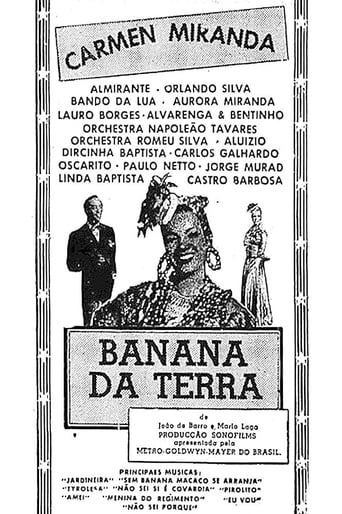
The 1939 film Banana-da-Terra is the only title linked here for Castro Barbosa. His known film work consists of a single appearance in the landmark 1939 musical comedy 'Banana-da-Terra,' which was produced by Cinédia, one of Brazil's most important film studios of the era. This film was particularly significant as it featured Carmen Miranda in one of her final Brazilian roles before her transition to Hollywood stardom. Barbosa's role in the film, while not a leading part, placed him among the ensemble cast that helped define Brazilian popular cinema during this transitional period. The film itself was a musical extravaganza that showcased Brazilian culture and music, reflecting the nationalistic cultural movement of the Getúlio Vargas era. Unfortunately, like many supporting actors from early Brazilian cinema, detailed records of Barbosa's career beyond this single film appearance are scarce, suggesting he may have had a brief tenure in the film industry or worked primarily in other theatrical mediums.
The Craft
Milestones
- Appeared in 'Banana-da-Terra' (1939), a significant Brazilian musical film of the late 1930s
- Part of the ensemble cast that supported Carmen Miranda in one of her final Brazilian films
Best Known For
Iconic Roles
Must-See Films
Working Relationships
Studios
Why They Matter
Impact on Culture
As a supporting actor in 'Banana-da-Terra,' Castro Barbosa contributed to a film that represents an important moment in Brazilian cinematic history. The film captured the essence of Brazilian popular culture during the Estado Novo period, when the government under Getúlio Vargas promoted cultural nationalism. The movie's success helped establish the musical comedy as a popular genre in Brazilian cinema and showcased the talents that would soon gain international recognition. While Barbosa's individual contribution may have been small, he was part of the artistic ecosystem that created.
Lasting Legacy
Castro Barbosa's legacy is primarily tied to his participation in 'Banana-da-Terra,' a film that has become historically important for featuring Carmen Miranda and representing Brazilian cinema's transition into its golden age. The film remains a valuable cultural artifact for understanding Brazilian popular entertainment of the late 1930s and the development of the nation's film industry. While Barbosa himself did not achieve lasting fame, his contribution to this significant work places him within the historical narrative of Brazilian cinema's formative years.
Who They Inspired
Due to the limited documentation of Castro Barbosa's career and the brevity of his known filmography, there is insufficient information to determine his specific influence on other actors or filmmakers. His role appears to have been that of a supporting performer during a pivotal but underdocumented period of Brazilian cinema history.
Off Screen
Very little personal information is available about Castro Barbosa, which is common for supporting actors from early Brazilian cinema. Records from this period, particularly for non-leading performers, are often incomplete or lost to time.
Did You Know?
- 'Banana-da-Terra' was one of the last Brazilian films featuring Carmen Miranda before she moved to Hollywood
- The film was produced by Cinédia, one of Brazil's major film studios during the 1930s
- The movie was a musical comedy that showcased Brazilian popular music and culture
- 1939 was a significant year for Brazilian cinema, marking the transition to more sophisticated productions
- The film reflected the cultural nationalism promoted during the Estado Novo period under Getúlio Vargas
- Many supporting actors from early Brazilian cinema, like Barbosa, have incomplete historical records
- The film's title translates to 'Banana of the Earth' in English
- Cinédia was known for producing films that promoted Brazilian culture and identity
Frequently Asked Questions
Who was Castro Barbosa?
Screen credits include the late 1930s, known primarily for his role in the 1939 film 'Banana-da-Terra.' He was part of the ensemble cast in this significant Brazilian musical comedy, though detailed information about his career is limited.
What films is Castro Barbosa best known for?
Titles linked here include Banana-da-Terra (1939).
When was Castro Barbosa born and when did he die?
Specific birth and death dates for Castro Barbosa are not documented in available historical records, which is common for supporting actors from early Brazilian cinema. His only known film work dates from 1939.
What awards did Castro Barbosa win?
There are no records of Castro Barbosa receiving any major awards or nominations for his work in film. This is not uncommon for supporting actors from Brazilian cinema of the 1930s, when formal award systems were limited.
What was Castro Barbosa's acting style?
Due to limited documentation of Castro Barbosa's career and the apparent brevity of his filmography, there is insufficient information to describe his specific acting style or techniques. His known work was in a musical comedy format typical of Brazilian popular cinema of the era.