Richard Brooks
Director
Born: May 18, 1912 in Philadelphia, Pennsylvania, USA Died: March 11, 1992 Active: 1940s-1980s Birth Name: Reuben Sax
Films
1 film
About Richard Brooks
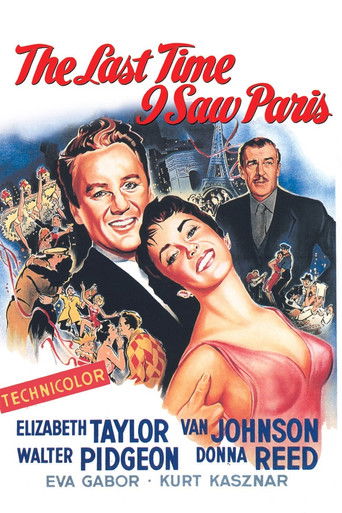
Influential American film director, screenwriter, producer, and novelist: career bridged the studio era and the more socially engaged cinema of the 1950s through the 1980s. Born Reuben Sax in Philadelphia, he came to Hollywood first as a writer and journalist before establishing himself as a sharp, literate storyteller with a strong interest in moral conflict, social institutions, and emotionally charged drama. Although the prompt identifies The Last Time I Saw Paris (1954) as a key title, Brooks is far better remembered for directing such acclaimed films as Blackboard Jungle, Cat on a Hot Tin Roof, Elmer Gantry, In Cold Blood, and Looking for Mr. Goodbar. He was known for adapting major literary and theatrical properties while bringing a brisk, unsentimental, often hard-edged realism to the screen. Brooks also wrote and directed original material, and his work frequently probed hypocrisy, ambition, sexuality, race, class, and violence in American life. He received multiple Academy Award nominations and won an Oscar for his screenplay for Elmer Gantry, helping to define a modern, adult-oriented strain of studio-era filmmaking. His films remain important for their blend of commercial energy, strong performances, and willingness to challenge prevailing social norms.
The Craft
Behind the Camera
Brooks's directing style was lean, literate, and confrontational, often emphasizing tension, moral ambiguity, and the emotional pressure cooker inside families, institutions, and communities. He favored strong performances and dialogue-driven scenes, but he also understood how to stage conflict with propulsive clarity and cinematic discipline. His films often carry an unsentimental tone, with an eye toward social reality rather than romantic idealization, and he was especially adept at adapting literary and theatrical source material without losing urgency on screen. He frequently used sharp contrasts between polished surfaces and underlying corruption, making his work especially effective for stories about hypocrisy, desire, and public versus private selves.
Milestones
- Began his career in journalism and radio writing before moving into Hollywood screenwriting
- Won the Academy Award for Best Adapted Screenplay for Elmer Gantry
- Directed Blackboard Jungle, one of the landmark school dramas of the 1950s
- Directed Cat on a Hot Tin Roof and helped bring major stage drama to the mainstream screen
- Directed the acclaimed crime drama In Cold Blood, noted for its stark realism
- Received multiple Academy Award nominations as both writer and director
- Built a reputation for adapting controversial or socially charged material for the screen
- Established himself as one of Hollywood's key postwar directors of serious adult drama
Best Known For
Must-See Films
Accolades
Won
- Academy Award for Best Adapted Screenplay for Elmer Gantry (1961)
Nominated
- Academy Award nomination for Best Director for Elmer Gantry (1961)
- Academy Award nomination for Best Writing, Screenplay Based on Material from Another Medium for Blackboard Jungle (1955)
- Academy Award nomination for Best Writing, Screenplay Based on Material from Another Medium for Blackboard Jungle (1955, shared credit where applicable)
- Academy Award nomination for Best Director for In Cold Blood (1967)
- Academy Award nomination for Best Picture for In Cold Blood (1967, as producer)
- Academy Award nomination for Best Adapted Screenplay for In Cold Blood (1967)
- Academy Award nomination for Best Writing, Screenplay Based on Material from Another Medium for Cat on a Hot Tin Roof (1958)
Special Recognition
- Recognition as one of the major socially conscious American directors of the postwar studio era
- Multiple film retrospectives and critical reassessments at major archives and repertory cinemas
Working Relationships
Worked Often With
Studios
Why They Matter
Impact on Culture
Richard Brooks had a major impact on postwar American cinema by helping steer mainstream Hollywood toward harder, more adult subject matter. He was one of the directors who made it commercially viable for a studio system audience to engage with delinquency, sexual frustration, class conflict, religious hypocrisy, and criminal psychology. Films such as Blackboard Jungle and In Cold Blood became touchstones for later filmmakers interested in realism, social critique, and the emotional brutality beneath American respectability. His work also helped legitimize the adaptation of challenging literary and stage material as serious popular entertainment, expanding what large-scale studio films could discuss without losing audience appeal.
Lasting Legacy
Brooks's legacy rests on his ability to combine craftsmanship with seriousness of purpose, creating films that remain sturdy examples of American dramatic filmmaking. He is often remembered as a director who brought journalistic clarity and moral urgency to subjects that other filmmakers treated more cautiously. His best-known works continue to be studied for their performances, their blunt engagement with social issues, and their refusal to sentimentalize human behavior. In film history, he stands as an important bridge between the classical studio system and the more confrontational adult dramas that became increasingly prominent in the New Hollywood era.
Who They Inspired
Brooks influenced later directors who pursued socially conscious, performance-driven drama with a tough, unsparing eye. His approach to adapting novels and plays into compact, emotionally forceful cinema can be seen as a model for filmmakers who wanted literary seriousness without sacrificing momentum. Directors interested in crime realism, institutional corruption, and psychologically fraught ensemble acting have often looked back to his films as examples of how to balance mainstream storytelling with critical bite. His willingness to confront taboo subjects also helped widen the range of acceptable topics in American studio filmmaking.
Off Screen
Richard Brooks was born Reuben Sax in Philadelphia and later adopted the professional name Richard Brooks. He was married multiple times, and his personal life was marked by the same intensity and restlessness that often appears in his films. Brooks was also a novelist and writer outside of filmmaking, reflecting a lifelong engagement with language and narrative. He had at least one child, but detailed family information is not as consistently documented in standard reference sources as his film career.
Education
He attended Temple University, though he did not complete a long formal academic path in the arts and instead moved into writing and journalism before entering Hollywood.
Family
- Barbara Cooney Brooks
- Jean Simmons (1950s-1960s)
- Teri Nelson (later marriage)
Did You Know?
- His birth name was Reuben Sax; he later worked under the professional name Richard Brooks.
- Before becoming a director, he was active as a writer and screenwriter, which gave his films a notably literary quality.
- He won an Oscar for screenplay work rather than for directing, despite being best known today as a director.
- Blackboard Jungle was especially influential for its tough portrayal of juvenile delinquency and school unrest.
- In Cold Blood is often cited as.
- He directed several star-driven literary adaptations that paired major Hollywood performers with serious material.
- His career reflected a rare combination of studio professionalism and willingness to tackle controversial themes.
- He was also a novelist, extending his storytelling beyond the screen.
Frequently Asked Questions
Who was Richard Brooks?
American on YTB.my. He is remembered for films such as Blackboard Jungle, Cat on a Hot Tin Roof, Elmer Gantry, and In Cold Blood.
What films is Richard Brooks best known for?
Titles linked here include Blackboard Jungle, Cat on a Hot Tin Roof.
When was Richard Brooks born and when did he die?
Born May 18, 1912; died March 11, 1992.
What awards did Richard Brooks win?
He won the Academy Award for Best Adapted Screenplay for Elmer Gantry. He was also nominated for several Oscars across directing, writing, and producing, reflecting his broad creative influence in Hollywood.
What was Richard Brooks's directing style?
Brooks's directing style was tough, literate, and unsentimental, with a strong interest in social issues and psychological conflict. He excelled at adapting novels and plays into sharply paced screen dramas that emphasized performance and moral tension.
What was Richard Brooks's legacy in film history?
His legacy is that of a major postwar American filmmaker who helped expand mainstream cinema's range of adult subject matter. He is remembered for balancing commercial appeal with serious social critique and for making some of the most durable dramas of the studio era.