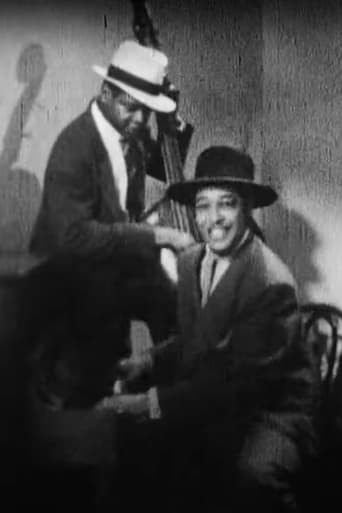
Rex Stewart
Actor
Born: February 22, 1907 in Philadelphia, Pennsylvania, USA Died: September 7, 1967 Active: 1920s-1967 (music), 1942 (film) Birth Name: Rex William Stewart Jr.
Films
1 film
About Rex Stewart
Made a significant mark on American music during the swing era, though his film career was limited to a single appearance. Born in Philadelphia in 1907, Stewart rose to prominence as a member of Fletcher Henderson's orchestra before joining the Duke Ellington Orchestra in 1934, where he would remain for eleven years as one of Ellington's most distinctive soloists. He developed and perfected a unique half-valve technique on the cornet that created a muted, conversational sound that became his trademark and influenced countless brass players. After leaving Ellington in 1945, Stewart led his own small groups, worked as a freelance musician, and became an important voice in jazz criticism, writing for publications like Down Beat and Jazz Review. His appearance in the 1942 musical short 'Jam Session' was essentially a performance showcase rather than an acting role, capturing him at the height of his powers with Ellington's orchestra. Throughout his later career, he continued to perform, record, and write about jazz until his death in 1967, leaving behind a legacy as both an innovative performer and an insightful commentator on the art form he helped shape.
The Craft
On Screen
Non-actor; appeared only as himself performing music
Milestones
- Member of Duke Ellington's Orchestra (1934-1945)
- Pioneered distinctive half-valve cornet technique
- Played with Fletcher Henderson's Orchestra
- Member of McKinney's Cotton Pickers
- Appeared in 'Jam Session' (1942)
- Led own bands post-Ellington era
- Became respected jazz critic and writer
Best Known For
Iconic Roles
Must-See Films
Accolades
Special Recognition
- Inducted into the Big Band and Jazz Hall of Fame
- Recognized as
Working Relationships
Worked Often With
Studios
Why They Matter
Impact on Culture
Rex Stewart's cultural impact extends far beyond his brief film appearance, as he was a pivotal figure in the development of jazz during its most popular era. His innovative half-valve technique revolutionized brass playing in jazz, creating a more expressive and conversational style that influenced generations of musicians. As a key member of Duke Ellington's orchestra during its golden period, Stewart contributed to some of the most important jazz recordings of the 1930s and 1940s, helping define the sound of American popular music during the swing era. His transition into jazz criticism and writing in his later years helped document and preserve the history of jazz, providing valuable insights into the creative process and the evolution of the art form. Stewart's work helped establish jazz as a serious art form worthy of scholarly consideration, bridging the gap between performer and intellectual observer.
Lasting Legacy
Rex Stewart's legacy in jazz history is secured through his groundbreaking technical innovations and his contributions to some of the most important recordings of the swing era. His half-valve technique remains a study in brass innovation, and his solo work with Ellington continues to be analyzed and admired by musicians and scholars. As a writer, he provided invaluable firsthand accounts of the jazz world during its formative years, offering perspectives that might otherwise have been lost to history. His influence can be heard in the work of countless brass players who adopted elements of his style, and his critical writings continue to serve as important primary sources for jazz historians. Stewart represents the complete jazz artist - performer, innovator, and intellectual - whose contributions helped elevate jazz from entertainment to art.
Who They Inspired
Stewart's influence on jazz musicians was profound, particularly in his approach to brass playing. His half-valve technique created new possibilities for expression on the cornet, influencing players like Clark Terry and Don Cherry. His work with Ellington helped establish the template for the featured jazz soloist within a big band context. As a writer and critic, he influenced how jazz was discussed and analyzed, helping establish a vocabulary for jazz criticism that balanced technical understanding with artistic appreciation. Many musicians who followed him cited his ability to tell stories through his instrument as a major influence on their own approach to improvisation.
Off Screen
Rex Stewart was married multiple times throughout his life and had two children. He was known in jazz circles for his articulate and thoughtful personality, which translated well into his later career as a jazz writer and critic. Despite his musical fame, he maintained a relatively private personal life, focusing primarily on his art and the development of jazz music. His relationships within the jazz community were extensive and influential, connecting him with many of the era's greatest musicians.
Education
Largely self-taught musician; learned through practical experience with various bands
Family
- Anna Mae Stewart (1930s-1940s)
- Miriam Stewart (1950s-1967)
Did You Know?
- His half-valve technique was so distinctive that it became known as 'the Stewart sound' among musicians
- He was left-handed but played a right-handed cornet
- Despite his fame as a performer, he was equally respected for his writing about jazz
- He was an avid photographer and documented many jazz scenes
- His nickname among fellow musicians was 'The Little Giant' due to his powerful sound despite his small stature
- He wrote an autobiography titled 'Jazz Masters of the 30s'
- He was one of the first jazz musicians to write seriously about the music's artistic merits
- His cornet solos with Ellington are still studied by music students today
- He appeared on over 200 recordings during his career
- He was known for his witty and articulate interviews about jazz music
In Their Own Words
Jazz is not just music, it's a way of life. You have to live it to play it.
The cornet can talk if you know how to make it speak. That's what I've always tried to do - make my horn tell stories.
Playing with Duke was like being part of a perfect machine where every cog had its own voice but worked together as one.
The half-valve technique wasn't something I invented on purpose. I was just trying to find new ways to express what I heard in my head.
Jazz criticism should come from people who have sweated on the bandstand, not just those who have sat in the audience.
Frequently Asked Questions
Who was Rex Stewart?
Renowned jazz cornet player best known for his work with Duke Ellington's orchestra from 1934 to 1945. He was famous for developing a distinctive half-valve technique and appeared in one film, 'Jam Session' (1942), where he performed as himself rather than acting.
What films is Rex Stewart best known for?
Titles linked here include Jam Session (1942).
When was Rex Stewart born and when did he die?
Born February 22, 1907; died September 7, 1967.
What awards did Rex Stewart win?
While Rex Stewart didn't receive traditional acting awards, he was posthumously inducted into the Big Band and Jazz Hall of Fame and is recognized as.
What was Rex Stewart's musical style?
Stewart developed a unique half-valve technique on the cornet that created a muted, conversational sound. His style was characterized by expressive storytelling through his instrument, combining technical innovation with emotional depth.
How long did Rex Stewart play with Duke Ellington?
Member of Duke Ellington's orchestra for eleven years, from 1934 to 1945, which was considered.
Did Rex Stewart have any other careers besides music?
Yes, after his performing career, Stewart became a respected jazz critic and writer, contributing to publications like Down Beat and Jazz Review, and wrote an autobiography about his experiences in the jazz world.