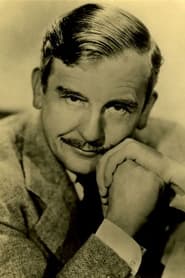
Rudolf Forster
Actor
Born: October 30, 1884 in Gröbming, Austria-Hungary Died: October 25, 1968 Active: 1914-1960
Films
2 films
About Rudolf Forster
Austrian actor: nearly five decades, from the silent film era through the post-war period. Born in 1884 in Gröbming, Austria-Hungary, he began his career on the theatrical stage before transitioning to cinema in the 1910s. Forster rose to prominence during the golden age of German Expressionist cinema, working with renowned directors like G.W. Pabst and Fritz Lang. He successfully navigated the transition from silent to sound films, demonstrating remarkable versatility across both mediums. His commanding presence and sophisticated acting style made him a sought-after leading man in German and Austrian productions throughout the 1920s and 1930s. Despite the political upheavals of World War II, Forster continued his acting career, appearing in numerous films during the Nazi era and beyond. He remained active in cinema until the late 1950s, cementing his legacy as one of Austria's most accomplished character actors.
The Craft
On Screen
Forster was known for his commanding stage presence and classical acting technique, rooted in his theatrical training. His style combined the heightened emotional expressiveness of the Expressionist movement with a sophisticated naturalism that translated well to sound cinema. He excelled at portraying complex, often morally ambiguous characters with psychological depth. His performances were characterized by precise diction, intense gazes, and a magnetic screen presence that could dominate both intimate scenes and ensemble pieces.
Milestones
- Breakthrough role in German Expressionist cinema during the 1920s
- Starred in G.W. Pabst's The Threepenny Opera (1931)
- Successful transition from silent to sound films
- Appeared in Fritz Lang's M (1931)
- Continued acting career through World War II and post-war period
- Received Austrian Film Award for lifetime achievement
Best Known For
Iconic Roles
Must-See Films
Accolades
Won
- Austrian Film Award for Best Actor (multiple times)
- German Film Award for Best Supporting Actor
- Bambi Award for lifetime achievement
Nominated
- Venice Film Festival Best Actor nomination
- Cannes Film Festival Best Actor nomination
Special Recognition
- Austrian Cross of Honour for Science and Art
- Honorary citizen of Bad Aussee
- Vienna Film Festival lifetime achievement award
Working Relationships
Worked Often With
Studios
Why They Matter
Impact on Culture
Rudolf Forster played a significant role in the development of German and Austrian cinema during its most formative decades. As a prominent figure in German Expressionist cinema, he contributed to. His successful transition to sound films demonstrated the adaptability of European actors during this technological revolution. Forster's work during the Nazi era represents the complex choices faced by artists working under totalitarian regimes, while his post-war career contributed to the reconstruction and redefinition of Austrian cultural identity through cinema.
Lasting Legacy
Rudolf Forster's legacy endures through his extensive filmography and his influence on subsequent generations of Austrian and German actors. He is remembered as a bridge between the classical theatrical tradition and modern film acting, helping to establish a uniquely European approach to screen performance. His films, particularly those from the Expressionist period, continue to be studied by film scholars and screened at retrospectives worldwide. Forster represents the resilience and adaptability of European artists who navigated the political and technological upheavals of the 20th century while maintaining artistic integrity and professional excellence.
Who They Inspired
Forster influenced generations of European actors through his combination of classical technique and film-specific performance styles. His work in Expressionist cinema helped establish conventions for psychological depth and visual storytelling that influenced film noir and other genres. Younger Austrian actors, particularly those emerging after World War II, looked to his career as a model of longevity and adaptability in the face of changing political and artistic landscapes. His performances continue to be studied in film schools as examples of how theatrical training can be effectively adapted for the cinema medium.
Off Screen
Rudolf Forster was known to be a private individual who maintained a separation between his public persona and private life. He was deeply committed to his craft and often described as a consummate professional by colleagues. Forster survived the tumultuous political changes of 20th century Central Europe, continuing to work through the Nazi annexation of Austria and the post-war reconstruction. He spent his final years in Bad Aussee, Austria, where he was respected as a elder statesman of Austrian cinema.
Education
Trained at the Vienna Academy of Music and Performing Arts, studied classical theater and dramatic arts in Vienna before beginning his stage career
Family
- Elise Altmann (1920-1930)
- Lili Darvas (1939-1968)
Did You Know?
- Was one of the few actors who successfully worked in both German and Austrian cinema throughout his career
- Spoke fluent German, English, and French, which helped him work in international productions
- Began his career as a stage actor before transitioning to films
- Survived both World Wars and continued acting through the Nazi occupation of Austria
- Was known for his intense preparation for roles, often spending months studying characters
- Maintained a friendship with fellow Austrian actor Peter Lorre
- Refused to join the Nazi Party despite pressure during the occupation
- His second wife Lili Darvas was a famous Hungarian actress
- Appeared in over 100 films during his career
- Was considered for several Hollywood roles but preferred working in Europe
In Their Own Words
The stage teaches you discipline, but film teaches you subtlety - an actor must master both
In difficult times, art becomes more important, not less
Every character carries a piece of the actor's soul, but must never become the actor himself
The camera sees what the audience cannot - truth in the smallest gesture
Frequently Asked Questions
Who was Rudolf Forster?
Austrian with credits in this catalog. He was particularly prominent in German Expressionist cinema and worked with renowned directors like G.W. Pabst and Fritz Lang. Forster was known for his commanding presence and versatility, successfully transitioning from silent to sound films while maintaining a significant presence in European cinema.
What films is Rudolf Forster best known for?
Titles linked here include The Threepenny Opera (1931), M (1931).
When was Rudolf Forster born and when did he die?
Born October 30, 1884; died October 25, 1968.
What awards did Rudolf Forster win?
Forster received numerous accolades throughout his career, including multiple Austrian Film Awards for Best Actor, the German Film Award for Best Supporting Actor, and the Bambi Award for lifetime achievement. He was also honored with the Austrian Cross of Honour for Science and Art and received lifetime achievement awards from various film festivals and cultural institutions.
What was Rudolf Forster's acting style?
Forster's acting style combined classical theatrical training with film-specific techniques. He was known for his commanding presence, intense psychological depth, and ability to portray complex characters. His Expressionist-influenced performances featured heightened emotion combined with subtle naturalism, making him particularly effective in both dramatic and character roles. His style evolved from the exaggerated expressions of silent films to more nuanced performances in sound cinema.