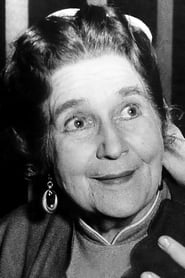
Elsa Wagner
Actor
Born: January 24, 1881 in Reval, Russian Empire (now Tallinn, Estonia) Died: August 17, 1975 Active: 1916-1966 Birth Name: Elisabeth Karoline Auguste Wagner
Films
1 film
About Elsa Wagner
German film actress: over five decades, primarily in German cinema. Born in 1881, she began her acting career on the stage before transitioning to film during the silent era. Wagner appeared in more than 140 films between 1916 and 1966, establishing herself as a versatile character actress known for her distinctive presence and memorable supporting roles. She worked extensively with prominent German directors including F.W. Murnau and Fritz Lang, appearing in both silent films and successfully transitioning to sound cinema. Her career continued through the Weimar Republic, Nazi Germany, and into post-war West Germany, demonstrating remarkable longevity and adaptability. Wagner was particularly adept at playing stern matrons, governesses, and aristocratic figures, becoming a familiar face to German cinema audiences across generations.
The Craft
On Screen
Wagner was known for her commanding screen presence and ability to portray authoritative female characters with depth and nuance. Her acting style combined the theatrical traditions of her stage background with the more subtle requirements of film acting. She excelled at creating memorable characterizations through expressive facial features and precise body language, particularly effective in the silent era. In sound films, her distinctive voice and diction added another dimension to her character portrayals.
Milestones
- Film debut in German silent cinema (1916)
- Transition to sound films successfully
- Survived and worked through three different German political regimes
- Appeared in over 140 films throughout her career
- Worked with legendary directors F.W. Murnau and Fritz Lang
- Continued acting well into her 80s
Best Known For
Iconic Roles
Must-See Films
Accolades
Special Recognition
- Bundesverdienstkreuz (Federal Cross of Merit) for contributions to German cinema
Working Relationships
Worked Often With
Studios
Why They Matter
Impact on Culture
Elsa Wagner's career shows the resilience and adaptability of artists working through tumultuous periods of German history. Her ability to maintain a successful career across the Weimar Republic, Nazi Germany, and post-war periods demonstrated the complex relationship between art and politics in 20th century Germany. As a character actress, she helped define the visual language of German cinema, particularly in her collaborations with expressionist directors. Her work in films like 'Metropolis' and 'M' contributed to some of the most influential films in cinema history.
Lasting Legacy
Wagner's legacy lies in her remarkable filmography of over 140 films that document the evolution of German cinema across half a century. She represents the archetype of the dedicated character actress who, while never achieving star status, became an essential element in countless classic films. Her ability to work successfully in both silent and sound cinema, and to adapt her acting style across different political regimes, makes her career a unique case study in film history. Today, film scholars and classic cinema enthusiasts recognize her as one of German cinema's most reliable and versatile supporting actresses.
Who They Inspired
Wagner influenced subsequent generations of German character actresses through her example of professionalism and longevity. Her work with directors helped establish techniques for film acting that bridged the gap between theatrical and cinematic performance styles. Younger actors studied her ability to create memorable characters with limited screen time, a skill particularly valuable in ensemble casts. Her career demonstrated that character actors could achieve lasting recognition and respect within the film industry without achieving star status.
Off Screen
Elsa Wagner led a relatively private life away from the spotlight, maintaining her focus on her craft throughout her long career. She never married and dedicated her life entirely to acting, becoming one of cinema's most prolific character actresses. Her longevity in the film industry was remarkable, spanning from the silent era through the early years of the New German Cinema. Wagner spent her final years in West Berlin, where she died at the age of 94.
Education
Trained at drama school in Berlin, initially focusing on stage acting before transitioning to film
Did You Know?
- Appeared in both versions of 'Der Student von Prag' (1926 and 1935)
- Worked with Marlene Dietrich early in both their careers
- Was one of the few actresses to work continuously through all periods of German cinema
- Her final film appearance was at age 85
- Never gave up her Estonian citizenship despite living most of her life in Germany
- Was a favorite of director Fritz Lang, who cast her in multiple films
- Survived the bombing of Berlin during WWII while continuing to work in films
- Was known for her punctuality and professionalism on set
- Spoke multiple languages, which helped her in international co-productions
- Her distinctive appearance made her easily recognizable even in small roles
In Their Own Words
Acting is not about being famous, it's about being truthful to the character
The camera sees everything, even what you try to hide
In fifty years of films, I've played every kind of woman except myself
Silent films taught me that eyes can say more than words ever could
Frequently Asked Questions
Who was Elsa Wagner?
Screen credits include over 140 films between 1916 and 1966, working with legendary directors like F.W. Murnau and Fritz Lang throughout her remarkable five-decade career.
What films is Elsa Wagner best known for?
Titles linked here include Der Letzte Mann (1924), Metropolis (1927).
When was Elsa Wagner born and when did she die?
Born January 24, 1881; died August 17, 1975.
What awards did Elsa Wagner win?
While Elsa Wagner did not receive major film awards during her career, she was honored with the Bundesverdienstkreuz (Federal Cross of Merit) for her significant contributions to German cinema.
What was Elsa Wagner's acting style?
Wagner was known for her commanding presence and ability to portray authoritative characters with depth, combining theatrical traditions with cinematic subtlety, excelling particularly in creating memorable characterizations through expressive features and precise body language.