
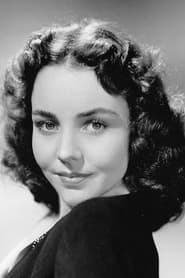
Jennifer Jones
Actor
Born: March 2, 1919 in Tulsa, Oklahoma, USA Died: December 17, 2009 Active: 1939-1974 Birth Name: Phylis Lee Isley
Films
1 film
About Jennifer Jones
Jennifer Jones was one of Hollywood's most celebrated actresses of the 1940s and 1950s, known for her intense, emotionally charged performances and striking beauty. Born Phylis Lee Isley in Tulsa, Oklahoma, she studied drama at Northwestern University and the American Academy of Dramatic Arts before meeting and marrying actor Robert Walker. After struggling to find work in Hollywood, she and Walker moved to New York where they performed in radio dramas and stage productions. Discovered by producer David O. Selznick, she was given the stage name Jennifer Jones and signed to an exclusive contract that would launch her to stardom. Her breakthrough came with 'The Song of Bernadette' (1943), for which she won the Academy Award for Best Actress in her first leading role. Throughout the 1940s and 1950s, she delivered powerful performances in films like 'Since You Went Away,' 'Love Letters,' 'Duel in the Sun,' and 'Portrait of Jennie.' After marrying Selznick in 1949, her career became more selective, but she continued to give memorable performances until her retirement in the 1970s. Her final years were marked by tragedy, including Selznick's death and her own struggles with mental health, but she remains remembered as one of cinema's most talented and enigmatic actresses.
The Craft
On Screen
Jennifer Jones was known for her intense, emotionally vulnerable performances that often conveyed deep psychological complexity. Her acting style combined naturalistic sensitivity with dramatic intensity, allowing her to portray both innocence and profound emotional turmoil. She had a unique ability to transform completely for each role, from the saintly Bernadette Soubirous to the passionate Pearl Chavez in 'Duel in the Sun.' Her performances were characterized by their emotional authenticity and her remarkable capacity to convey complex inner states through subtle facial expressions and body language. Critics often noted her ethereal quality and the depth of feeling she brought to even the most challenging roles.
Milestones
- Academy Award win for Best Actress for 'The Song of Bernadette' (1943)
- Five Academy Award nominations for Best Actress
- Marriage to producer David O. Selznick who managed her career
- Starred in the controversial Western 'Duel in the Sun' (1946)
- Received critical acclaim for 'Portrait of Jennie' (1948)
- Performed in both dramatic and musical films throughout her career
Best Known For
Iconic Roles
Must-See Films
Accolades
Won
- Academy Award for Best Actress - The Song of Bernadette (1943)
- Golden Globe Award for Best Actress - The Song of Bernadette (1943)
- New York Film Critics Circle Award for Best Actress - The Song of Bernadette (1943)
- Venice Film Festival Volpi Cup - Duel in the Sun (1946)
- Golden Globe Award for Best Actress - Love Is a Many-Splendored Thing (1955)
Nominated
- Academy Award nomination for Best Actress - Since You Went Away (1944)
- Academy Award nomination for Best Actress - Love Letters (1945)
- Academy Award nomination for Best Actress - Duel in the Sun (1946)
- Academy Award nomination for Best Actress - Portrait of Jennie (1948)
- Academy Award nomination for Best Actress - Love Is a Many-Splendored Thing (1955)
- BAFTA nomination for Best Foreign Actress - Love Is a Many-Splendored Thing (1956)
Special Recognition
- Hollywood Walk of Fame star at 6429 Hollywood Boulevard
- Inducted into the Oklahoma Hall of Fame
- Honored at the Film Society of Lincoln Center
- Retrospective at the Museum of Modern Art
- Career Achievement Award from the National Board of Review
Working Relationships
Worked Often With
Studios
Why They Matter
Impact on Culture
Jennifer Jones represented the transition from the classic Hollywood star system to the more psychologically complex cinema of the postwar era. Her performances in films like 'The Song of Bernadette' and 'Portrait of Jennie' helped establish the template for the spiritually and emotionally conflicted female protagonist that would become central to 1950s cinema. Her willingness to tackle controversial roles, particularly in 'Duel in the Sun,' pushed boundaries for what was acceptable for leading ladies in Hollywood. Jones' career also exemplified the power and limitations of the studio system, showing how a producer's vision could both elevate and constrain an actor's artistic development. Her influence extended beyond acting into the art world through her work with the Norton Simon Museum, where she helped build one of America's most important private art collections.
Lasting Legacy
Jennifer Jones' legacy endures through her remarkable film performances that continue to captivate audiences with their emotional depth and technical brilliance. She is remembered as one of Hollywood's most versatile actresses, capable of conveying both saintly innocence and passionate intensity with equal conviction. Her five Academy Award nominations place her among the most recognized actresses of her generation, while her Oscar win for 'The Song of Bernadette' remains one of cinema's most impressive debuts. The films she created with David O. Selznick represent some of the most ambitious and artistically significant productions of Hollywood's golden age. Beyond her film work, her transformation into a respected art patron and museum director demonstrated her lifelong commitment to artistic excellence. Today, she is studied by film scholars for her contributions to the development of method acting in American cinema and her role in shaping the psychological realism that defined postwar Hollywood.
Who They Inspired
Jennifer Jones influenced generations of actors through her work in psychological realism and emotional authenticity. Her technique of internalizing her characters' emotions and expressing them through subtle physicality prefigured the method acting approach that would dominate American cinema in the 1950s and beyond. Actresses like Grace Kelly, Eva Marie Saint, and later Meryl Streep have cited Jones' ability to convey complex inner states as an inspiration. Her collaborations with directors like John Ford and King Vidor helped establish new standards for female characterization in American cinema, moving away from one-dimensional archetypes toward more psychologically complex women. Her success in both dramatic and musical roles demonstrated the range possible for serious actresses in Hollywood, influencing career paths for performers who followed.
Off Screen
Jennifer Jones had a complex personal life marked by both professional success and personal tragedy. She married actor Robert Walker in 1939, and they had two sons together before divorcing in 1945. Her marriage to legendary producer David O. Selznick in 1949 became one of Hollywood's most famous partnerships, with Selznick carefully managing her career until his death in 1965. After Selznick's death, she married industrialist Norton Simon in 1971 and became involved in philanthropy and art collecting, serving as chairman of the Norton Simon Museum. She struggled with depression throughout her life and made a suicide attempt in 1967, but found peace in her later years through her work with the museum and her spiritual pursuits. Her daughter with Selznick, Mary Jennifer Selznick, committed suicide in 1976, adding to the family's tragic history.
Education
Attended Northwestern University (briefly), studied at the American Academy of Dramatic Arts in New York
Family
- Robert Walker (1939-1945)
- David O. Selznick (1949-1965, his death)
- Norton Simon (1971-1993, his death)
Did You Know?
- Her birth name Phylis was spelled with one 'L' because her father wanted her to be unique
- She was discovered while performing in a summer stock production in Massachusetts
- David O. Selznick changed her name from Phylis Isley to Jennifer Jones
- She won her Oscar on her first nomination, a rare achievement
- Her film 'Duel in the Sun' was so controversial it was nicknamed 'Lust in the Dust'
- She was the first actress to receive five Oscar nominations before age 30
- She turned down the lead role in 'Roman Holiday' which went to Audrey Hepburn
- Her suicide attempt in 1967 led to her temporary retirement from acting
- She became a born-again Christian in the 1970s
- She never watched her own films after retiring from acting
In Their Own Words
I'm not a star. I'm an actress. Stars are people who live in Hollywood and have heart-shaped swimming pools. I live in New York and my pool is rectangle.
Acting is not about being someone different. It's finding the similarity in what is apparently different, then finding myself in there.
I've always felt that if you're lucky enough to be successful, you have a responsibility to give something back.
The camera doesn't lie. It shows everything. That's why it's so frightening and so wonderful.
I never thought of myself as a beauty. I thought of myself as an actress who happened to have a certain look.
Frequently Asked Questions
Who was Jennifer Jones?
Acclaimed American actress who won the Academy Award for Best Actress for her debut leading role in 'The Song of Bernadette' (1943). She was one of Hollywood's most prominent stars during the 1940s and 1950s, known for her intense emotional performances and striking beauty, and was married to legendary producer David O. Selznick who managed her career.
What films is Jennifer Jones best known for?
Titles linked here include The Song of Bernadette (1943), Duel in the Sun (1946).
When was Jennifer Jones born and when did she die?
Born March 2, 1919; died December 17, 2009.
What awards did Jennifer Jones win?
Jennifer Jones won the Academy Award for Best Actress for 'The Song of Bernadette' (1943), and received four additional Oscar nominations. She also won Golden Globe Awards, the New York Film Critics Circle Award, and the Venice Film Festival Volpi Cup for her performances throughout her career.
What was Jennifer Jones' acting style?
Jennifer Jones was known for her intense, emotionally vulnerable performances that conveyed deep psychological complexity. Her acting combined naturalistic sensitivity with dramatic intensity, allowing her to portray both innocence and profound emotional turmoil, with a unique ability to transform completely for each role.
How many times was Jennifer Jones married?
Jennifer Jones was married three times: first to actor Robert Walker (1939-1945), with whom she had two sons; second to producer David O. Selznick (1949-1965, his death); and third to industrialist Norton Simon (1971-1993, his death).
What was Jennifer Jones' connection to the art world?
After marrying Norton Simon, Jennifer Jones became deeply involved in the art world, serving as chairman of the Norton Simon Museum in Pasadena, California. She helped build and curate one of America's most important private art collections and became a respected figure in museum circles.